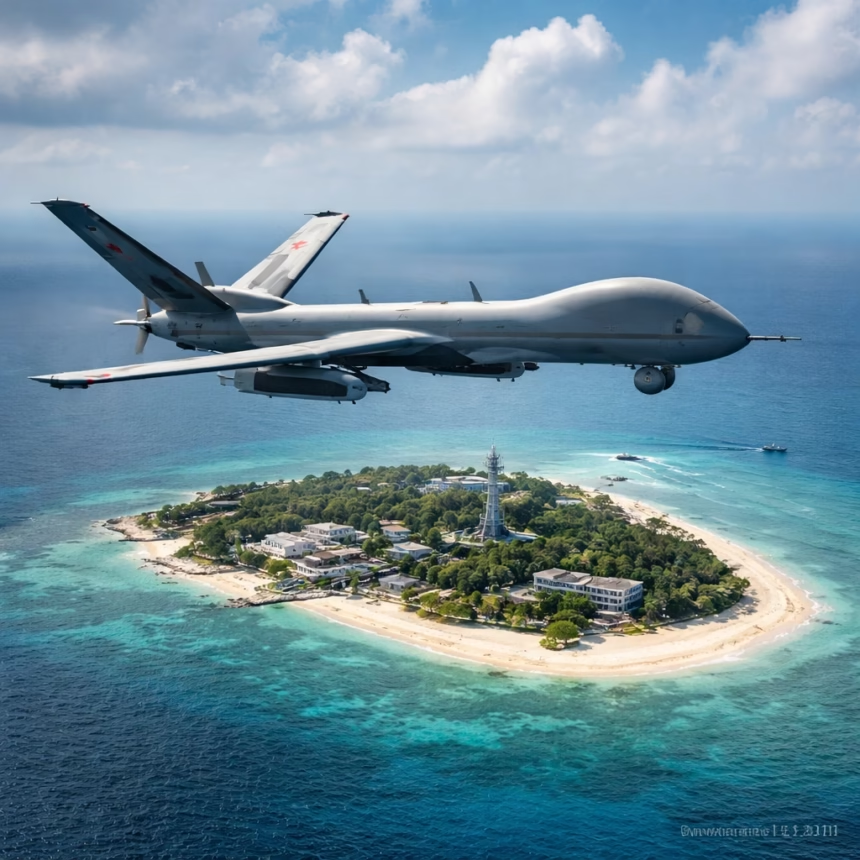
Taiwan Alerts After 'Provocative' Chinese Drone Flies Over Strategic Outpost
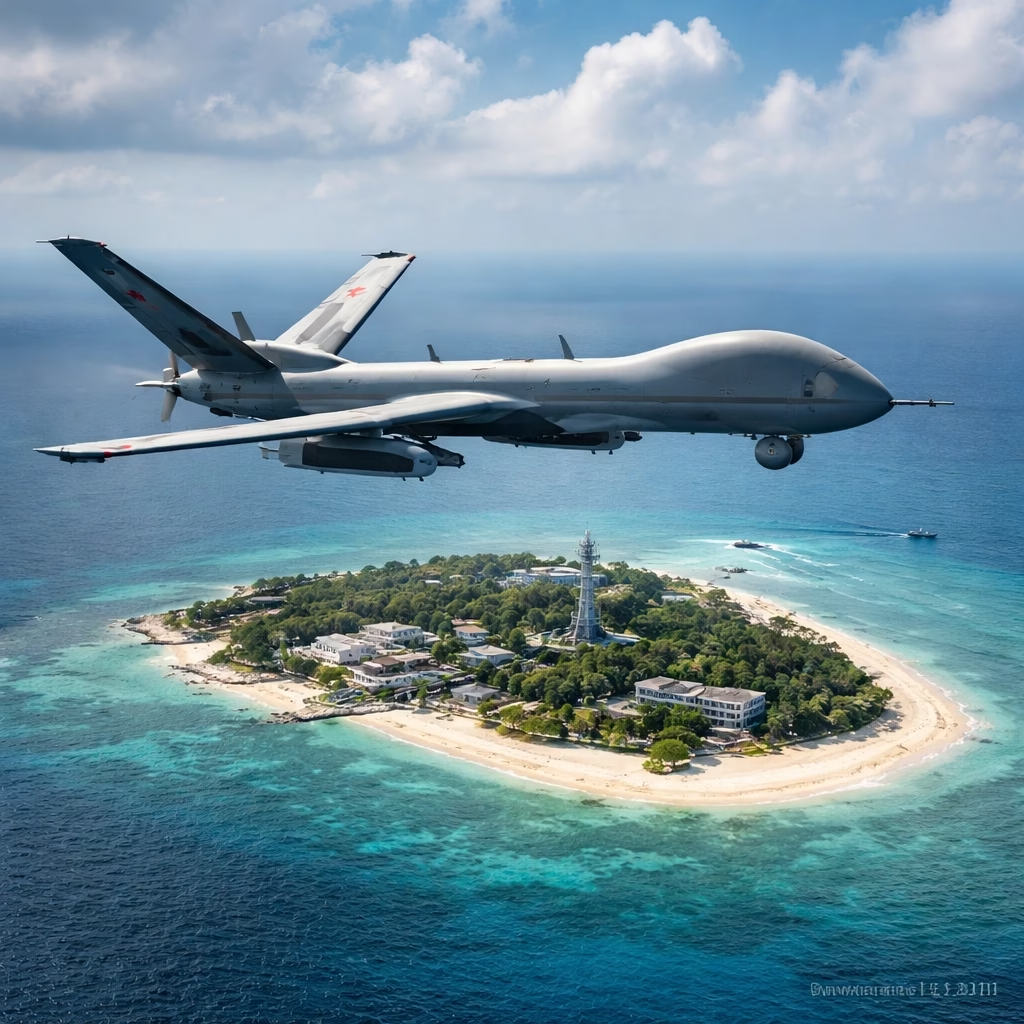
Taiwan's Ministry of National Defense recently reported a Chinese drone conducting a "provocative" flight over the Dongsha Islands, also known as the Pratas Islands, a strategically vital outpost controlled by Taipei in the South China Sea. The incident marks a significant escalation in aerial reconnaissance activities by Beijing in the contested waters, prompting immediate monitoring and a strong rebuke from Taiwanese authorities.
Background: A Region on Edge
The South China Sea is one of the world's most disputed maritime regions, with overlapping territorial claims from China, Taiwan, Vietnam, the Philippines, Malaysia, and Brunei. China asserts sovereignty over vast swathes of the sea, demarcated by its controversial "nine-dash line," which Taiwan, among other claimants, rejects. Beijing's claims encompass numerous islands, reefs, and shoals, including the Dongsha Islands, which are administered by Taiwan.
The Dongsha Islands: A Strategic Outpost
The Dongsha Islands are located approximately 440 kilometers (270 miles) southwest of Kaohsiung, Taiwan, and about 310 kilometers (190 miles) southeast of Hong Kong. This remote coral atoll serves as a critical strategic point, situated near major international shipping lanes. Taiwan maintains a small military garrison on the main island, Dongsha Island, comprising coast guard personnel and marine corps detachments, underscoring its commitment to defending its claims in the region.
More Read

Cross-Strait Tensions and Escalating Pressure
Relations between Taipei and Beijing have deteriorated significantly in recent years. China views democratically governed Taiwan as a breakaway province that must be reunified with the mainland, by force if necessary. Beijing has ramped up military pressure on Taiwan, with frequent incursions by fighter jets, bombers, and naval vessels into Taiwan’s self-declared air defense identification zone (ADIZ) and surrounding waters. These actions are widely seen as attempts to intimidate Taiwan and assert China’s territorial claims.
Previous incidents involving Chinese drones have primarily focused on Taiwan’s closer outlying islands, such as Kinmen, where Taiwanese forces have previously fired warning shots at unidentified drones. The latest incident over the more distant Dongsha Islands signals a potential expansion of China’s reconnaissance and intimidation tactics.
Key Developments: The Drone Incident
The recent drone flight over the Dongsha Islands was detected and monitored by Taiwanese forces. While specific details regarding the drone's model, altitude, or flight duration were not immediately released, Taiwanese authorities confirmed it was a Chinese unmanned aerial vehicle (UAV). The Ministry of National Defense spokesperson stated that the drone's presence was "provocative" and an "infringement of sovereignty," emphasizing Taiwan's firm resolve to protect its territory.

Taiwan’s Firm Stance
Upon detection, Taiwanese military units stationed on Dongsha Island initiated standard operating procedures, including close-range monitoring and issuing warnings. Taiwan’s defense ministry reiterated its commitment to maintaining peace and stability in the region while simultaneously asserting its sovereign rights. The incident has prompted a review of defense protocols and surveillance capabilities in the South China Sea.
Beijing’s Unspoken Message
As is often the case with such incidents, China has not issued an immediate official statement regarding the drone flight. Beijing typically characterizes its military activities in the South China Sea as routine exercises or necessary actions to protect its “indisputable sovereignty.” The drone’s flight, regardless of official acknowledgment, serves as a clear message from China, testing Taiwan’s defenses and asserting its expansive claims over the disputed waters and islands.
Impact: Sovereignty, Stability, and International Reaction
The drone incident over the Dongsha Islands carries significant implications for Taiwan, regional stability, and international dynamics.
Sovereignty Under Scrutiny
For Taiwan, the drone’s flight represents a direct challenge to its sovereignty and administrative control over the Dongsha Islands. It forces Taiwan to expend resources on surveillance and defense, diverting attention and assets that could be used elsewhere. Domestically, such incidents reinforce public sentiment regarding the external threat from China and strengthen calls for increased defense spending and international support.
Regional Ripple Effects
The incident contributes to the broader pattern of escalating tensions in the South China Sea. Other claimant states, particularly Vietnam and the Philippines, which also have disputes with China, closely monitor these developments. Increased Chinese assertiveness, whether through drone flights, naval patrols, or island-building activities, raises concerns about the potential for miscalculation or accidental clashes, threatening the vital shipping lanes that traverse the region.
International Watch
The international community, particularly the United States and its allies, has consistently advocated for freedom of navigation and overflight in the South China Sea and peaceful resolution of disputes. While direct condemnation of this specific drone incident might be limited, it feeds into the broader narrative of China’s aggressive posture in the region. Washington has frequently reaffirmed its support for Taiwan’s self-defense capabilities and has conducted its own “freedom of navigation operations” (FONOPs) in the South China Sea, which Beijing views as provocations.
More Read

What Next: Vigilance and Diplomacy
The drone incident underscores the ongoing and evolving nature of the security challenges facing Taiwan and the broader South China Sea region. Future developments are likely to involve a combination of heightened vigilance, diplomatic maneuvering, and continued military posturing.
Preparing for Future Incursions
Taiwan is expected to further enhance its surveillance and early warning systems on the Dongsha Islands and other outlying territories. This may include deploying more advanced radar systems, anti-drone technologies, or increasing the frequency of patrols. The incident will likely inform Taiwan’s defense planning and procurement strategies for remote outposts.
China’s Continued Pressure
Beijing is unlikely to cease its military activities in the South China Sea or its pressure campaign against Taiwan. Drone flights, naval exercises, and air incursions are expected to continue as part of China’s long-term strategy to assert its claims and intimidate Taiwan. The frequency and nature of these activities will depend on geopolitical developments and China’s strategic objectives.
International Calls for De-escalation
While direct intervention is unlikely, international bodies and concerned nations will likely continue to call for de-escalation and adherence to international law in the South China Sea. The incident may prompt renewed diplomatic efforts to encourage dialogue among claimants, though substantive progress on resolving core territorial disputes remains challenging given the entrenched positions of the parties involved. The risk of miscalculation remains a significant concern, requiring careful management from all actors in the region.