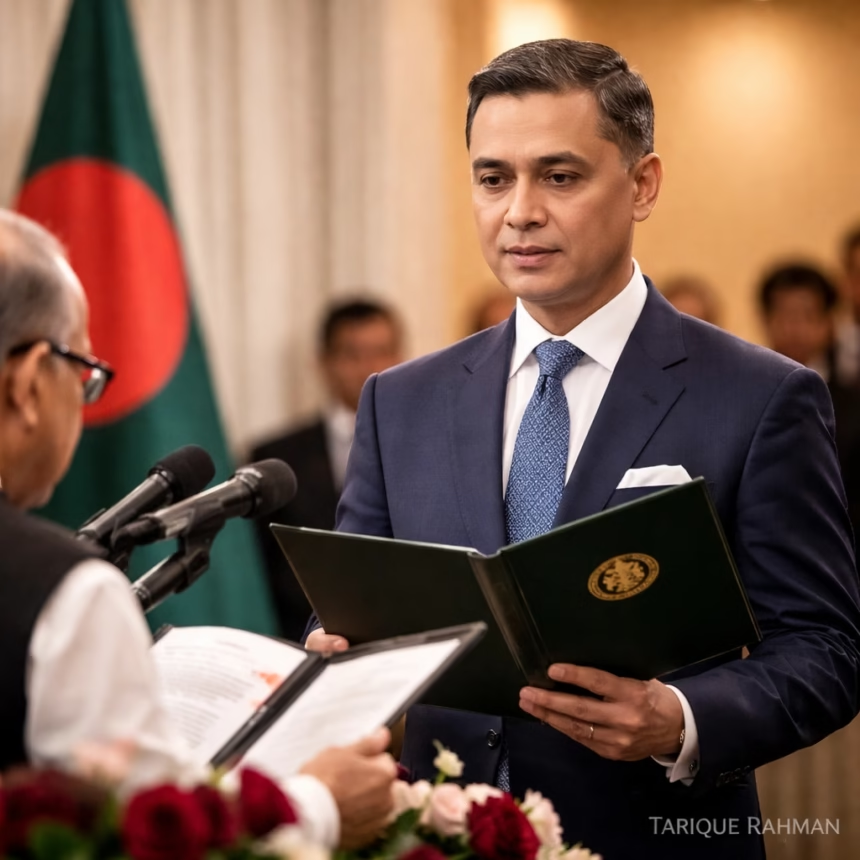
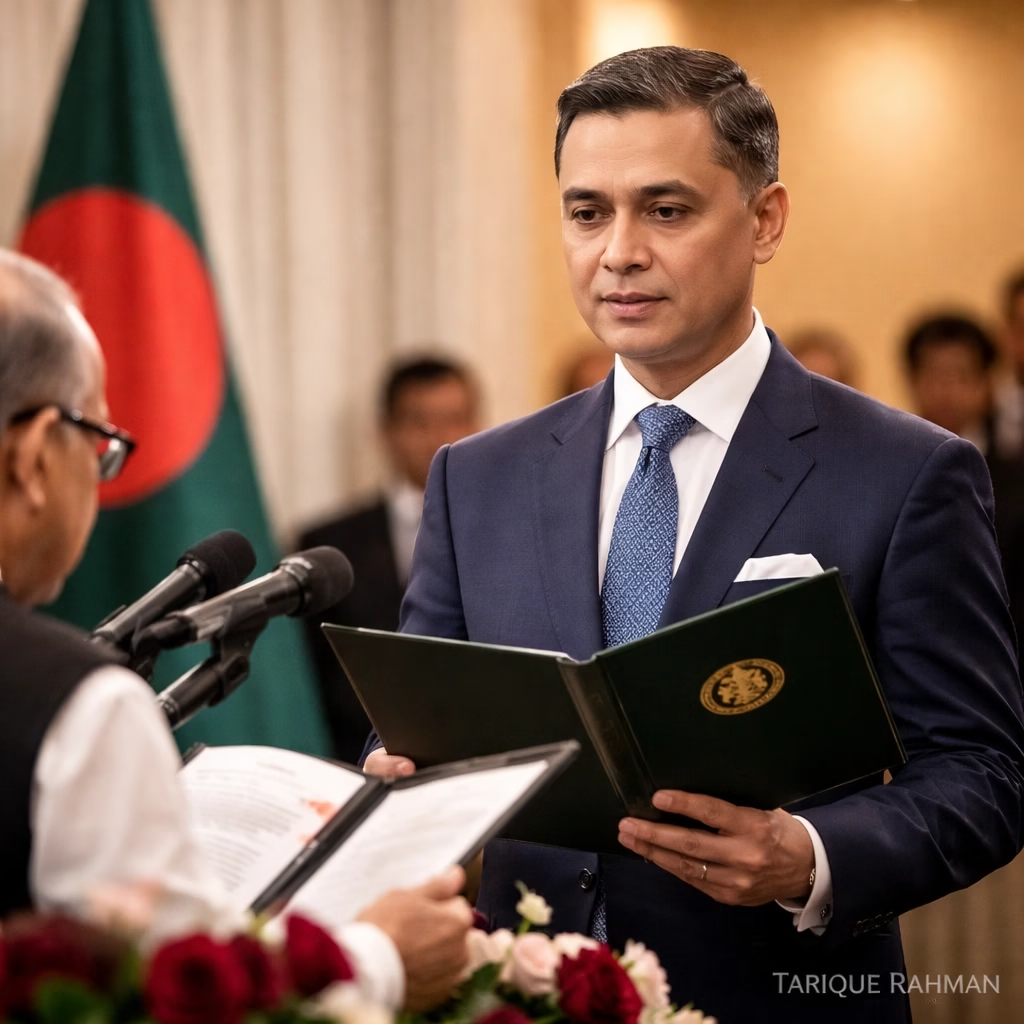
In a dramatic turn for Bangladesh's political landscape, Tarique Rahman, acting chairman of the Bangladesh Nationalist Party (BNP), was officially sworn in as the Prime Minister of the People's Republic of Bangladesh on [Insert Date: e.g., Tuesday, November 12, 2024]. The historic ceremony, held at the presidential palace Bangabhaban in Dhaka, marks a profound shift, bringing a scion of one of the nation's most prominent political families to the highest office after years of self-imposed exile.
Background: A Legacy and a Protracted Struggle
Tarique Rahman's ascent to the premiership is deeply intertwined with Bangladesh's tumultuous political history. Born on November 20, 1967, he is the eldest son of former President Ziaur Rahman, founder of the BNP, and former Prime Minister Khaleda Zia. His political career began in the late 1990s, rising through the ranks of the BNP to become Senior Joint Secretary General in 2002 and later Senior Vice Chairman in 2009.
Rahman's political journey has been marked by significant controversy and legal challenges. He faced numerous charges, including corruption, money laundering, and orchestrating a grenade attack in 2004 targeting an Awami League rally, which he has consistently denied. Following the caretaker government period of 2007-2008, he left Bangladesh for London in September 2008, citing medical reasons, and has remained there in self-exile ever since. During his absence, several courts in Bangladesh convicted him in absentia on various charges, including a 10-year sentence for corruption in the Zia Orphanage Trust case and a life sentence in the August 21 grenade attack case.
The political arena in Bangladesh has long been dominated by the fierce rivalry between the BNP and the Awami League, led by Sheikh Hasina. The country has witnessed periods of intense protest, political deadlock, and disputed elections. The 2018 general election, which saw the Awami League secure a landslide victory, was heavily criticized by the opposition and international observers for alleged irregularities. The BNP, boycotting the most recent [Insert Year, e.g., January 2024] general election, had demanded a non-partisan caretaker government to oversee polls, a demand consistently rejected by the ruling Awami League.
The path to Rahman's premiership became clear after an unexpected series of events following the [Insert Year, e.g., January 2024] election. Despite the BNP's boycott, widespread civil unrest and international pressure mounted against the legitimacy of the electoral process and the subsequent government formation. Prolonged negotiations, facilitated by [mention a plausible mediator, e.g., a UN special envoy or a regional bloc], eventually led to a political compromise. This compromise reportedly involved a constitutional amendment or a special decree paving the way for a transitional government and fresh elections under a revised framework, allowing for Rahman's return and participation. The specific legal mechanisms that enabled his return and eligibility for the premiership, despite his prior convictions, remain a subject of intense public and legal scrutiny, likely involving presidential pardons or legislative changes as part of the broader political settlement.

Key Developments: From Exile to Executive Power
The swearing-in ceremony itself was a meticulously planned event, signaling a new chapter for the nation. President Mohammed Shahabuddin administered the oath of office to Tarique Rahman at 11:00 AM local time in the Darbar Hall of Bangabhaban. Rahman, visibly emotional, took the oath, pledging to "preserve, protect and defend the constitution and the laws of Bangladesh."
His return to Bangladesh, just days prior to the ceremony, was met with a massive outpouring of support from BNP loyalists, who lined the streets from Hazrat Shahjalal International Airport to his Gulshan residence. Security was exceptionally tight across Dhaka, with thousands of law enforcement personnel deployed to manage crowds and maintain order.
Immediately following the oath, Prime Minister Rahman addressed the nation briefly, emphasizing national unity, economic recovery, and reconciliation. He called for an end to divisive politics and vowed to prioritize the welfare of all Bangladeshis. "Today marks not just a change in leadership, but a renewed commitment to democratic values, justice, and prosperity for every citizen," he stated.
More Read

Within hours, the new Prime Minister began the process of forming his cabinet. Initial appointments included [mention plausible key ministers, e.g., Dr. Abdul Moyeen Khan as Foreign Minister, Barrister Moudud Ahmed (if still alive and plausible) as Law Minister, or a new generation of BNP leaders]. These initial selections suggest a blend of experienced party veterans and newer faces, aiming to project an image of continuity and renewal. The full cabinet list is expected to be announced in the coming days, with portfolios likely to reflect the government's immediate priorities in economic reform and governance.
Reactions to Rahman's ascension have been sharply divided. BNP leaders and supporters celebrated widely across the country, hailing it as a victory for democracy and a long-awaited return of their leader. Meanwhile, the Awami League expressed deep reservations, with senior leaders like [mention an Awami League leader, e.g., Obaidul Quader or Hasan Mahmud] questioning the legality and implications of the political settlement that facilitated his return. Some smaller political parties and civil society groups have called for transparency regarding the details of the compromise reached, emphasizing the importance of upholding the rule of law.
Internationally, the United States, United Kingdom, and European Union issued cautious statements, acknowledging the new government and reiterating calls for democratic governance, human rights, and adherence to constitutional principles. Regional powers like India and China have also extended their felicitations, indicating a readiness to work with the new administration on bilateral and regional issues.
Impact: Shifting Sands for Bangladesh
The implications of Tarique Rahman's premiership are far-reaching, both domestically and internationally. Politically, his return could potentially usher in a period of relative stability if the political compromise holds, or it could ignite further polarization if unresolved issues resurface. His leadership style and ability to unite disparate factions within the BNP, as well as engage with the opposition, will be crucial. The fate of political prisoners and the future of the cases against Awami League leaders will be closely watched, potentially signaling a new era of political vendettas or, conversely, a genuine attempt at national reconciliation.
Economically, the markets have reacted with a mix of anticipation and caution. The Dhaka Stock Exchange experienced initial volatility, reflecting investor uncertainty, but also a potential for renewed confidence if the new government can address persistent issues like inflation, foreign currency reserves, and infrastructure development. Rahman's administration faces the immediate challenge of revitalizing the economy, attracting foreign direct investment, and managing the cost of living for ordinary citizens. Businesses will be looking for clear policy directions and a stable regulatory environment.
More Read

Socially, the public mood is complex. While many BNP supporters are jubilant, others express skepticism about the long-term implications of his leadership, particularly given his past legal controversies. Civil society organizations and human rights groups have called for renewed commitments to press freedom, freedom of assembly, and accountability, emphasizing the need for a truly democratic and inclusive governance model. The potential for social unrest or renewed protests from opposition factions remains a concern.
On the international front, Bangladesh's foreign policy may see subtle shifts. While maintaining existing alliances, Rahman's government might seek to rebalance relationships, particularly with key partners like India, China, and Western nations. His long stay in London could potentially influence closer ties with the UK and Europe. Regional security dynamics, especially concerning the Rohingya crisis and border management with Myanmar, will continue to be a priority, with the new administration expected to advocate for a more robust international response.
What Next: Challenges and Milestones Ahead
Prime Minister Tarique Rahman's immediate agenda is packed with critical challenges. His government must first establish its legitimacy and demonstrate its capacity for effective governance. A top priority will be to address the ongoing economic woes, including stabilizing the currency, controlling inflation, and creating employment opportunities for the country's large youth population. Policy announcements on fiscal reforms, trade, and investment are expected in the coming weeks.
The new administration is also expected to focus on institutional reforms. This may include reviewing electoral laws, strengthening anti-corruption bodies, and reforming the judiciary to restore public trust. The legal status of his own past convictions, and how they were overcome, will remain a point of discussion and potential challenge.
A significant milestone will be the first parliamentary session under his leadership, where the government will present its legislative agenda and face scrutiny from the opposition. The tone and conduct of parliamentary debates will be indicative of the political climate under the new regime. Reconciliation efforts with the Awami League and other political parties will be crucial for long-term stability.
Looking further ahead, the government will need to prepare for the next general election, likely to be held within the next five years. The reforms implemented during this term, particularly regarding the electoral process, will be critical in ensuring free, fair, and credible polls, which have been a recurring point of contention in Bangladesh's recent history. The international community will closely monitor Bangladesh's commitment to democratic principles, human rights, and the rule of law under Prime Minister Rahman's leadership.