Shifting Sands in Tehran: Trump's Bold Stance on Iranian Power
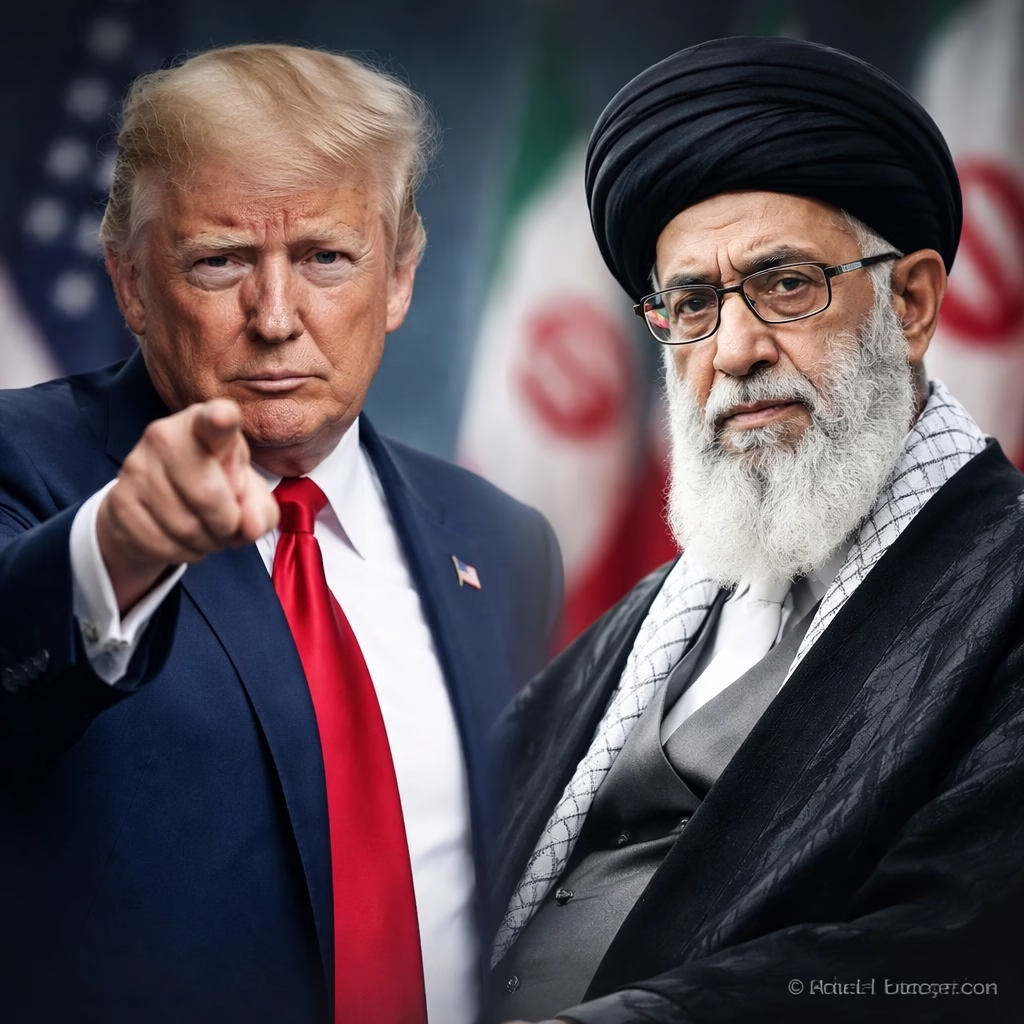
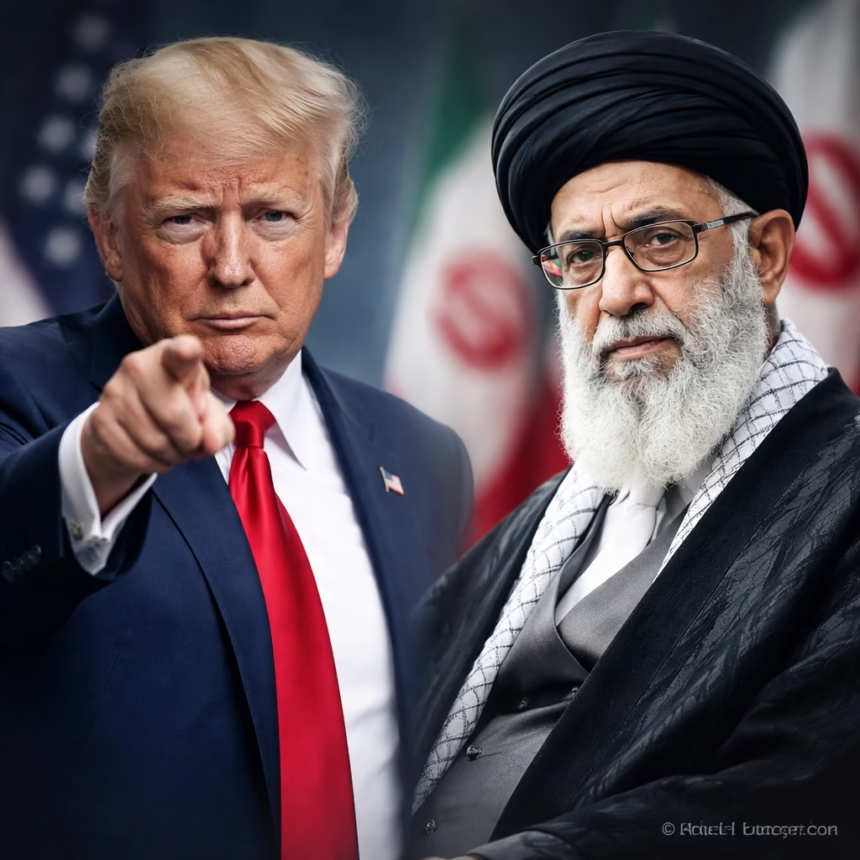
Former U.S. President Donald Trump has once again targeted Iran’s Supreme Leader, Ayatollah Ali Khamenei, advocating for his removal from power. The remarks, delivered during a recent public address in Dallas, Texas on October 26, 2023, signal a continuation of Trump's confrontational approach to the Iranian regime, raising questions about the future of U.S.-Iran relations.
Background
Ayatollah Ali Khamenei assumed the role of Supreme Leader of Iran in 1989, succeeding Ayatollah Ruhollah Khomeini, the founder of the Islamic Republic. The Supreme Leader is the highest authority in Iran, wielding significant political, military, and religious power. The position is for life. Throughout his tenure, Khamenei has overseen Iran’s nuclear program, its regional influence, and its ongoing economic challenges, particularly those exacerbated by international sanctions. Trump’s presidency (2017-2021) was marked by a significant escalation of tensions with Iran, including the withdrawal from the 2015 Iran nuclear deal (JCPOA) in May 2018 and the reimposition of stringent economic sanctions.
Key Developments
Trump’s recent comments reiterate his long-held position that Khamenei represents a key obstacle to a more stable and predictable relationship with Iran. He specifically stated that the Iranian people deserve leadership that prioritizes their well-being and economic prosperity. These comments follow a period of heightened diplomatic activity involving Iran and several nations, including China and Russia, who are increasingly seeking to circumvent U.S. sanctions and bolster ties with Tehran. Recent reports suggest increased Iranian military exercises in the Persian Gulf, a move interpreted by some analysts as a response to perceived U.S. pressure and a demonstration of regional power. The U.S. has also recently increased its military presence in the region.
Impact
For Iran
Trump's remarks are likely to be viewed as a provocative challenge by the Iranian government and its supporters. The Supreme Leader's authority is deeply entrenched within Iran's political system and is supported by a significant portion of the population. However, the constant pressure from the U.S. and the economic hardships faced by many Iranians could potentially create internal dissent. The Iranian government has consistently condemned U.S. sanctions as economic warfare and has vowed to continue its nuclear program as a deterrent. These pronouncements may further solidify anti-American sentiment within Iran.
More Read

For the United States
The renewed calls for change in Iran come at a time when the U.S. is navigating complex geopolitical challenges in the Middle East. While the Biden administration has pursued a more diplomatic approach to Iran than its predecessor, tensions remain high, particularly regarding Iran’s nuclear ambitions and its support for proxy groups in the region. Trump’s comments could complicate efforts to engage in dialogue and potentially escalate tensions. U.S. allies in the Middle East, such as Israel and Saudi Arabia, are likely to view Trump’s remarks favorably, while other nations may urge restraint.
For the Region
The situation could further destabilize an already volatile region. Increased tensions between the U.S. and Iran could have ripple effects on countries like Iraq, Lebanon, and Syria, where Iran exerts considerable influence. The potential for miscalculation or unintended escalation remains a significant concern. The ongoing conflict in Yemen, where Iran supports the Houthi rebels, also adds to the complexity of the regional landscape.
What Next
It is unclear whether Trump intends to take concrete actions to challenge Khamenei’s leadership. His remarks are primarily rhetorical, but they reflect a consistent policy stance. The Biden administration has indicated a willingness to engage in diplomacy with Iran, but it has also maintained a firm stance on preventing Iran from acquiring nuclear weapons. The next few months are expected to be crucial in determining the trajectory of U.S.-Iran relations. Key milestones to watch include any potential negotiations on the Iran nuclear program and any significant military deployments in the Persian Gulf. Regional elections in countries like Iran and Iraq could also impact the political landscape.
More Read

Potential Scenarios
Analysts suggest several potential scenarios. One is a continuation of the current pattern of indirect confrontation, with both sides engaging in military posturing and economic pressure. Another is a renewed attempt at diplomatic engagement, potentially mediated by international actors. A third, less likely but still possible, scenario involves internal political changes within Iran that could eventually lead to a shift in leadership.