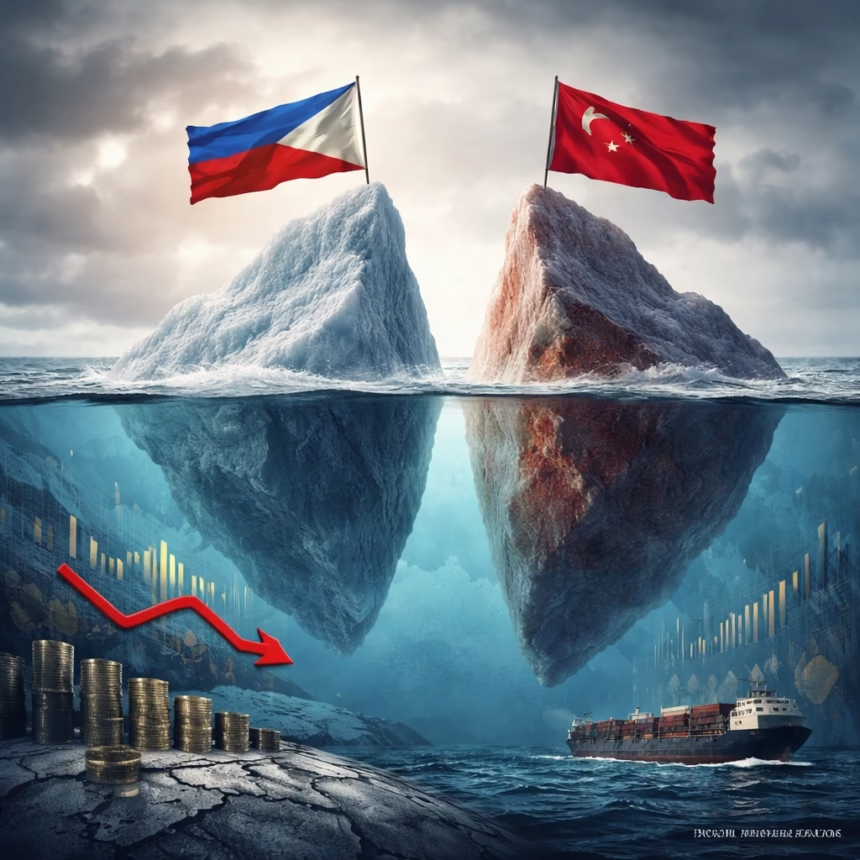
Rising Tensions: Economic Ripple Effects of PH-China Dispute
A simmering dispute between the Philippines and China over the South China Sea is drawing increasing attention, with analysts warning of potential economic consequences and heightened security risks. The escalating tensions, marked by diplomatic clashes and assertive actions in the disputed waters, have sparked concerns both domestically and internationally.
Background: A History of Disagreement
The territorial dispute primarily centers on the Spratly Islands and Scarborough Shoal, areas claimed in whole or in part by multiple nations, including China, the Philippines, Vietnam, Malaysia, Brunei, and Taiwan. The Philippines asserts its rights under the United Nations Convention on the Law of the Sea (UNCLOS), particularly its exclusive economic zone (EEZ). China, however, maintains a broader claim, often referencing historical justifications and the "nine-dash line" – a demarcation that has been widely rejected by international law.
Past incidents, such as the 2019 Philippine Navy standoff at Scarborough Shoal, have strained relations. The Philippines has consistently relied on diplomatic channels and international law to defend its claims, while China has responded with increased military presence and assertive rhetoric. The current escalation began in 2023 with accusations of Chinese harassment of Filipino vessels conducting resupply missions to troops stationed on Second Thomas Shoal.
Key Developments: Escalation in Recent Months
Recent months have witnessed a sharp increase in the frequency and intensity of confrontations. In August 2023, the Philippine Coast Guard (PCG) reported being illegally blocked by Chinese vessels during resupply operations to the BRP Sierra Madre, a grounded Philippine Navy ship stationed on Second Thomas Shoal. This incident led to a strong condemnation from the Philippines and a response from the Chinese Coast Guard asserting its sovereignty over the area.
More Read

Furthermore, China's recent military exercises in the South China Sea, conducted in late September 2023, were viewed by many as a deliberate show of force. These exercises, involving naval vessels and aircraft, occurred near disputed areas and were interpreted as a message to the Philippines and other claimant states. Diplomatic meetings between Philippine and Chinese officials have yielded limited progress, with both sides maintaining firm positions on key issues.
Impact: Economic and Security Concerns
The escalating tensions pose significant economic risks for the Philippines. The South China Sea is a crucial shipping lane for global trade, and any disruption could impact regional commerce. The fishing industry, a vital source of livelihood for many Filipinos, is also vulnerable to restrictions and harassment in disputed waters. Tourism, particularly in areas near the South China Sea, could also suffer if the situation deteriorates.
More Read

Security concerns are paramount. The increased military presence in the region raises the risk of accidental clashes or miscalculations, potentially escalating the conflict. The Philippines has sought security assurances from allies, particularly the United States, which has reiterated its commitment to the country's defense under the Mutual Defense Treaty. However, the US has also emphasized its commitment to maintaining peace and stability in the region.
Economic Ripple Effects
Analysts from the Philippine Institute for Development Studies (PIDS) estimate that a prolonged dispute could negatively impact the country’s GDP growth by as much as 1-2% annually. This is primarily due to disruptions in trade, reduced investment, and increased security spending.
Impact on Fishing Communities
Local fishing communities in areas near Scarborough Shoal and Second Thomas Shoal have reported a significant decline in catches due to Chinese fishing vessels allegedly encroaching on their traditional fishing grounds. This has resulted in economic hardship for many families.
What Next: Potential Future Scenarios
The situation remains fluid, and the future trajectory is uncertain. Several possible scenarios are being considered, ranging from continued diplomatic stalemate to a more serious military confrontation.
Diplomatic Efforts
Ongoing diplomatic efforts, including bilateral talks and multilateral discussions within ASEAN, aim to de-escalate tensions and find a peaceful resolution. The Philippines is expected to continue seeking support from international partners to strengthen its position in negotiations.
Military Posturing
Continued military posturing by both sides could lead to further escalation. The Philippines is likely to continue bolstering its defenses, while China may maintain its assertive presence in the South China Sea.
More Read

International Involvement
Increased international involvement, particularly from the United States and other regional powers, could play a role in mediating the dispute and preventing further escalation. However, any external intervention carries its own risks and complexities.
The coming months will be crucial in determining the path forward. The Philippines faces the challenge of defending its sovereignty while navigating a complex geopolitical landscape. The situation highlights the delicate balance between economic interests, security concerns, and international law in the South China Sea.