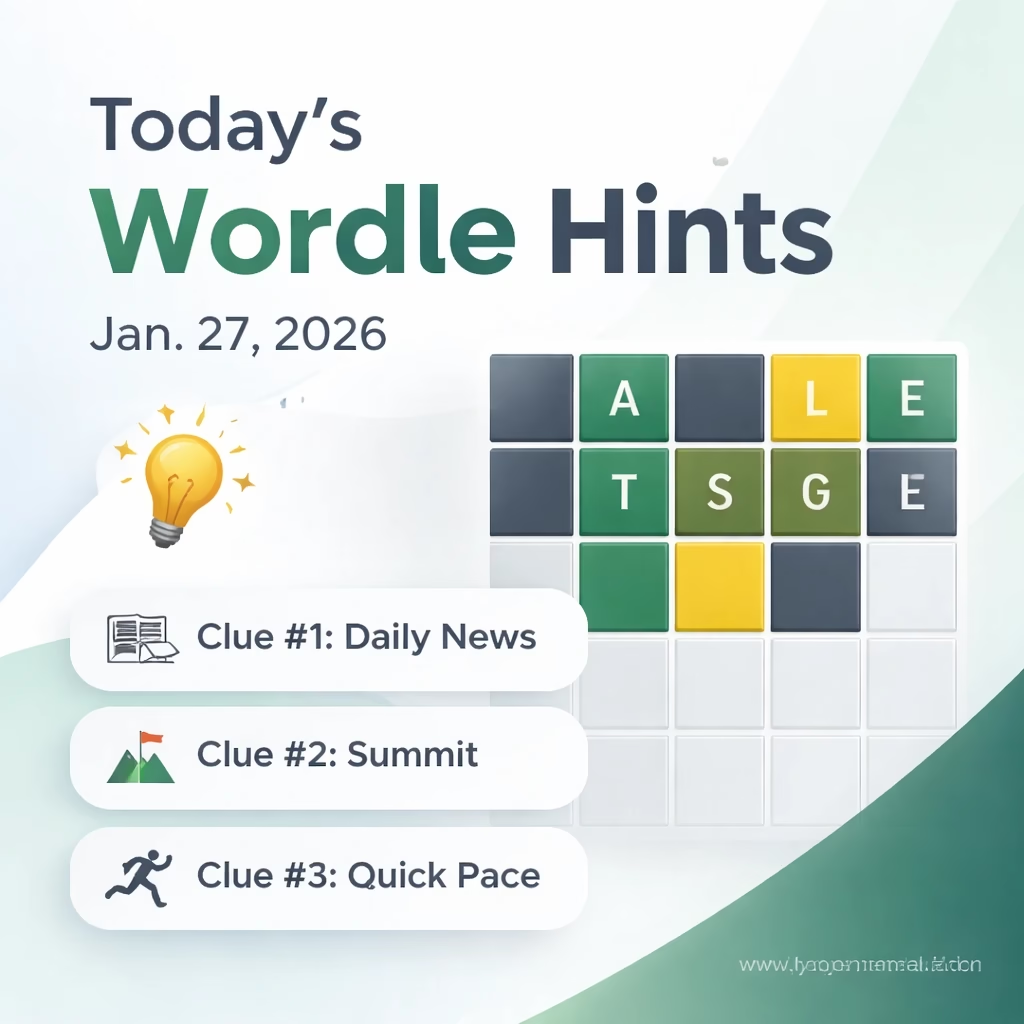
Wordle, the globally popular word game, continues to captivate millions. As we approach January 27th, 2026, anticipation is building for the day's puzzle. This article provides insights and potential hints to help players navigate the challenge.
Background
Wordle originated in October 2021, created by Josh Wardle in New York City. Initially a personal game shared with his partner, it quickly gained traction through social media. The game's simple mechanics – guessing a five-letter word in six attempts – proved highly addictive. The New York Times acquired Wordle in October 2022, significantly expanding its reach and infrastructure to handle the surge in players.

Since its inception, Wordle has spawned numerous inspired clones and variations. The core gameplay remains consistent: players receive feedback on each guess – letters highlighted green for correct placement, yellow for presence but wrong placement, and gray for absent letters. This feedback loop allows for strategic deduction and pattern recognition.
Key Developments
The past year has seen several adjustments to the Wordle experience. In late 2024, The New York Times introduced a "Wordle Streak" feature, allowing users to track their consecutive win records. This fostered a sense of competition and encouraged daily participation.

More recently, in June 2025, The New York Times experimented with a limited-time "Wordle Olympics," featuring themed puzzles related to historical events and cultural milestones. While the Olympics have concluded, the experiment highlighted the potential for future themed challenges. The introduction of accessibility features, including screen reader compatibility, was implemented in September 2025, making the game more inclusive.
A notable change impacting gameplay is the algorithm used to select the daily word. The New York Times has publicly stated that the algorithm prioritizes words with a diverse range of letter frequencies and avoids overly obscure or archaic vocabulary. Regular updates ensure a consistently challenging yet solvable experience.
Impact
Wordle’s impact extends far beyond a simple pastime. It has become a cultural phenomenon, sparking conversations and shared experiences across geographical boundaries. The game has fostered a sense of community, with players sharing their scores and strategies on social media platforms like X (formerly Twitter) and Reddit.
More Read

The game's popularity has also influenced language learning. Many users have reported expanding their vocabulary and improving their spelling skills as a result of playing Wordle. Educational institutions are increasingly incorporating Wordle-like puzzles into language arts curricula to promote critical thinking and word recognition.
Beyond direct user impact, Wordle's success has demonstrated the potential of simple, engaging digital experiences. It has inspired other game developers to explore similar mechanics and approaches, contributing to the evolution of the puzzle game genre.
What Next
The New York Times has indicated plans for continued development and expansion of the Wordle franchise. Rumors suggest the introduction of new game modes, such as collaborative puzzles and themed challenges tied to specific holidays or events, are under consideration.
Potential Features
One frequently requested feature is a "Wordle History" section, allowing players to revisit past puzzles and analyze their performance. Furthermore, a more robust statistics system, providing insights into player performance metrics, is also being discussed.
The possibility of a mobile app dedicated solely to Wordle remains a topic of speculation. While the game is currently accessible through a web browser, a dedicated app could offer enhanced features and a more streamlined user experience. The New York Times has yet to officially announce any plans in this regard.
Looking further ahead, there's potential for Wordle to integrate with other New York Times services, offering cross-promotional opportunities and expanding the overall user ecosystem. This could include incorporating Wordle-style puzzles into crosswords or other word-based games.