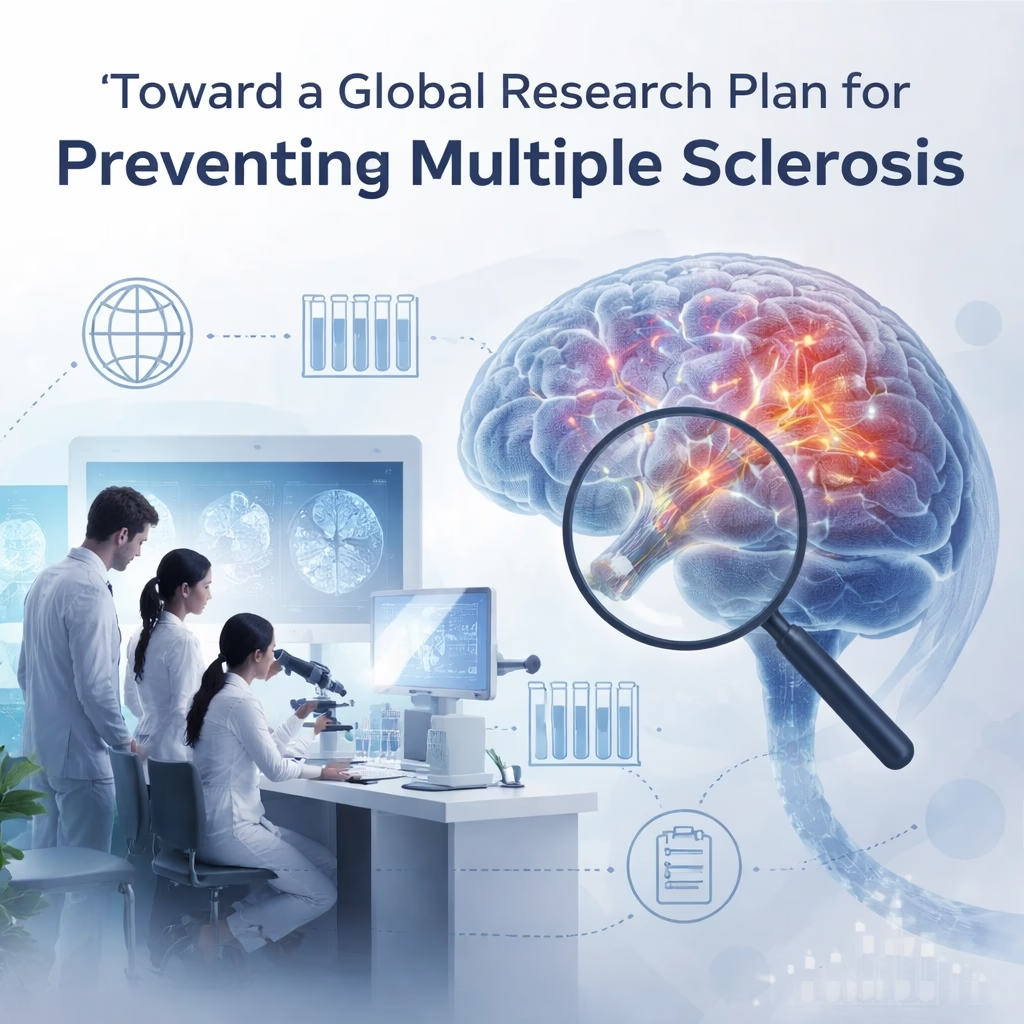
Global Research Plan Unveiled to Prevent Multiple Sclerosis
Scientists Unite to Tackle Multiple Sclerosis on a Global Scale
A groundbreaking initiative to prevent multiple sclerosis (MS) has been launched, bringing together researchers and policymakers from around the world. The global research plan, announced on [DATE] in [LOCATION], aims to accelerate the development of preventive strategies and improve early intervention for those at risk.
Multiple sclerosis is a chronic, often debilitating disease affecting the central nervous system, with over 2.8 million people living with the condition globally. Despite significant advancements in treatment, prevention remains a critical unmet need.
Background: The Urgent Need for Prevention
MS is an autoimmune disease in which the immune system mistakenly attacks the protective sheath (myelin) covering nerve fibers, leading to communication problems between the brain and the rest of the body. While the exact cause of MS is unknown, researchers have identified several risk factors, including genetics, environmental triggers, and lifestyle factors.
The disease typically manifests between the ages of 20 and 40, with women being twice as likely to develop MS as men. The global burden of MS has been increasing, particularly in regions with higher latitudes, such as North America, Europe, and Australia.
Despite decades of research, there is currently no cure for MS, and existing treatments primarily focus on managing symptoms and reducing the frequency and severity of relapses. The lack of preventive measures has driven the need for a coordinated global effort to address this gap.
Key Developments: A Collaborative Approach
The newly unveiled global research plan outlines a comprehensive strategy to advance MS prevention. Key components include:
Identifying High-Risk Individuals: Research will focus on pinpointing biomarkers and genetic markers that can predict susceptibility to MS, enabling early intervention.
Environmental and Lifestyle Modifications: Studies will explore how factors like vitamin D levels, smoking, and diet influence the risk of developing MS, with the goal of developing targeted lifestyle recommendations.
Immunomodulatory Interventions: Scientists will investigate the potential of drugs or vaccines that can modulate the immune system to prevent the onset of MS in high-risk individuals.
Global Data Sharing: The plan emphasizes the importance of international collaboration, with researchers sharing data and resources to accelerate progress.
Leading institutions, including the Multiple Sclerosis International Federation (MSIF) and the National Multiple Sclerosis Society (NMSS), are spearheading this effort, with support from governments and private sector stakeholders.
Impact: A Hopeful Future for Millions
The global research plan has the potential to transform the lives of millions of individuals at risk of developing MS. Early prevention could significantly reduce the physical, emotional, and financial burden associated with the disease.
For patients already diagnosed with MS, the findings from this research could lead to better management strategies and improved quality of life. Additionally, the plan could pave the way for similar initiatives targeting other autoimmune conditions.
What Next: The Path Forward
The next steps involve securing funding, establishing research hubs, and recruiting participants for clinical trials. Researchers estimate that significant progress could be made within the next 5-10 years, with the potential for breakthroughs in prevention strategies.
Public awareness campaigns will also play a crucial role in encouraging high-risk individuals to participate in studies and adopt preventive measures. The ultimate goal is to create a world where MS can be prevented, not just managed.