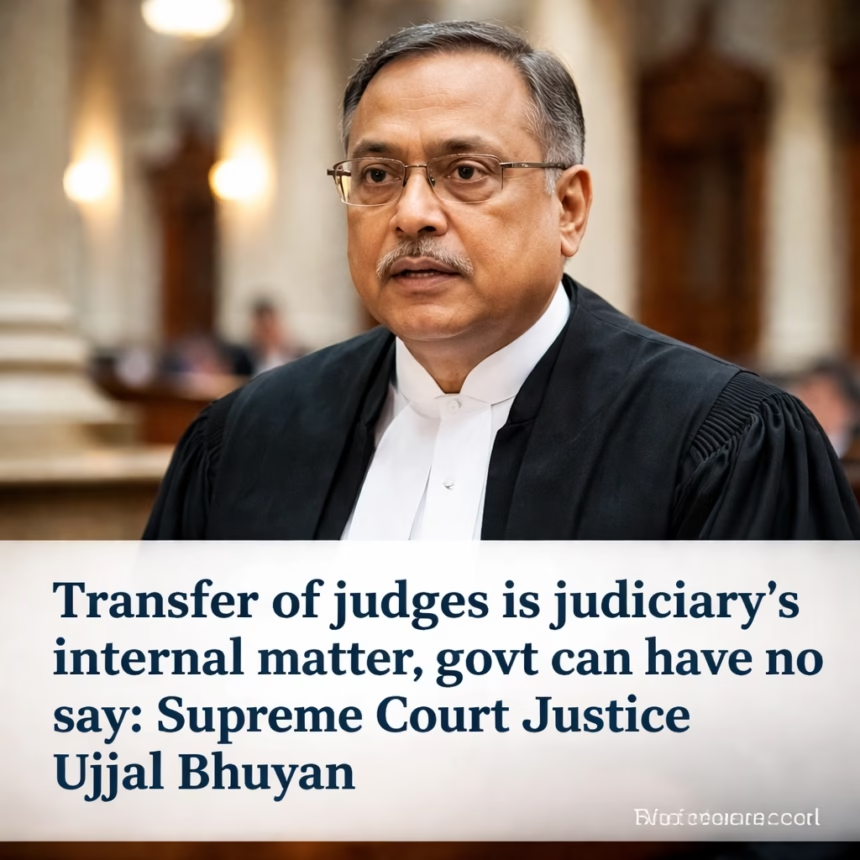
Judiciary's Independence: Supreme Court Rejects Government Interference in Judge Transfers
The Supreme Court of India delivered a significant ruling on October 11, 2023, asserting the judiciary's independence in matters of transferring judges. Justice Ujjal Bhuyan, in a dissenting opinion, strongly emphasized that the government should not have any say in the transfer process. The decision has sparked debate about the balance of power between the executive and the judiciary.
Background
The issue of judicial transfers has been a recurring point of contention in Indian politics. Historically, the government has exerted influence over the transfer of judges, leading to concerns about potential political interference and undermining the judiciary's impartiality. Several petitions have been filed challenging the existing transfer mechanisms, arguing that they violate the Constitution's guarantee of judicial independence. Previous attempts to introduce a collegium system for judicial appointments and transfers faced challenges and modifications over the years. The current system involves the executive recommending transfers, a practice often criticized for its susceptibility to political pressure.
Key Developments
The recent case stemmed from concerns surrounding the transfer of Justice Anupama Haydankar from the Bombay High Court to the Delhi High Court in August 2023. Justice Haydankar, in a strongly worded letter to the Chief Justice of India, raised concerns about the propriety of the transfer and alleged that it was motivated by personal animosity. The Supreme Court initially formed a bench to examine the matter, leading to a detailed hearing on October 11th.
More Read

Justice Bhuyan, in his dissenting opinion, argued that the transfer process, as currently structured, compromises judicial independence. He asserted that the judiciary should have the autonomy to manage its own personnel without undue influence from the executive branch. He highlighted the importance of maintaining public trust in the judiciary and warned that any perceived political interference could erode that trust. The majority opinion, while acknowledging the importance of judicial independence, stopped short of fully endorsing Justice Bhuyan’s view, opting for a more nuanced approach.
Impact
This ruling has significant implications for the functioning of the Indian judiciary. Judges across the country are now emboldened to raise concerns about potential political interference in their transfers. The dissenting opinion by Justice Bhuyan is likely to resonate with many within the judicial community who have long advocated for greater autonomy. The outcome could lead to increased scrutiny of transfer decisions and a renewed push for reforms to the transfer process. Legal experts predict that the ruling might encourage further challenges to transfers deemed politically motivated. The immediate impact is a heightened awareness of the issue and a renewed call for constitutional safeguards to protect judicial independence.
Concerns Raised by Justice Haydankar
Justice Haydankar’s letter detailed specific instances of alleged bias and pressure surrounding her transfer, claiming that the process was unfair and violated established norms. Her concerns have brought the issue of judicial transfers into sharp focus.
More Read

Potential Reforms
While the Supreme Court’s ruling doesn’t mandate immediate changes, it opens the door for potential reforms. Discussions are likely to intensify around strengthening the collegium system, establishing transparent guidelines for transfers, and ensuring judicial accountability.
What Next
The Supreme Court is expected to issue a final judgment on the matter within the next few weeks. The final ruling will likely provide clearer guidelines and principles for judicial transfers, potentially paving the way for long-term reforms. Legal scholars and judicial experts are closely monitoring the court's deliberations, anticipating a decision that will shape the future of judicial independence in India. The government and the judiciary are expected to engage in further discussions to address the concerns raised and develop a consensus on the way forward. The case is likely to influence future judicial appointments and transfers for years to come.
Further Considerations
The ruling is not expected to immediately overturn the existing transfer mechanisms. However, it puts significant pressure on the government and the judiciary to address the concerns surrounding potential political interference and to implement reforms that strengthen judicial independence.