Unexpected Meeting: Trump's Venezuela Strategy Takes a New Turn
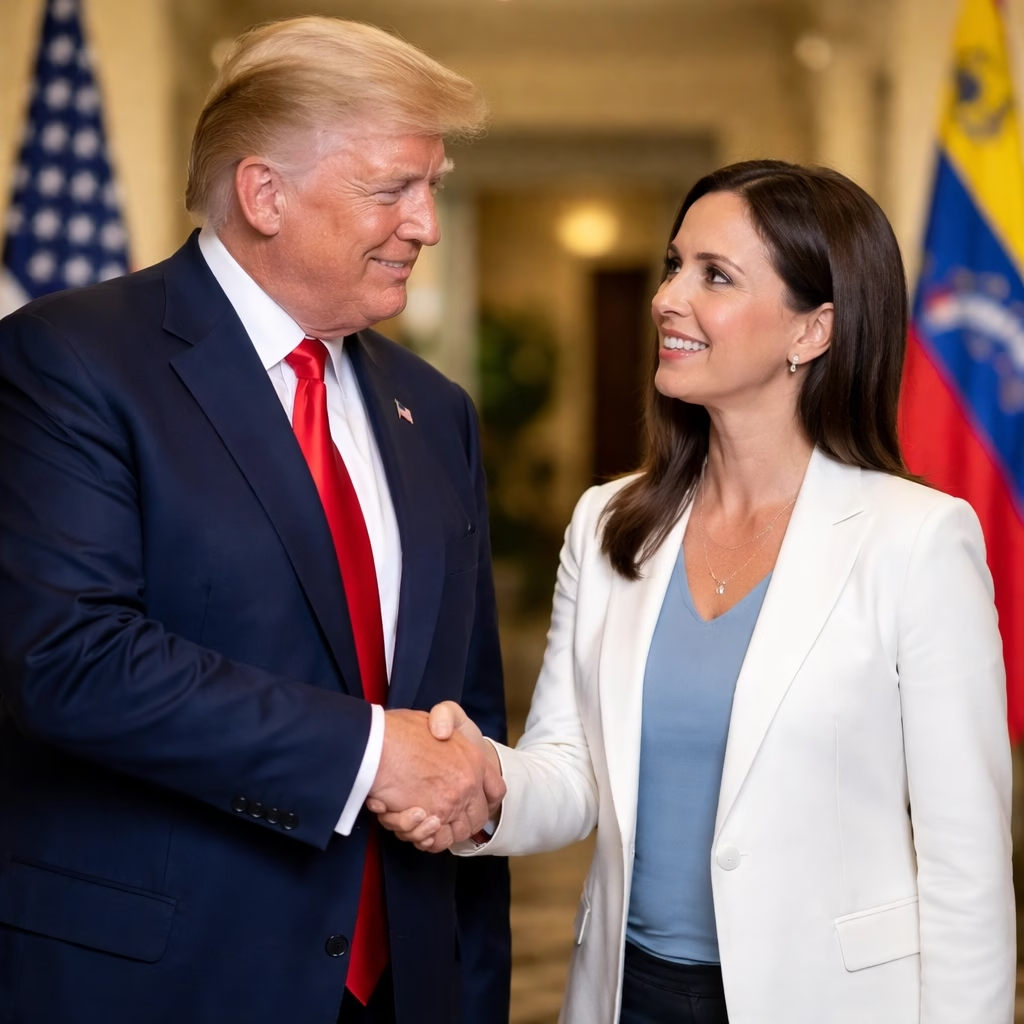
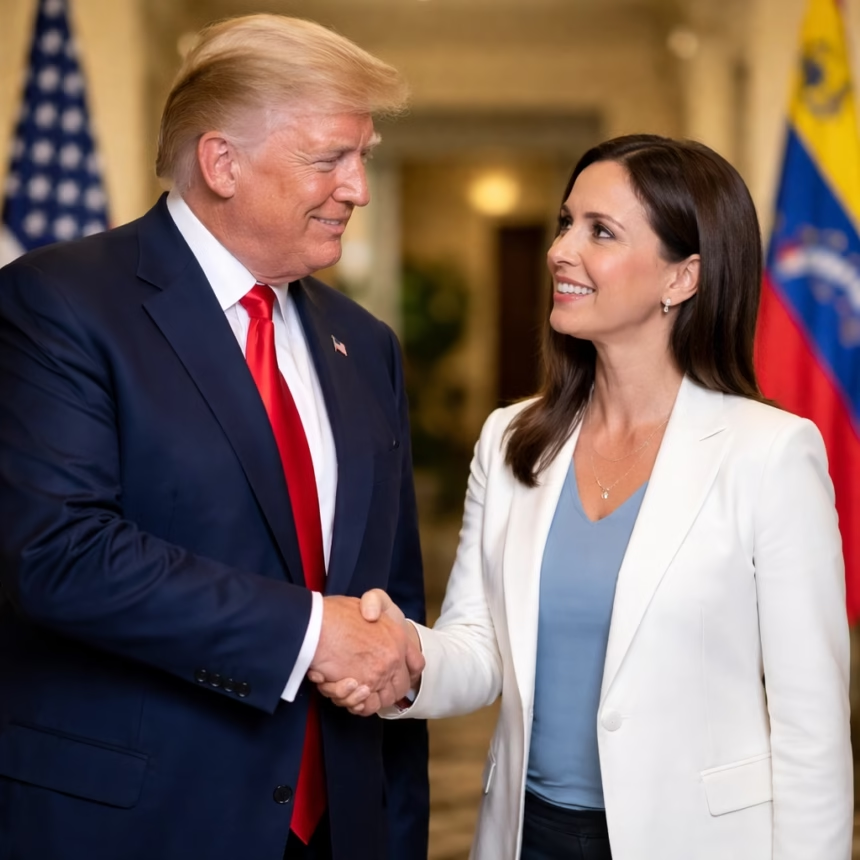
Former U.S. President Donald Trump recently met with Venezuelan opposition leader María Corina Machado at his Mar-a-Lago estate in Palm Beach, Florida, on July 10, 2023. The meeting signals a potential shift in approaches to Venezuela and underscores ongoing efforts to find a resolution to the country's political crisis.
Background
The political landscape in Venezuela has been dominated by a deep polarization between the ruling United Socialist Party of Venezuela (PSUV), led by President Nicolás Maduro, and the opposition-led Democratic Unity Roundtable (MUD). Since 2018, the opposition has challenged the legitimacy of Maduro's presidency, citing electoral fraud and human rights abuses. The U.S. has largely aligned with the opposition, imposing sanctions on Venezuelan officials and entities linked to the Maduro regime.
Trump’s administration (2017-2021) adopted a hardline stance against Venezuela, including extensive sanctions aimed at pressuring Maduro to step down and allow free and fair elections. His policies, while intended to promote democracy, also significantly impacted the Venezuelan economy and contributed to a severe humanitarian crisis. Following his departure from office, the Biden administration has maintained many of these sanctions, although with some adjustments.

Key Developments
The meeting between Trump and Machado represents a notable development. Machado, who secured 56% of the opposition vote in the July 2023 primary election, has been a vocal critic of Maduro and a proponent of a new constitution. Her participation in the primary was reportedly hindered by the Maduro government, leading to accusations of political repression.
Reports suggest the discussion focused on strategies for challenging Maduro's authority and promoting democratic reforms in Venezuela. Trump reportedly expressed support for Machado's efforts and offered potential avenues for U.S. involvement. While details of the conversation remain largely confidential, the meeting occurred amidst ongoing diplomatic efforts by various international actors, including the European Union and the United Nations, to mediate a political solution.
This interaction contrasts with the current Biden administration's approach, which emphasizes a more nuanced strategy involving dialogue with both the government and the opposition. However, Trump's continued engagement with Venezuelan opposition figures indicates a potential parallel track in efforts to resolve the crisis.
More Read

Impact
The meeting is likely to be viewed with mixed reactions. Proponents of the opposition see it as a boost to their morale and a validation of their struggle against Maduro. Machado’s public statements following the meeting emphasized the importance of international support for the Venezuelan people.
Critics of Trump’s past policies, and those who favor a more pragmatic approach to Venezuela, may view the meeting with concern, fearing it could reignite tensions and complicate ongoing diplomatic efforts. The Venezuelan government is expected to condemn the meeting, potentially further straining relations with the United States.
The impact on the Venezuelan people themselves remains uncertain. While some may see the meeting as a sign of hope for a more democratic future, others are wary of external interference and concerned about the potential for further political instability.
Potential Implications for Sanctions
The meeting could influence future U.S. policy toward Venezuela, potentially leading to adjustments in the existing sanctions regime. It remains unclear whether Trump will advocate for a more aggressive or a more moderate approach.
Impact on International Mediation Efforts
The Trump-Machado meeting may complicate ongoing efforts by the EU and UN to mediate a political solution. It could create divisions among international actors and make it more difficult to achieve a consensus on a path forward.
What Next
The immediate next steps are unclear. Machado is expected to continue her campaign for political reform in Venezuela, while Trump may continue to offer support through public statements and private discussions.

It is anticipated that the Biden administration will continue its efforts to engage with both the Maduro government and the opposition, seeking to find a mutually acceptable solution to the crisis. The timing and scope of any potential U.S. involvement in mediating a political transition remain uncertain.
The upcoming Venezuelan elections, scheduled for 2024, will be a crucial test of the political landscape and a key factor in determining the future of the country. The actions of Trump and other international actors could significantly influence the outcome of these elections.