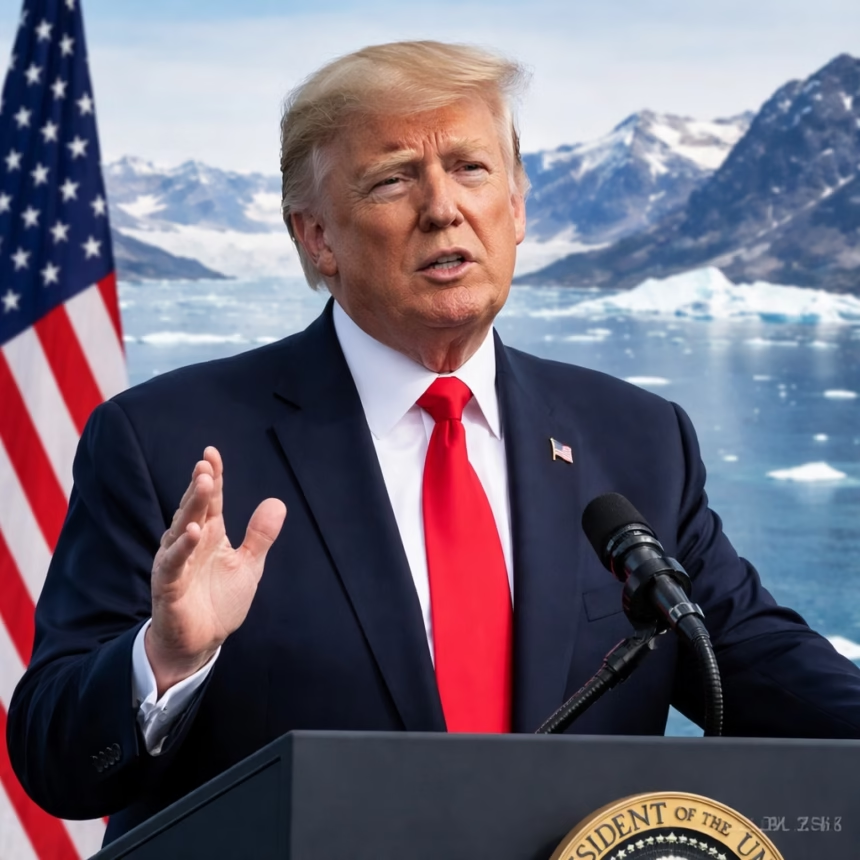
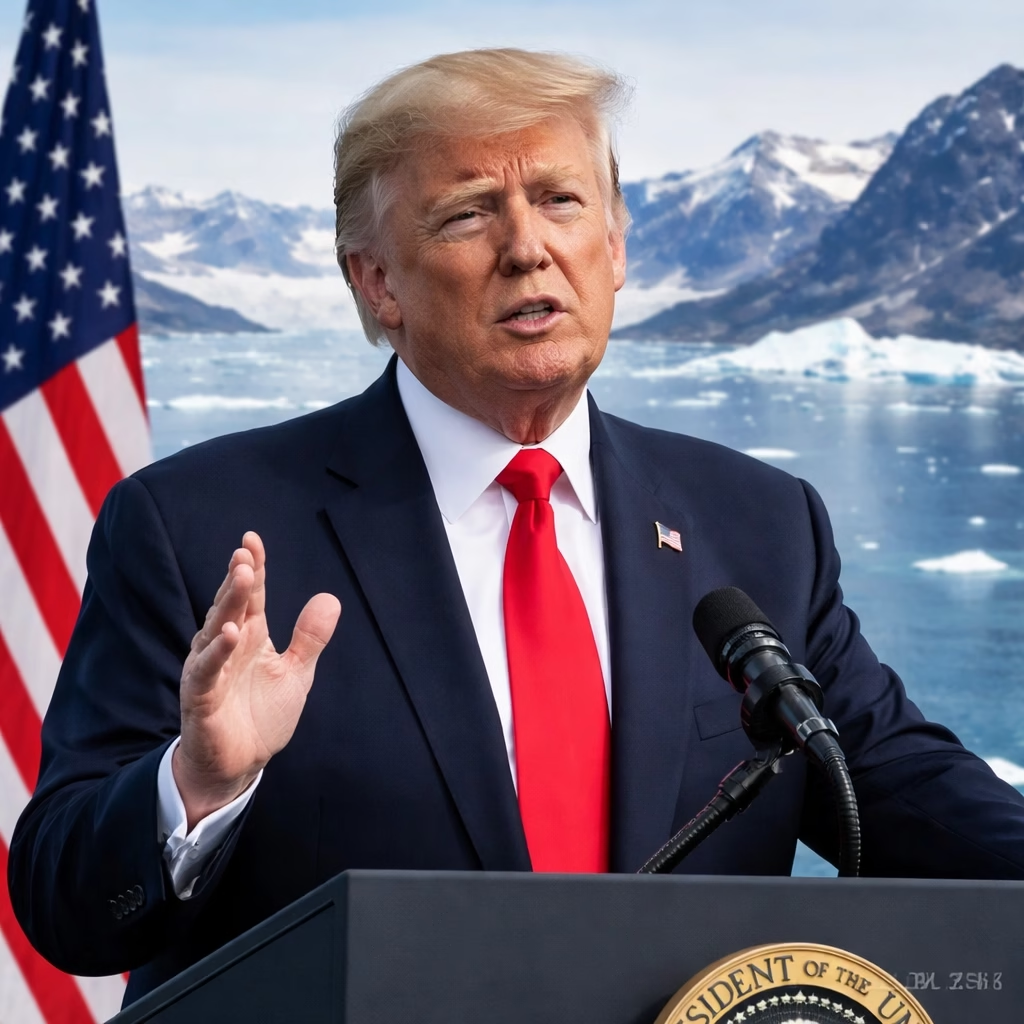
Former President Donald Trump has reignited his controversial interest in purchasing Greenland, framing the strategic acquisition as a critical component of U.S. national security. His recent comments have once again brought the vast, ice-covered island, a self-governing territory within the Kingdom of Denmark, to the forefront of geopolitical discussions, prompting renewed debate over Arctic strategy and international relations.
Background: A History of American Ambition
The United States' strategic interest in Greenland is not new, tracing back over a century. In 1867, Secretary of State William Seward explored the possibility of purchasing Greenland and Iceland. Later, in 1946, President Harry S. Truman offered Denmark $100 million for the island following World War II, a proposal that was rejected.
The 2019 Overture
The issue resurfaced dramatically in August 2019 when then-President Trump publicly expressed a desire to buy Greenland. Reports indicated that his administration had privately discussed the idea for some time, viewing it as a "large real estate deal" with significant strategic benefits. The proposal was met with swift and unequivocal rejection from both Copenhagen and Nuuk. Danish Prime Minister Mette Frederiksen famously dismissed the idea as "an absurd discussion," leading to a diplomatic spat and the cancellation of Trump's planned state visit to Denmark.
Greenland’s Strategic Imperative
Greenland's geopolitical significance stems from its unique location, straddling the Arctic and Atlantic oceans. It serves as a crucial strategic outpost for monitoring maritime traffic and missile defense. The U.S. maintains a vital military presence at Thule Air Base, established in 1951, which hosts a radar station integral to the North American Aerospace Defense Command (NORAD) and the Space Force's early warning system.
Beyond its military value, Greenland is rich in natural resources, including rare earth minerals, zinc, gold, and uranium, which are increasingly vital for modern technology and renewable energy. The melting Arctic ice cap, driven by climate change, is also opening new shipping routes, such as the Northwest Passage, further enhancing Greenland's strategic economic and logistical importance. This evolving landscape has intensified competition among global powers, particularly Russia and China, for influence and access in the Arctic region.
More Read

Key Developments: A Renewed Push
Trump's recent comments, made in a television interview, explicitly linked the acquisition of Greenland to U.S. national security. He reiterated his belief that the island is vital for American defense and expressed frustration over Denmark's refusal to sell.
The Shifting Arctic Landscape
Since 2019, the geopolitical context of the Arctic has grown more complex. Russia has significantly increased its military presence and activity in its Arctic territories, reactivating Cold War-era bases and deploying advanced weaponry. China, while not an Arctic nation, has declared itself a "near-Arctic state" and is actively pursuing its "Polar Silk Road" initiative, investing in research stations, shipping routes, and resource extraction projects across the region. These developments have heightened concerns in Washington and among NATO allies about potential challenges to regional stability and freedom of navigation.
Biden Administration’s Approach
In contrast to Trump's transactional approach, the Biden administration has pursued a strategy focused on diplomatic engagement, climate change cooperation, and support for Greenland's economic diversification. The U.S. reopened its consulate in Nuuk, Greenland's capital, in 2020, and has increased financial assistance and cultural exchange programs. This strategy aims to strengthen ties with Greenland and Denmark, emphasizing partnership rather than acquisition, and aligning with the broader U.S. commitment to multilateralism and alliance building in the Arctic Council.

Impact: Who is Affected?
The revival of the Greenland acquisition discussion has wide-ranging implications for several key stakeholders.
Denmark and Greenland
For Denmark, the renewed suggestion touches upon national sovereignty and diplomatic relations. While Denmark is a staunch U.S. ally, the notion of selling a part of its kingdom is politically untenable and deeply unpopular. For Greenland, a self-governing territory since 2009 with aspirations for greater autonomy, the discussion underscores its evolving role on the international stage. Greenlandic leaders have consistently emphasized their desire for self-determination and economic independence, not a change in ownership. The island's population, predominantly Inuit, values its cultural heritage and unique identity.
The United States
From a U.S. perspective, continued public discussion of an acquisition, particularly without prior diplomatic consultation, risks alienating a key NATO ally and undermining the cooperative spirit essential for managing the complex challenges of the Arctic. While the strategic rationale for Greenland's importance is widely accepted within U.S. defense circles, the method of securing that interest remains a point of contention.
Other Arctic Nations
Other Arctic Council members, including Canada, Norway, Sweden, Finland, and Iceland, closely monitor developments concerning Greenland. Stability and adherence to international law are paramount in the region. Unilateral actions or aggressive posturing could destabilize the delicate balance, potentially escalating tensions and complicating efforts to address shared concerns like climate change and sustainable development. Russia and China, in particular, watch U.S. Arctic policy with keen interest, viewing any expansion of American influence as a potential threat to their own regional ambitions.
What Next: Anticipated Milestones
As the U.S. presidential election approaches, the topic of Greenland could resurface as a campaign talking point, especially if Trump remains a prominent figure in the political landscape.
More Read

Diplomatic Reaffirmations
Following Trump's comments, it is likely that Danish and Greenlandic officials will reiterate their position on sovereignty and the future of the island. The Biden administration, or any future U.S. administration, will likely continue to navigate a path of diplomatic engagement, seeking to reinforce partnerships in the Arctic rather than pursuing a highly contentious acquisition.
Arctic Geopolitics
The broader trend of increasing geopolitical competition in the Arctic is expected to continue. Nations will likely invest further in military capabilities, infrastructure, and resource exploration in the region. Greenland's strategic importance will remain a constant, driving continued international attention and potentially increased foreign investment in its nascent mining and tourism sectors.
Greenland’s Autonomy Journey
Greenland itself will continue its journey towards greater economic independence, exploring opportunities in mining, fishing, and tourism. The debate over its future, whether within the Kingdom of Denmark or as a fully independent nation, will be shaped by global interest in its resources and strategic location, but ultimately decided by its own people. The island's future will likely involve navigating complex relationships with major powers while safeguarding its unique culture and environment.