Shifting Sands: Trump's Iran Policy Strains Middle East Alliances
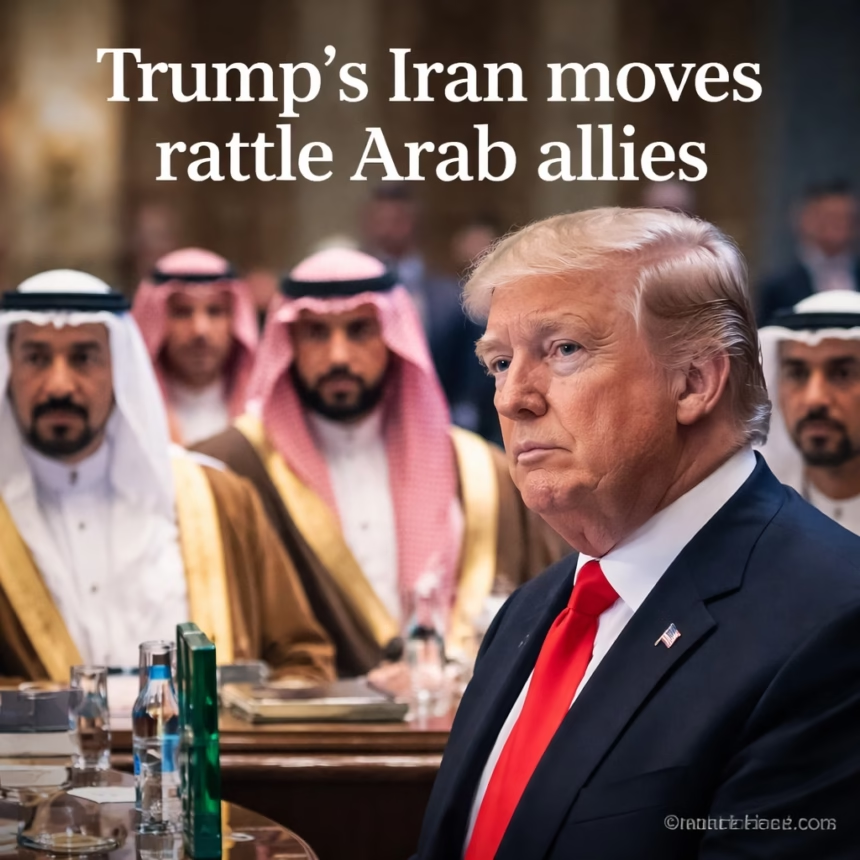
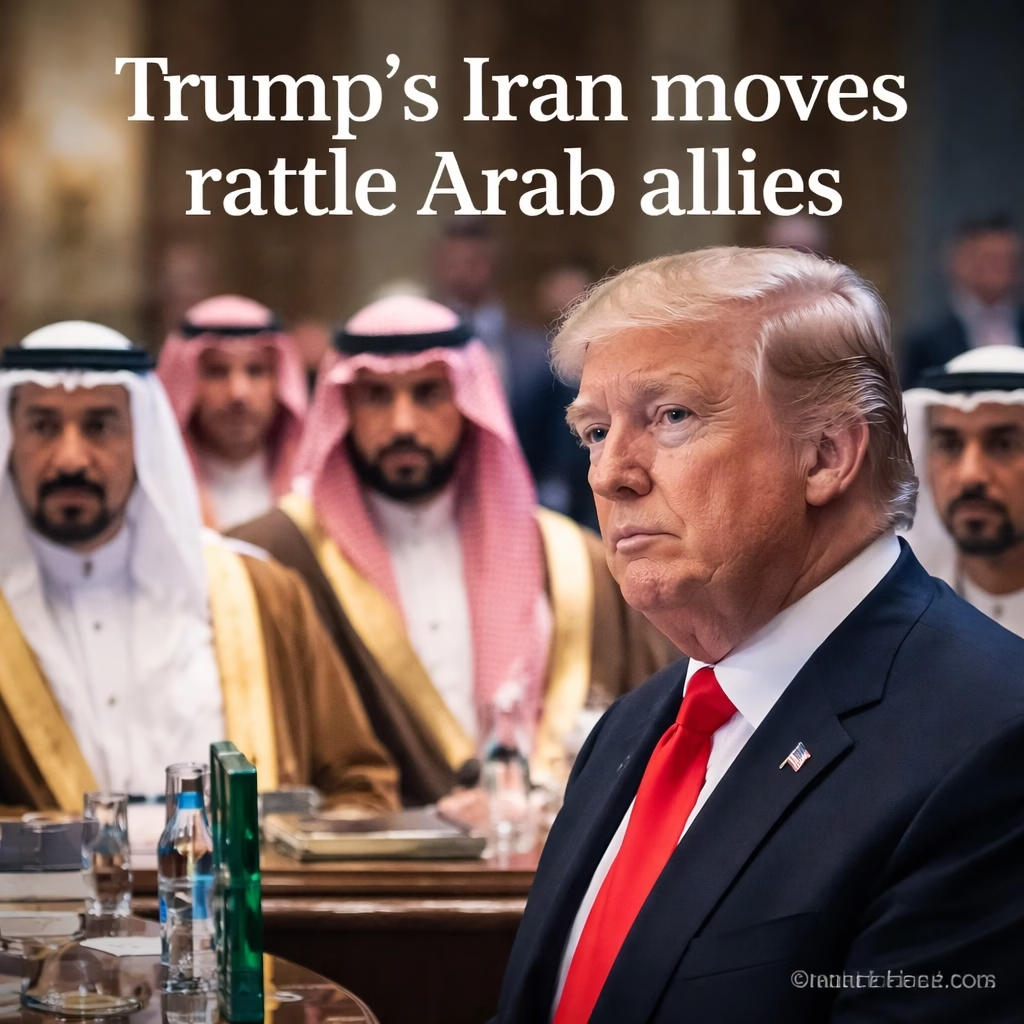
President Donald Trump's recent policy shifts regarding Iran have created ripples of concern and uncertainty throughout the Middle East, testing the strength of longstanding alliances. The moves, primarily involving sanctions and diplomatic engagements, have prompted worried discussions among key regional partners like Saudi Arabia, Israel, and Egypt. The evolving situation began in early 2018 and continues to shape the geopolitical landscape.
Background: A History of Shifting Relations
The relationship between the United States and Iran has been fraught with tension since the 1979 Islamic Revolution. Following the revolution, the U.S. imposed sanctions on Iran, significantly impacting its economy. The Iran nuclear deal (JCPOA), reached in 2015 under the Obama administration, aimed to limit Iran's nuclear program in exchange for sanctions relief. However, President Trump withdrew the U.S. from the JCPOA in May 2018, reinstating sanctions and escalating tensions. This decision was framed by the Trump administration as a necessary measure to curb Iran's ballistic missile program and regional influence.
Prior to the Trump administration’s actions, Saudi Arabia, Israel, and other Gulf states had viewed the JCPOA as a vital tool for preventing Iran from developing nuclear weapons. They also shared concerns about Iran's support for proxy groups in the region, including Hezbollah in Lebanon and Houthi rebels in Yemen.
Key Developments: Sanctions and Diplomatic Maneuvering
Since withdrawing from the JCPOA, the Trump administration has implemented a series of increasingly stringent sanctions targeting Iran's oil exports, financial institutions, and key individuals. These sanctions have severely impacted Iran's economy, leading to inflation, unemployment, and a decline in oil revenues. In recent months, the administration has also engaged in limited diplomatic interactions with Iranian officials, primarily focused on prisoner exchanges and humanitarian aid.

A particularly notable development was the assassination of Iranian General Qassem Soleimani in Baghdad, Iraq, on January 3, 2020. This act significantly heightened tensions and raised the risk of direct military confrontation between the U.S. and Iran. While the Trump administration maintained that the assassination was a preemptive strike to prevent imminent attacks, it was widely condemned by many international actors.
Impact: Regional Allies Feeling the Pressure
Trump's policies have created a complex dilemma for regional allies. While many share concerns about Iran's regional ambitions, they are wary of the economic consequences of the U.S. sanctions. Saudi Arabia, a major oil producer, has seen its oil exports affected by the sanctions, and the instability in the region has impacted investment and economic growth. Israel, which views Iran as a direct security threat, has welcomed some aspects of the Trump administration's approach, but also fears further escalation of conflict.
Egypt, historically a key U.S. partner in the region, has expressed concerns about the destabilizing effects of the escalating tensions. The uncertainty surrounding the U.S. policy has also made it difficult for regional countries to pursue their own economic and security agendas.
More Read

Economic Strain
The sanctions imposed by the U.S. have significantly impacted various sectors of the economies of countries in the region, including oil and gas, banking, and trade. Businesses have faced challenges in conducting international transactions, and investment has slowed down in some areas.
Security Concerns
The heightened tensions between the U.S. and Iran have increased security concerns across the Middle East. There have been reports of increased military activity, heightened border security, and a rise in proxy conflicts in several countries. The potential for miscalculation or accidental escalation remains a significant risk.
What Next: Uncertainty and Potential Shifts
With President Trump's term nearing its end, the future of U.S. policy toward Iran remains uncertain. The Biden administration has signaled a willingness to re-engage with the JCPOA, but also intends to maintain pressure on Iran's nuclear program and regional activities. The administration has emphasized a diplomatic approach, but has not ruled out the use of sanctions.
The upcoming presidential election in Iran in February 2022 will also play a role in shaping the regional dynamics. The outcome of the election could influence Iran's willingness to negotiate with the U.S. and its approach to regional conflicts.
Potential Scenarios
Several scenarios are possible. The Biden administration could attempt to revive the JCPOA, leading to a gradual easing of tensions. Alternatively, the administration could maintain a more cautious approach, continuing to impose sanctions while pursuing diplomatic channels. A third scenario involves a continuation of the current trajectory, with escalating tensions and increased risk of conflict.
The long-term impact of Trump's policies on the Middle East will likely be felt for years to come. The region faces a complex set of challenges, and finding a sustainable solution to the Iran issue will require a concerted effort from all stakeholders.