Trump’s Bold Greenland Plan: A Step Too Far for Americans?
Trump’s Audacious Plan to Own Greenland: Is It What Americans Really Want?
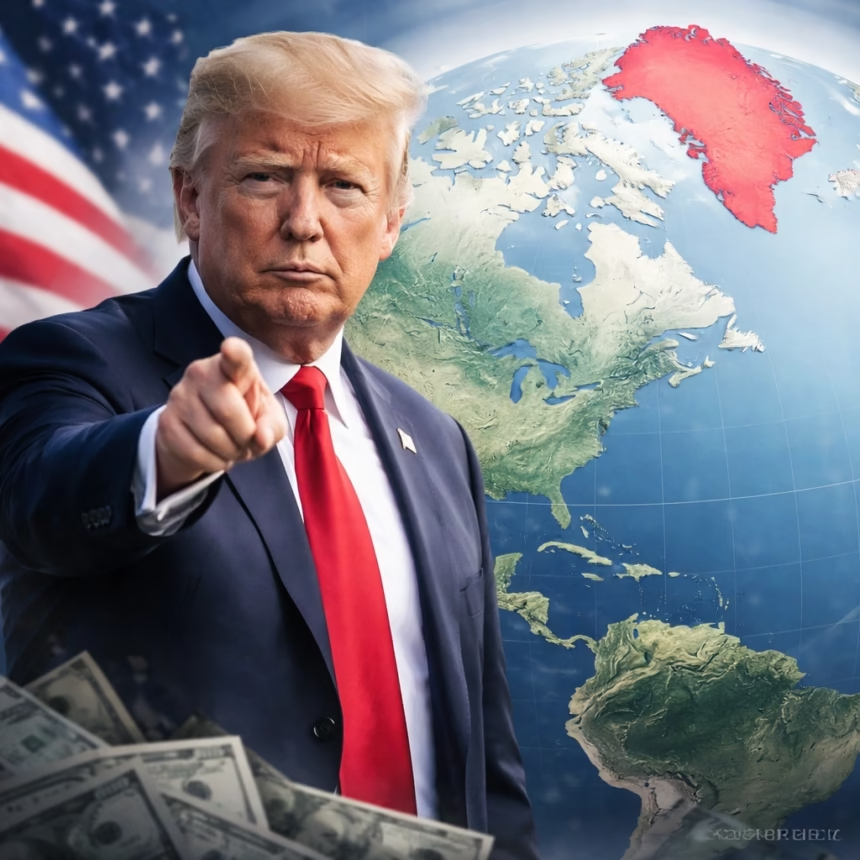
WASHINGTON, D.C. – Former President Donald Trump’s reported interest in acquiring Greenland has resurfaced, sparking debate over whether such a move aligns with American interests. The idea, which gained traction during Trump’s presidency, has been met with skepticism from both political allies and critics.
Background: A History of American Interest in Greenland
Greenland, an autonomous territory within the Kingdom of Denmark, has long been a strategic interest for the United States. During World War II, the U.S. negotiated an agreement with Denmark to establish military bases in Greenland, securing a foothold in the Arctic region. The island’s natural resources, including rare earth minerals and potential oil reserves, have made it an attractive proposition for economic and military expansion.
In 2019, reports emerged that Trump had privately discussed the possibility of purchasing Greenland, drawing comparisons to the 1867 acquisition of Alaska from Russia. Danish officials dismissed the idea, and Trump later downplayed the significance of the discussions. However, the concept has resurfaced in recent political discourse, raising questions about the feasibility and desirability of such an acquisition.
Key Developments: Trump’s Renewed Interest and Political Fallout
In recent months, Trump has revisited the idea of acquiring Greenland, framing it as a way to bolster U.S. influence in the Arctic. His supporters argue that controlling Greenland would enhance national security and economic opportunities, while opponents warn of potential diplomatic and financial pitfalls. The renewed interest has led to debates within the Republican Party, with some lawmakers expressing concern over the logistical and political challenges involved.

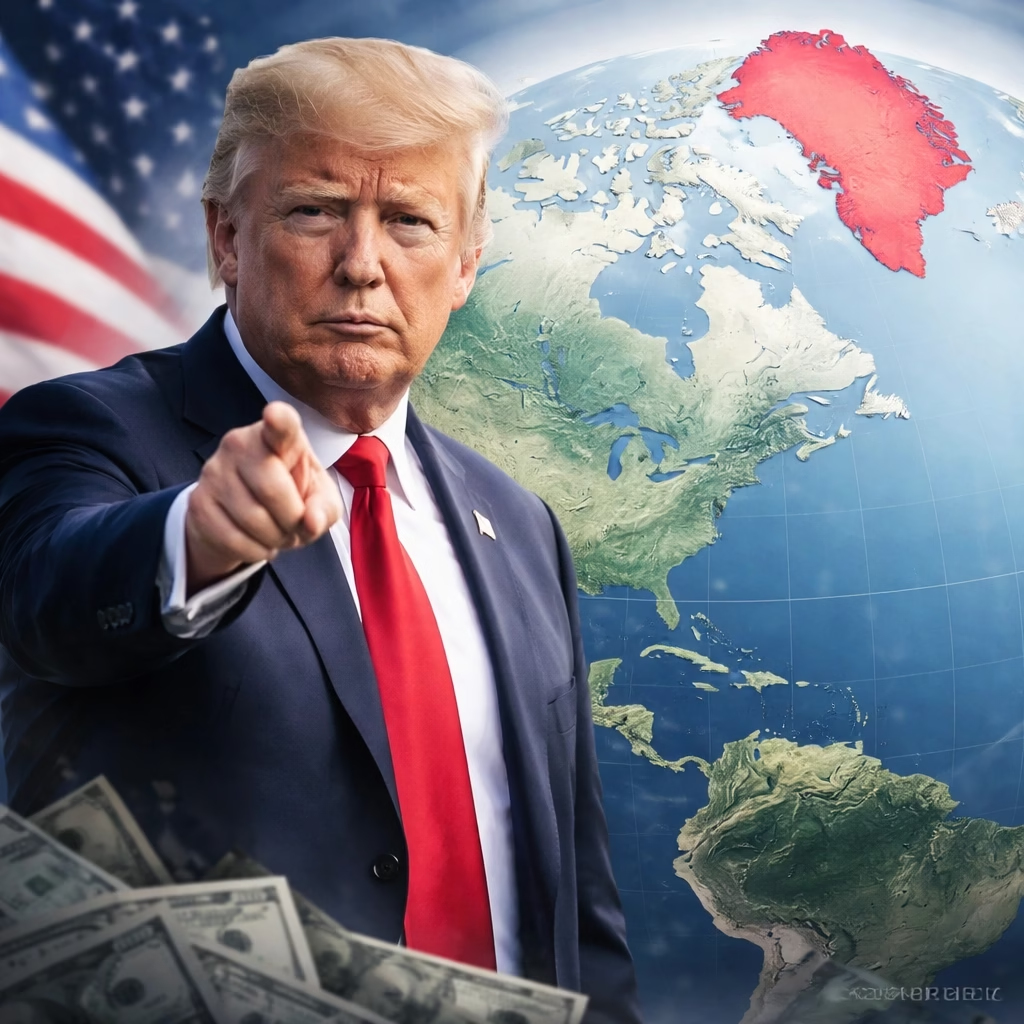
Denmark has consistently rejected the notion of selling Greenland, emphasizing the territory’s autonomy and its historical ties to the Danish Crown. Greenland’s government, which governs most domestic affairs, has also expressed opposition to any potential sale, citing concerns over sovereignty and cultural identity.
Impact: Who Stands to Gain or Lose?
The potential acquisition of Greenland would have far-reaching implications for the U.S., Denmark, and Greenland itself. For the U.S., control of Greenland could strengthen its position in the Arctic, a region increasingly important due to climate change and geopolitical competition. However, the financial and diplomatic costs of such a move could be substantial, with Denmark and other Arctic nations likely to object.
More Read

For Greenland, the prospect of becoming a U.S. territory raises concerns about loss of autonomy and cultural erosion. The island’s indigenous Inuit population, which makes up the majority of Greenland’s residents, has a distinct cultural heritage that could be at risk under American governance. Economic benefits, such as increased investment in infrastructure and resource development, would need to be carefully balanced against potential losses in self-governance.
On the international stage, the acquisition of Greenland would likely strain U.S.-Denmark relations and provoke reactions from other Arctic powers, including Russia and China. The move could be seen as an aggressive assertion of American influence, potentially escalating tensions in a region already fraught with geopolitical rivalries.
What Next: The Path Forward for Trump’s Greenland Ambition
As Trump’s influence within the Republican Party remains strong, the idea of acquiring Greenland is unlikely to disappear from political discourse. However, the significant legal, financial, and diplomatic hurdles make such a move highly improbable in the near future. Denmark’s firm stance, combined with Greenland’s own resistance, suggests that any serious negotiations would face insurmountable opposition.
For now, the debate over Greenland’s future serves as a reminder of the complex interplay between national interests, geopolitical strategy, and the aspirations of indigenous populations. As the Arctic region continues to gain strategic importance, the U.S. will need to carefully consider its approach to the region, balancing military and economic objectives with respect for international norms and local autonomy.