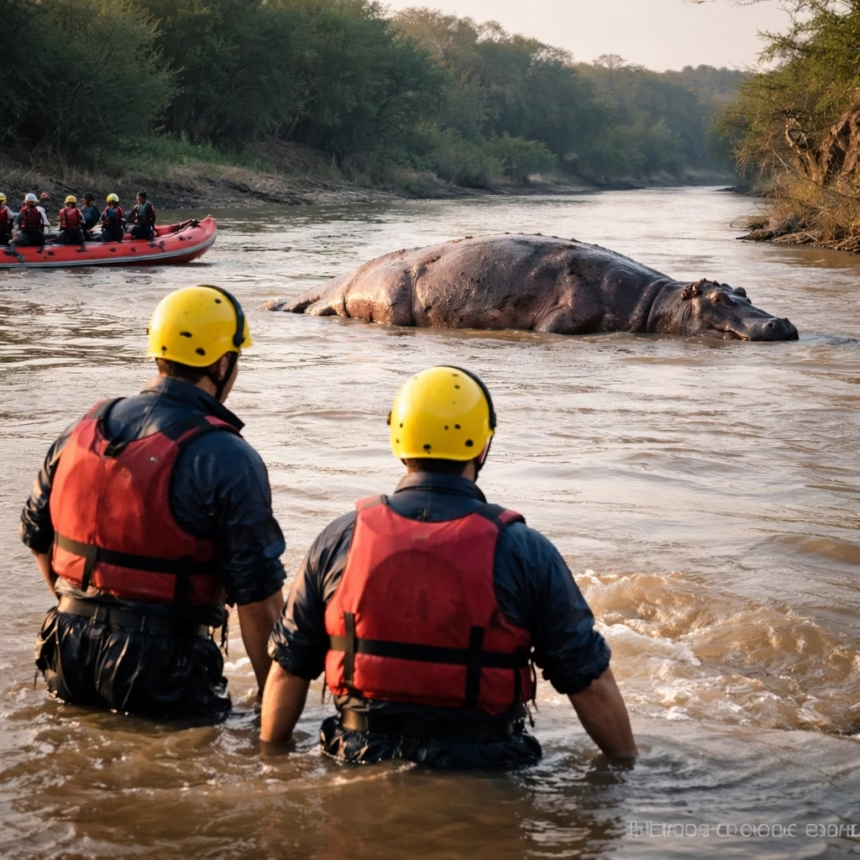
Two men tragically drowned in the Imfolozi River this week while attempting to retrieve a hippo carcass, an incident that has sent shockwaves through the local communities surrounding the Hluhluwe-Imfolozi Park in KwaZulu-Natal. The ill-fated expedition, driven by the scarcity of resources and the allure of free meat, underscores the perilous risks faced by those living on the fringes of wilderness areas. Authorities have launched an investigation into the circumstances of their deaths and renewed warnings about the dangers of the powerful river.
Background: The Perilous Pursuit of River Resources
The Imfolozi River, a lifeline for both wildlife and human communities, is simultaneously a source of great danger. Its waters are home to crocodiles, hippos, and unpredictable currents, especially after heavy rains or during periods of high flow. For generations, communities residing along its banks, such as those in KwaJobe and Mpukunyoni, have relied on the river for various resources, including water, fishing, and occasionally, meat from naturally deceased wildlife.
Hippo carcasses, when they wash ashore or become accessible, represent a significant bounty. A single adult hippo can provide hundreds of kilograms of meat, a crucial source of protein for families struggling with food insecurity. However, retrieving such a large animal from the river is an inherently dangerous undertaking, often involving makeshift rafts or small boats and a disregard for personal safety in the face of desperate need. Despite repeated warnings from Ezemvelo KZN Wildlife and local traditional leaders, these attempts persist.
The specific hippo carcass in question was spotted floating downstream on Monday, October 23, 2023, near the southern boundary of the Hluhluwe-Imfolozi Park. Its death is believed to have been from natural causes, possibly territorial combat or illness, a common occurrence within the dense hippo populations of the reserve. News of the carcass quickly spread through nearby villages, igniting the hope of a substantial food source.
Reports indicate that several community members initially observed the carcass, weighing the risks against the potential reward. By Tuesday morning, a small group had reportedly gathered, with two individuals deciding to venture onto the river to secure the prize. This decision, made under the intense pressure of need, would ultimately lead to a tragic outcome, highlighting the complex socio-economic factors at play in conservation-rich regions.

Key Developments: The Tragic Expedition and Recovery
The two men, identified as Mr. Sipho Dlamini, 38, from KwaJobe village, and Mr. Thabo Mkhize, 45, a resident of Mpukunyoni, embarked on their retrieval mission early on Tuesday, October 24, 2023. According to eyewitnesses on the riverbank, they attempted to reach the floating carcass using a rudimentary raft constructed from logs and plastic drums. The river, swollen from recent rainfall, presented a formidable challenge with its strong, deceptive currents.

Initial reports from villagers indicate that the men struggled almost immediately after launching. The makeshift raft proved unstable against the river's force, and at approximately 08:30 AM, it reportedly capsized, throwing both men into the turbulent water. Despite the desperate shouts and efforts of those watching from the bank, the powerful current quickly swept Mr. Dlamini and Mr. Mkhize downstream, out of sight.
More Read

Emergency services were immediately alerted. A joint search and rescue operation was launched by the South African Police Service (SAPS) Search and Rescue Unit, Ezemvelo KZN Wildlife rangers, and local community volunteers. The search spanned several kilometers of the river, a difficult task complicated by the dense riverine vegetation and the inherent dangers of the environment.
The body of Mr. Sipho Dlamini was recovered late on Wednesday afternoon, approximately 15 kilometers downstream from the incident site, entangled in reeds near the Mkhuze River confluence. The search continued for Mr. Thabo Mkhize, whose body was eventually located on Thursday morning, October 26, 2023, even further downstream, close to the St. Lucia estuary system. Both bodies showed no signs of crocodile attack, suggesting drowning as the primary cause of death.
Impact: A Community in Mourning and Renewed Warnings
The double tragedy has cast a pall of grief and despair over the KwaJobe and Mpukunyoni communities. Both Mr. Dlamini and Mr. Mkhize were described as dedicated family men and primary breadwinners, leaving behind young children and wives who now face an uncertain future. Local community leaders have expressed profound sorrow, emphasizing the devastating impact on families already grappling with economic hardship.
Mr. Dlamini leaves behind a wife and three young children, aged 5, 8, and 12. Mr. Mkhize was a father of four, with his youngest child only two years old. The loss of their income will undoubtedly place immense strain on these households, highlighting the dire consequences of such risky ventures in pursuit of sustenance. Funeral arrangements are currently underway, with villagers rallying to support the bereaved families.
Ezemvelo KZN Wildlife has reiterated its long-standing warnings about the extreme dangers of entering the Imfolozi River, especially without proper equipment or training. Spokesperson Mr. Musa Mntambo stated, "Our hearts go out to the families of the deceased. This tragic incident serves as a stark reminder of the unpredictable and often deadly nature of our rivers. We urge communities to prioritize safety and avoid taking such grave risks, particularly when dealing with large, dangerous wildlife and strong currents."
The incident has also sparked renewed discussions within the communities about sustainable resource management and alternative livelihood opportunities. Many residents feel caught between the dangers of the wilderness and the necessities of survival, leading to calls for greater support from government and non-governmental organizations to address underlying socio-economic challenges that drive such risky behavior.

What Next: Investigations and Community Dialogue
The SAPS has opened an inquest docket to investigate the precise circumstances leading to the drownings. Post-mortem examinations will be conducted to officially confirm the cause of death for both Mr. Dlamini and Mr. Mkhize, although preliminary assessments point towards drowning. The investigation will also aim to ascertain if any other individuals were involved in the ill-fated expedition and to gather a full account of the events.
In response to the tragedy, Ezemvelo KZN Wildlife, in collaboration with local traditional authorities and community representatives, plans to hold urgent meetings to reinforce safety protocols and discuss strategies to prevent similar incidents in the future. These discussions are expected to explore various avenues, including enhanced community awareness campaigns, potential alternative food sources, and sustainable resource management practices that reduce the need for dangerous river excursions.
Local NGOs and welfare organizations are also mobilising to provide immediate support to the bereaved families, including assistance with funeral costs and long-term aid for the orphaned children. The incident serves as a poignant reminder of the delicate balance between human needs and wildlife conservation, and the urgent necessity for collaborative solutions that prioritize both safety and livelihood in these critical interface zones. The community hopes that through dialogue and concerted efforts, future tragedies can be averted.