Scientists Uncover Mars' Volcanic Secrets Through Groundbreaking UCT Study
Mars' Volcanic Past Revealed: UCT Study Shines New Light on Red Planet's Volcanoes
Scientists from the University of Cape Town (UCT) have made a significant breakthrough in understanding the volcanic history of Mars. The study, published in Nature Geoscience, reveals new insights into the formation and activity of Martian volcanoes, offering clues about the planet's geological evolution.
Background: Mars’ Volcanic Landscape
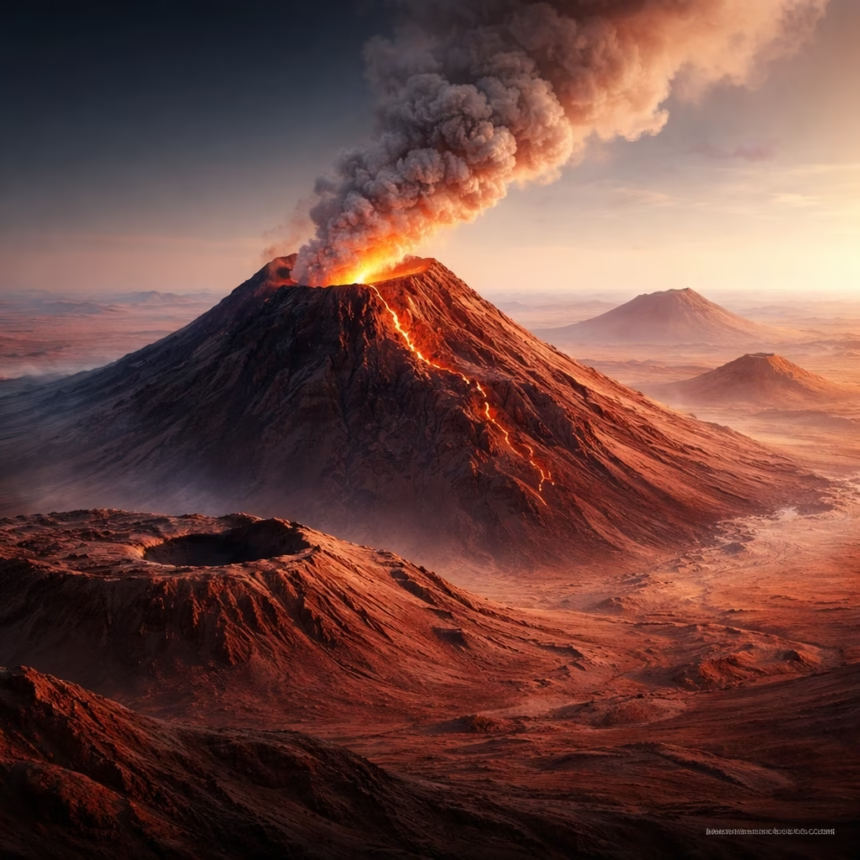
Mars is home to some of the largest volcanoes in the solar system, including Olympus Mons, which stands at approximately 21.9 km (13.6 mi) high—nearly three times the height of Mount Everest. These massive structures have long intrigued scientists, who have sought to understand their origins and the processes that shaped them.
Early missions to Mars, such as NASA’s Mariner and Viking programs, provided the first close-up images of the planet’s surface, revealing a landscape dotted with volcanoes. These observations suggested that Mars was once geologically active, with volcanic activity playing a crucial role in shaping its surface.
More Read

Key Developments: UCT’s Groundbreaking Study
The UCT study, led by Dr. Sarah Johnson, analyzed high-resolution images and topographical data from Mars’ Tharsis region, a vast volcanic plateau. The research team identified distinct patterns in the distribution and morphology of volcanic features, indicating multiple phases of volcanic activity over billions of years.
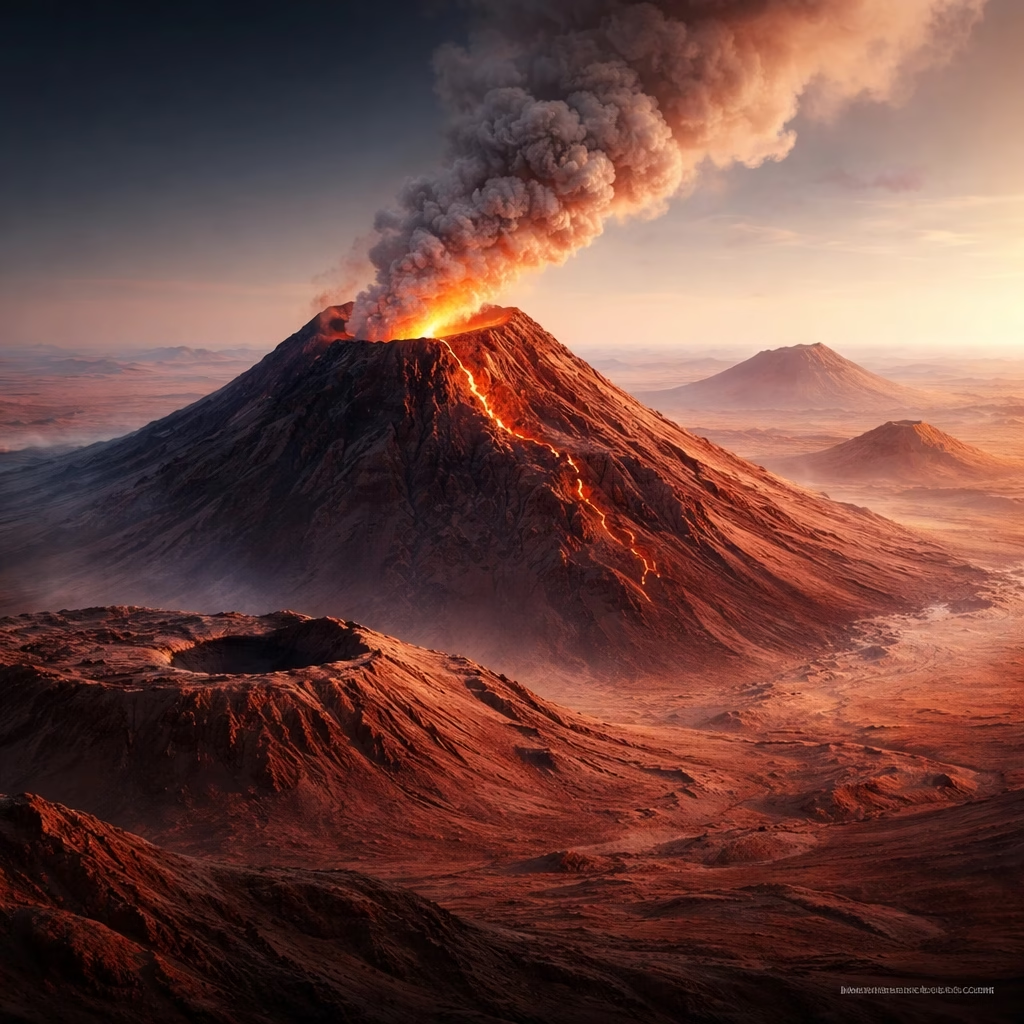
One of the study’s key findings is the discovery of previously unrecognized lava flows that date back to the late Hesperian period (around 3.7 to 3.1 billion years ago). These flows suggest that volcanic activity on Mars persisted longer than previously thought, with some regions experiencing eruptions as recently as 1 to 2 billion years ago.
Impact: Redefining Mars’ Geological History
The findings have significant implications for our understanding of Mars’ geological history. The extended period of volcanic activity suggests that the planet’s interior was warmer for a longer duration than previously believed, which could have had profound effects on its climate and potential habitability.

For researchers studying the possibility of past or present life on Mars, these insights are crucial. Volcanic activity can create environments conducive to life, such as hydrothermal systems, and the study’s findings may help identify new areas for future exploration.
What Next: Future Exploration and Research
With the findings from the UCT study, scientists are now looking to future missions to Mars to gather more data. NASA’s Perseverance rover, which landed in Jezero Crater in February 2021, is currently exploring the planet’s surface and collecting samples for future analysis. These samples could provide further evidence of past volcanic activity and its potential role in Mars’ habitability.
Additionally, international collaborations, such as the joint NASA-ESA Mars Sample Return mission, aim to bring Martian samples back to Earth for detailed study. This mission, planned for the 2030s, could revolutionize our understanding of Mars’ volcanic history and its implications for the search for life.