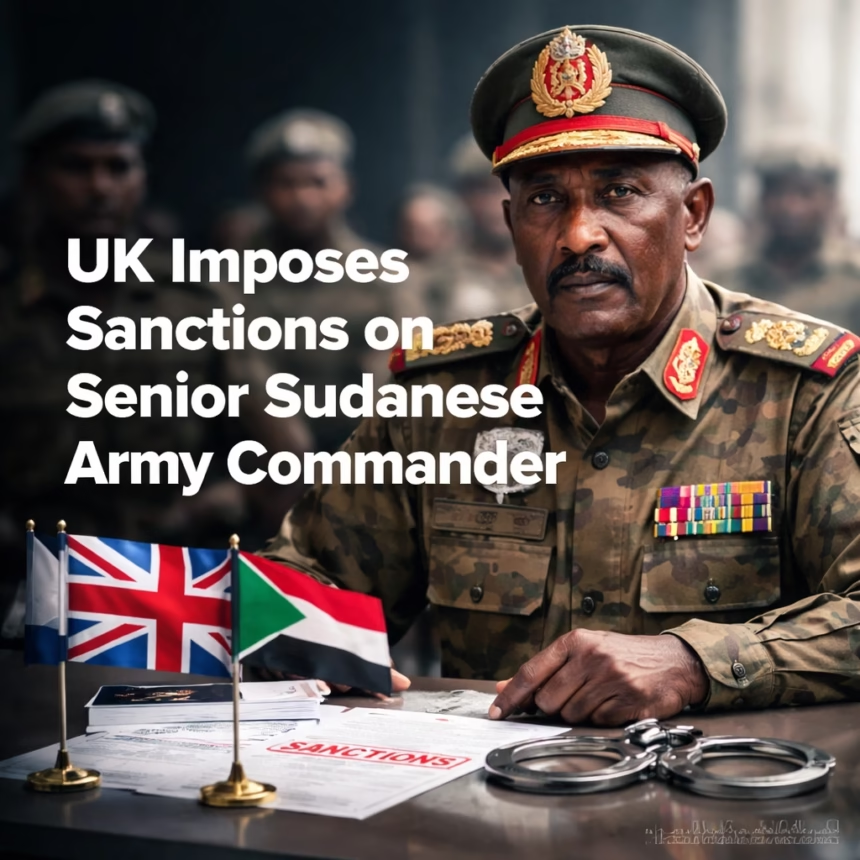
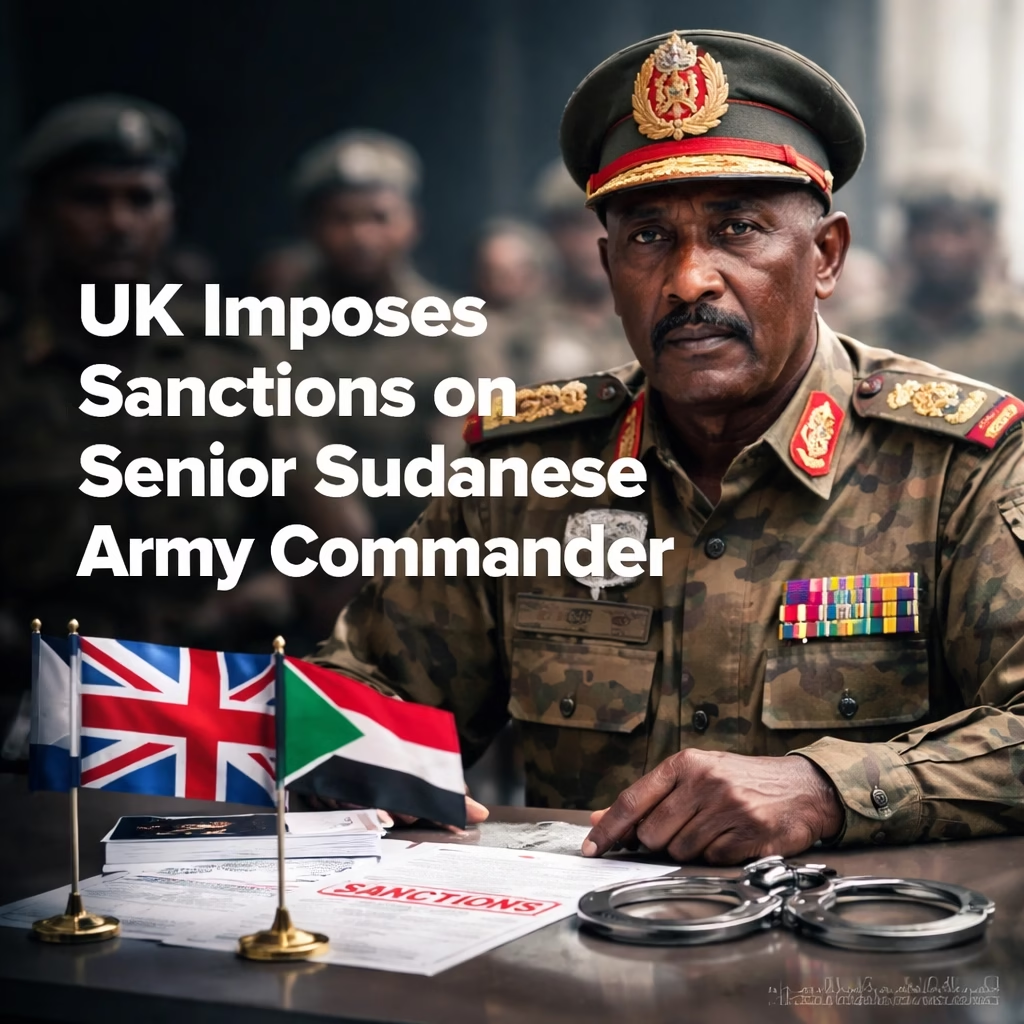
The United Kingdom has imposed a fresh round of sanctions on a senior Sudanese army commander and five other individuals and entities, citing their alleged roles in perpetrating war atrocities and fueling the ongoing conflict in Sudan. The measures, announced this week, aim to hold accountable those responsible for widespread violence and human rights abuses that have devastated the North African nation since April 2023.
Background to the Sudanese Conflict
Sudan plunged into a brutal civil conflict on April 15, 2023, when long-simmering tensions between the Sudanese Armed Forces (SAF) and the paramilitary Rapid Support Forces (RSF) erupted into open warfare. The two factions, formerly allies in the 2021 military coup, are led by General Abdel Fattah al-Burhan, head of the SAF and Sudan's de facto leader, and General Mohamed Hamdan Dagalo, known as Hemedti, who commands the RSF.
The conflict's roots lie in a power struggle following the overthrow of Omar al-Bashir in 2019 and the subsequent failure to transition to a civilian-led government. Both generals had initially agreed to integrate the RSF into the SAF, but disputes over timelines and command structures ultimately led to the current hostilities. The fighting primarily began in the capital, Khartoum, but quickly spread to other vital regions, including Darfur, which has a long history of ethnic conflict.
Escalating Humanitarian Crisis
The war has triggered one of the world's most severe humanitarian crises. Millions of Sudanese citizens have been displaced, with over 10 million forced to flee their homes, making it the largest displacement crisis globally. A significant portion of the population faces acute food insecurity, with famine conditions threatening large areas, particularly in Darfur. Essential services, including healthcare and education, have collapsed in many regions. Reports from the United Nations and various human rights organizations detail widespread human rights violations, including indiscriminate shelling of civilian areas, extrajudicial killings, sexual violence, and the recruitment of child soldiers. Both the SAF and RSF have been accused of committing atrocities, with particular concern raised over ethnically targeted violence in Darfur.
International Responses to the Crisis
Prior to the UK's latest actions, the international community had made various attempts to mediate a ceasefire and provide humanitarian aid. The United States and Saudi Arabia have led peace talks in Jeddah, which have yielded limited success. The African Union and the Intergovernmental Authority on Development (IGAD) have also been involved in diplomatic efforts. Several countries, including the US and the European Union, had already imposed sanctions on individuals and entities linked to the conflict, aiming to pressure the warring parties towards a peaceful resolution and accountability for abuses. These previous sanctions targeted financial networks and commanders deemed responsible for destabilizing the country and obstructing humanitarian access.
More Read

Key Developments in UK Sanctions
The United Kingdom's recent announcement marks a significant escalation in its direct response to the atrocities committed in Sudan. The sanctions target individuals and entities from both sides of the conflict, signaling a commitment to holding all perpetrators accountable, regardless of their affiliation.
The Sanctioned Individuals and Entities
Among those designated is General Malik Agar, the Deputy Chairman of Sudan's Transitional Sovereignty Council, aligned with the SAF. He faces sanctions for his alleged role in obstructing humanitarian aid and for the SAF's part in the conflict's violence. Also sanctioned from the SAF side is Taha Othman Ahmed Al-Hussein, a former Chief of Staff, whose actions are deemed to have contributed to the conflict's escalation and the suffering of the Sudanese people.
From the Rapid Support Forces, the UK has sanctioned General Osama Hamdan, a Major General, and General Abdelrahim Hamdan Dagalo, the Deputy Commander of the RSF and brother to its leader, Hemedti. Both are accused of significant human rights violations, including the targeting of civilians, sexual violence, and the destruction of civilian infrastructure. The inclusion of General Abdelrahim Hamdan Dagalo is particularly notable, given his close familial ties to the RSF's top leadership.
More Read

Beyond individuals, the sanctions also extend to two commercial entities: Al Junaid Multi Activities Co Ltd and Zadna International Co. Al Junaid Multi Activities Co Ltd is a business linked to the RSF, accused of providing financial support and resources that enable the paramilitary group's operations. Zadna International Co, on the other than, is associated with the SAF and similarly accused of generating revenue that fuels the military's war efforts. By targeting these businesses, the UK aims to disrupt the financial lifelines sustaining the conflict.
Nature and Justification of Sanctions
The sanctions impose asset freezes and travel bans on the designated individuals. An asset freeze prohibits any UK citizen or company from dealing with the funds or economic resources owned, held, or controlled by the sanctioned individuals or entities. A travel ban prevents the individuals from entering or transiting through the United Kingdom.
The UK government explicitly stated that these measures are a direct response to credible evidence of war atrocities, including indiscriminate attacks on civilians, widespread sexual violence, and the deliberate obstruction of humanitarian assistance. Foreign Secretary David Cameron emphasized the UK's unwavering commitment to human rights and international law, stating that those who perpetuate such crimes will face consequences. The decision underscores a growing international consensus that impunity for atrocities in Sudan must end, and that concrete actions are required to pressure the warring factions.
Alignment with International Efforts
These latest UK sanctions align with broader international efforts to address the Sudanese crisis. They complement existing measures imposed by the United States and the European Union, contributing to a concerted global approach to exert pressure on the SAF and RSF. This coordinated strategy aims to amplify the impact of sanctions, making it more challenging for sanctioned individuals and entities to evade restrictions by shifting assets or travel routes. The UK's actions also reinforce the message that the international community is closely monitoring the conflict and will use all available tools to promote accountability and protect civilians.
Impact of the Sanctions
The imposition of sanctions by a major global power like the United Kingdom carries significant implications, affecting the targeted individuals and entities, the broader conflict dynamics, and the international community's role.
Impact on Sanctioned Individuals and Entities
For General Malik Agar, Taha Othman Ahmed Al-Hussein, General Osama Hamdan, and General Abdelrahim Hamdan Dagalo, the sanctions mean an immediate freeze on any assets they hold within UK jurisdiction, as well as a ban on their travel to the UK. This directly impacts their personal wealth and mobility, limiting their access to international financial systems and potentially hindering their ability to move funds or seek refuge abroad. Beyond the practical implications, the sanctions carry a significant reputational cost, publicly identifying them as alleged perpetrators of grave human rights abuses. This can isolate them diplomatically and make it harder to engage in international dealings.
The sanctioned businesses, Al Junaid Multi Activities Co Ltd and Zadna International Co, will face severe restrictions on their operations. Their ability to conduct international trade, access foreign banking services, or engage with UK-based partners will be severely curtailed. This aims to disrupt their financial flows, thereby reducing the resources available to the SAF and RSF to continue the war. However, the effectiveness of these measures depends on the extent to which these companies rely on international financial systems and UK connections.
Impact on the Sudanese Conflict
The direct impact of sanctions on the ground in Sudan can be complex. On one hand, they send a strong signal that the international community will not tolerate the ongoing violence and abuses, potentially pressuring the warring factions to reconsider their tactics or engage more seriously in peace negotiations. By targeting the financial networks, the UK hopes to degrade the capacity of both the SAF and RSF to sustain their military operations.
On the other hand, sanctions can sometimes lead to unintended consequences. They might harden the resolve of the targeted factions, making them less willing to compromise. There is also a risk that the economic pressure could further destabilize the country, potentially exacerbating the humanitarian crisis if essential goods or aid delivery mechanisms are inadvertently affected. The UK and its allies will need to carefully monitor these dynamics to ensure the sanctions achieve their intended effect without causing further harm to the Sudanese population.
Impact on International Relations and Humanitarian Efforts
The UK's actions bolster its reputation as a proponent of human rights and international law. By acting decisively, London reinforces the global norm against impunity for war crimes and crimes against humanity. It also sends a message to other actors involved in conflicts worldwide that such violations will not go unaddressed.
Regarding humanitarian efforts, the sanctions are intended to improve access for aid organizations by pressuring those who obstruct it. However, the complex nature of the conflict and the widespread insecurity continue to pose immense challenges to aid delivery. While sanctions might create diplomatic leverage, the practicalities of reaching millions in need remain formidable. International organizations continue to call for unhindered access and guarantees of safety for humanitarian workers.
What Next for Sudan?
The imposition of sanctions by the UK is one piece of a broader, ongoing international effort to address the multifaceted crisis in Sudan. Several avenues are being pursued to bring an end to the conflict and provide relief to the suffering population.
Further International Sanctions and Pressure
It is highly probable that the UK, along with its allies such as the US and the EU, will consider additional sanctions if the conflict persists and atrocities continue. These could target more individuals, military-affiliated businesses, or even sectors of the Sudanese economy deemed to be funding the war. The goal is to incrementally increase pressure, making the cost of continuing the conflict outweigh any perceived benefits for the warring parties. Diplomatic pressure through international bodies like the UN Security Council will also likely intensify, aiming for stronger resolutions and coordinated action.
Renewed Peace Efforts and Negotiations
Despite numerous failures, peace talks remain a critical pathway to resolving the conflict. Mediation efforts, particularly those spearheaded by Saudi Arabia and the United States in Jeddah, are expected to continue. Regional bodies like IGAD and the African Union are also working to bring the SAF and RSF to the negotiating table, aiming for a permanent ceasefire, humanitarian access agreements, and a political process that leads to a civilian-led transitional government. The challenge lies in overcoming the deep mistrust and divergent interests between General al-Burhan and Hemedti.
Accountability and Justice
Calls for accountability for war crimes and human rights abuses are growing louder. The International Criminal Court (ICC) has an existing mandate to investigate crimes in Darfur, and there is increasing pressure for it to expand its investigations into the current conflict. National courts in countries with universal jurisdiction may also pursue cases against individuals implicated in atrocities. The UK's sanctions contribute to this broader push for justice, signaling that perpetrators will face consequences beyond Sudan's borders. Documenting evidence of abuses by human rights organizations will be crucial for future prosecutions.
Humanitarian Response and Recovery
The immediate priority remains scaling up the humanitarian response to address the dire needs of the Sudanese population. This includes securing safe and unhindered access for aid workers, providing food, water, shelter, and medical supplies to millions of displaced people, and preventing the spread of disease. Long-term recovery efforts, including rebuilding infrastructure, restoring essential services, and facilitating the return of refugees and internally displaced persons, will be a monumental task that can only begin once a lasting peace is achieved. The international community will continue to provide funding and support for these vital efforts, though access remains the primary challenge.
The UK's latest sanctions underscore a firm commitment to leverage international pressure against those prolonging the conflict and committing atrocities in Sudan. While the path to peace and stability remains fraught with challenges, these measures aim to contribute to a future where accountability prevails and the suffering of the Sudanese people can finally come to an end.