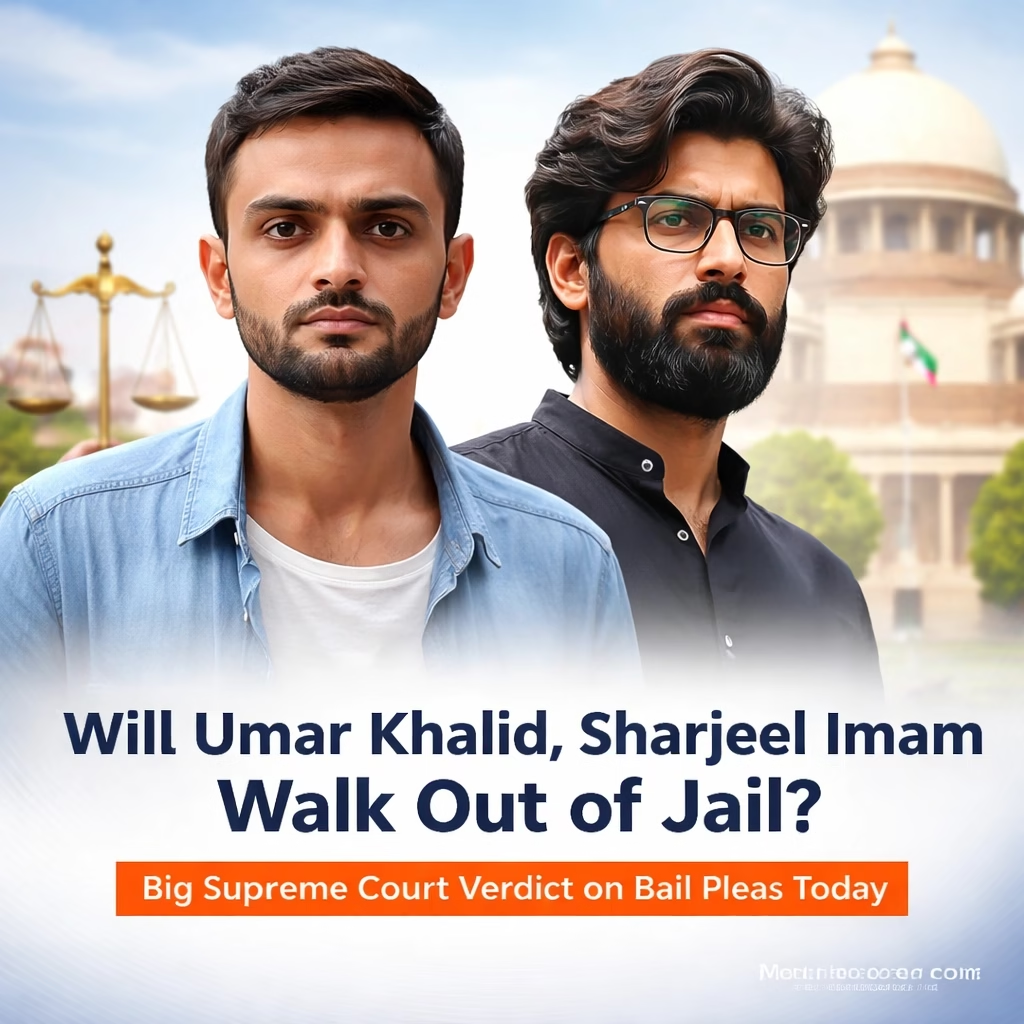
The Supreme Court of India is set to deliver a crucial verdict today on the bail applications of Umar Khalid and Sharjeel Imam, two prominent figures facing charges under the stringent Unlawful Activities (Prevention) Act (UAPA). The case, which has drawn significant attention, centers around allegations of their involvement in inflammatory speeches that allegedly stoked communal tensions during the 2020 Northeast Delhi riots.
Background
Umar Khalid, a former student activist and scholar, and Sharjeel Imam, an academic, were arrested in September 2020 following the communal violence in Delhi. The charges against them include sedition, conspiracy, and terrorism-related offenses under the UAPA, which makes bail difficult to obtain. The Delhi Police alleged that their speeches incited violence and were instrumental in planning the riots, which left at least 53 people dead and hundreds injured.
The legal battle has been ongoing for nearly four years, with lower courts consistently denying bail on the grounds of the severity of the charges and the potential for the accused to influence witnesses. The Delhi High Court, in separate judgments, upheld the denial of bail, leading the accused to approach the Supreme Court as their last resort.
Key Developments
In recent months, the Supreme Court has shown a willingness to revisit the stringent bail conditions under the UAPA, particularly in cases where prolonged incarceration could be deemed excessive. The court has also emphasized the need for a balance between national security and individual liberties, which has raised hopes for the accused.
During the hearings, the defense argued that the accusations were politically motivated and that the prosecution had failed to present concrete evidence linking the accused to the riots. The defense also highlighted the prolonged detention, which they claimed was a violation of the right to a speedy trial. On the other hand, the prosecution maintained that the accused posed a threat to public order and national security, warranting their continued detention.

Impact
The outcome of this case is expected to have far-reaching implications, not just for the accused but for the broader discourse on free speech and dissent in India. The UAPA has been widely criticized for its wide-ranging provisions, which allow for prolonged detention without trial. A favorable verdict could set a precedent for similar cases where activists, journalists, and dissidents have been detained under anti-terror laws.
The case has also sparked debates about the role of social media and public discourse in an increasingly polarized political climate. The speeches in question, delivered during the anti-CAA protests, have been both defended as expressions of dissent and condemned as incitements to violence. The court's decision is likely to influence future interpretations of what constitutes permissible speech in the context of national security.
More Read

What Next
If the Supreme Court grants bail, Umar Khalid and Sharjeel Imam are expected to be released from Tihar Jail, where they have been detained since their arrests. However, the court may impose certain conditions, such as restrictions on their movements or speeches, to address concerns about public order.
Regardless of the outcome, legal experts predict that the case will be closely monitored by civil rights groups and opposition parties, who have frequently criticized the government's use of the UAPA to suppress dissent. The verdict could also prompt further deliberations on the need for judicial reforms to ensure that anti-terror laws are not misused to stifle legitimate political expression.
The Supreme Court's decision is awaited with anticipation, as it could redefine the boundaries of free speech and national security in India's legal landscape.