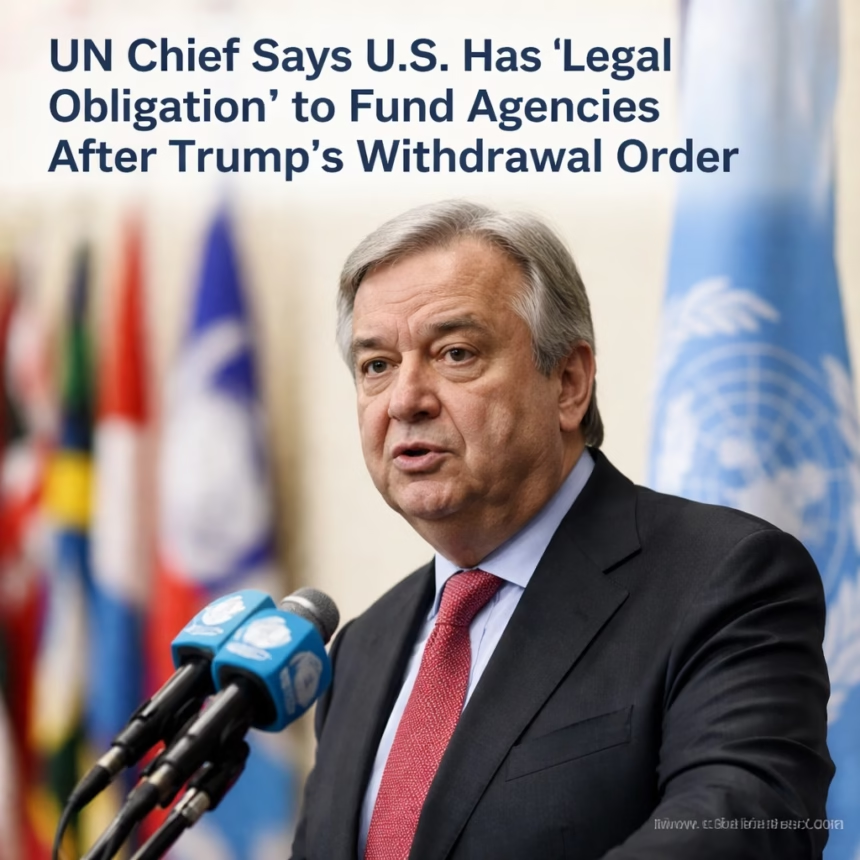
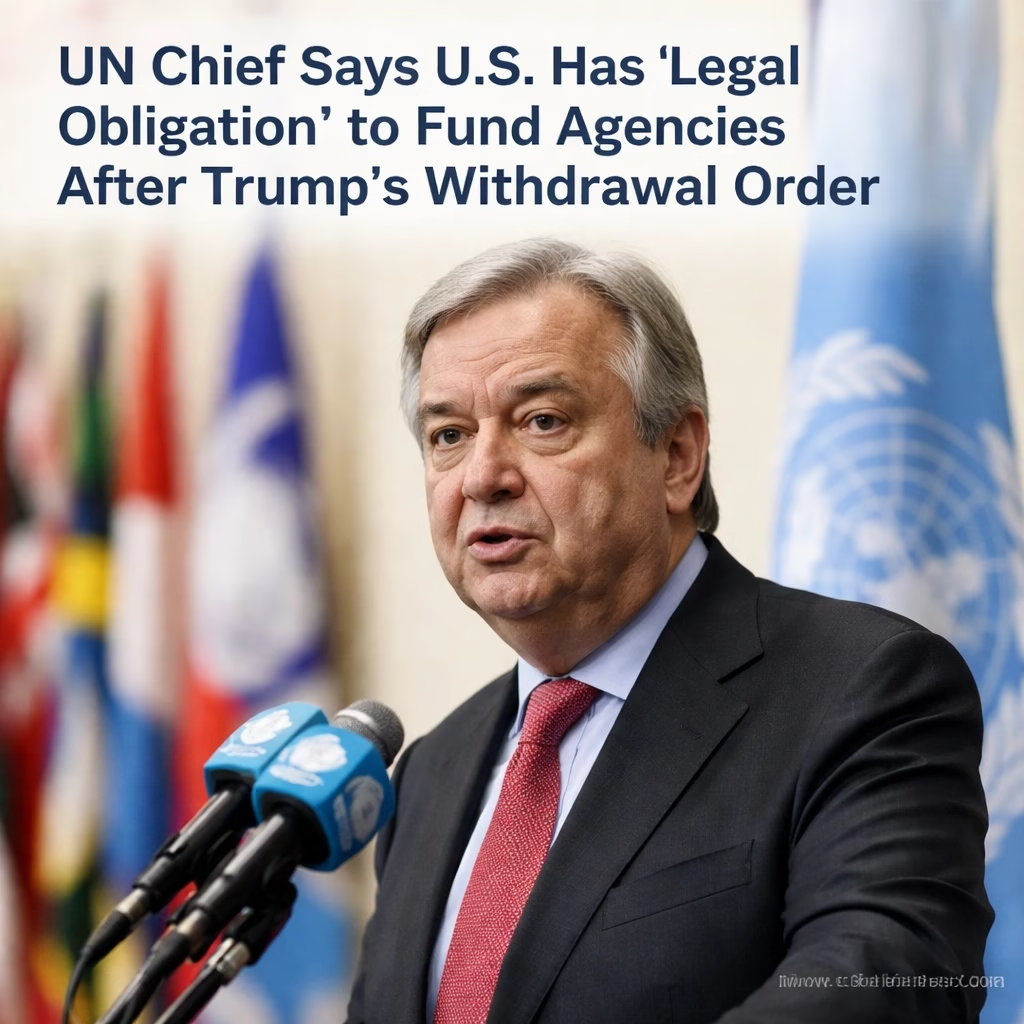
United Nations Secretary-General António Guterres recently issued a pointed reminder, asserting that the United States carries a "legal obligation" to fund various UN agencies, despite past withdrawal orders by the Trump administration. This statement, made from the UN Headquarters in New York, reignites a long-standing debate over financial commitments and the responsibilities of member states within the international body.
Background: A Tumultuous Decade of US-UN Relations
The relationship between the United States and the United Nations has historically been complex, marked by periods of strong support and significant friction. The Trump administration, guided by an "America First" foreign policy, initiated a series of withdrawals and funding cuts from several key UN bodies, citing concerns over alleged anti-Israel bias, financial mismanagement, and a perceived lack of reform.
Trump Administration’s “America First” Stance
Key withdrawals and funding decisions under President Donald Trump included: * UNESCO: In October 2017, the U.S. announced its withdrawal from the United Nations Educational, Scientific and Cultural Organization, effective December 31, 2018. The decision cited UNESCO's "continuing anti-Israel bias" and the need for fundamental reform. This move compounded a previous U.S. funding freeze to UNESCO in 2011.
* UN Human Rights Council: In June 2018, the U.S. withdrew from the Human Rights Council, labeling it a "hypocritical and self-serving" body that "mocks human rights" due to its perceived bias against Israel and its inclusion of human rights abusers as members.
* UNRWA: In August 2018, the U.S. completely cut its funding to the United Nations Relief and Works Agency for Palestine Refugees in the Near East (UNRWA), which provides essential services to millions of Palestinian refugees. This decision ended decades of U.S. support for the agency.
* WHO: In July 2020, amidst the initial stages of the COVID-19 pandemic, the U.S. formally notified the UN of its withdrawal from the World Health Organization (WHO), effective July 2021. The administration accused WHO of mishandling the pandemic response and being overly deferential to China.
These actions left significant financial gaps and raised questions about the U.S.'s commitment to multilateralism and its international obligations.
Biden’s Return to Multilateralism
Upon taking office in January 2021, President Joe Biden immediately signaled a shift back towards international cooperation. His administration moved swiftly to rejoin and re-engage with many of the international bodies that the Trump administration had abandoned.
* WHO: On his first day in office, President Biden reversed the withdrawal from the WHO, with the U.S. officially rejoining the organization.
* UN Human Rights Council: The U.S. re-engaged as an observer and was later elected back to a full membership.
* UNRWA: The Biden administration partially restored funding to UNRWA in 2021, though this funding has recently faced new suspensions due to allegations against some UNRWA staff members.
* UNESCO: In July 2023, the U.S. officially rejoined UNESCO, a move championed by Secretary of State Antony Blinken, who emphasized the importance of American leadership in addressing global challenges like the rise of artificial intelligence and Holocaust denial. This rejoining came with a commitment to address outstanding financial obligations.

Key Developments: The “Legal Obligation” Argument
Secretary-General Guterres's recent statement specifically underscores the UN's position that withdrawal from an agency does not automatically absolve a member state of its financial responsibilities, particularly concerning assessed contributions or previously accrued arrears.
The UN’s Stance on Arrears
For agencies like UNESCO, where the U.S. had previously frozen funding in 2011 and then fully withdrew, the issue of arrears is substantial. The UN maintains that financial obligations, particularly assessed contributions, continue to accrue even during periods of non-participation or withdrawal, unless specific agreements for their termination are made and accepted by the organization. Upon rejoining, the expectation is that these outstanding dues will be settled.
The U.S. rejoining UNESCO, for instance, was contingent on a plan to pay off its estimated $619 million in arrears, accumulated since 2011. This commitment highlights the practical application of the UN's "legal obligation" principle. The U.S. has begun making payments towards these arrears, with an initial $150 million payment made in late 2023.
More Read

WHO and Other Agencies
While the U.S. quickly rejoined WHO, the question remains whether any financial obligations accrued during the period of its intended withdrawal (July 2020 to January 2021) are considered outstanding. Guterres's broader statement suggests that the UN views such periods as not entirely exempting a member state from its financial duties.
The UN's budget is largely supported by assessed contributions from member states, which are legally binding under the UN Charter and other international agreements. Failure to pay can lead to loss of voting rights in the General Assembly, though this is rare for major contributors.
US Congressional Hurdles
The U.S. Congress plays a critical role in appropriating funds for international organizations. Historically, both Democratic and Republican administrations have faced challenges in securing full funding due to domestic political considerations, budget constraints, or disagreements with UN policies. Any commitment by the executive branch to pay arrears or increase contributions must ultimately be approved by Congress. This often involves intense lobbying and negotiation.
Impact: Who Is Affected by Funding Shortfalls?
The financial stability of UN agencies directly impacts their ability to deliver critical programs and services worldwide. When a major contributor like the U.S. withholds or delays payments, the ripple effects are profound.
Humanitarian Aid at Risk
Agencies like UNRWA, though primarily funded by voluntary contributions, demonstrate the immediate and devastating impact of funding cuts. The recent suspension of funding by multiple countries, including the U.S., following allegations against some staff members, has pushed UNRWA to the brink of collapse. This jeopardizes food, shelter, education, and healthcare for millions of Palestinian refugees, particularly in conflict zones like Gaza.
Global Health Initiatives Jeopardized
The WHO relies on consistent funding to lead global health initiatives, respond to pandemics, eradicate diseases, and strengthen health systems. During the U.S. withdrawal, the organization faced a significant funding gap at a crucial time, potentially hindering its ability to coordinate a unified global response to COVID-19 and other health crises.
Cultural Heritage and Education Undermined
UNESCO's work in protecting cultural heritage sites, promoting education, and fostering scientific cooperation is vital. The decade-long U.S. funding freeze and subsequent withdrawal severely impacted UNESCO's budget, forcing it to scale back programs and seek alternative funding sources. The U.S. absence also diminished its influence on critical policy decisions within the organization.
Undermining Multilateralism and US Standing
Beyond the direct programmatic impact, funding disputes erode trust in multilateral institutions and can diminish the perceived reliability of the U.S. as a global partner. It also places a greater burden on other member states to fill the financial void, potentially straining international relations.
What Next: Diplomatic Pathways and Future Relations
The UN Secretary-General's statement serves as a clear signal that the issue of outstanding contributions remains a priority for the organization. Resolving these financial disagreements will require ongoing diplomatic efforts and cooperation between the U.S. and the UN.
Diplomatic Pathways and Negotiations
Discussions between U.S. State Department officials and UN representatives will continue, focusing on payment schedules for arrears and ensuring consistent future contributions. The U.S. commitment to pay UNESCO arrears sets a precedent for how similar situations might be handled.
Congressional Role and Appropriations
The ultimate resolution rests with the U.S. Congress. Future appropriations bills will need to include funds for UN agencies, including any agreed-upon arrears payments. This process can be influenced by domestic political priorities, economic conditions, and the ongoing debate within the U.S. about the value and effectiveness of the UN.
Future of US-UN Financial Relations
The "legal obligation" argument is likely to remain a central tenet of the UN's financial policy. For the U.S., navigating its role as the largest single contributor to the UN while balancing national interests and budgetary constraints will continue to be a delicate act. The expectation is that the Biden administration will continue its efforts to restore U.S. leadership and financial reliability within the UN system, but the path forward for full resolution of all past financial disputes remains complex and subject to political realities.