Silent Threat: Aussie Scientists Race to Outsmart Deadly Virus
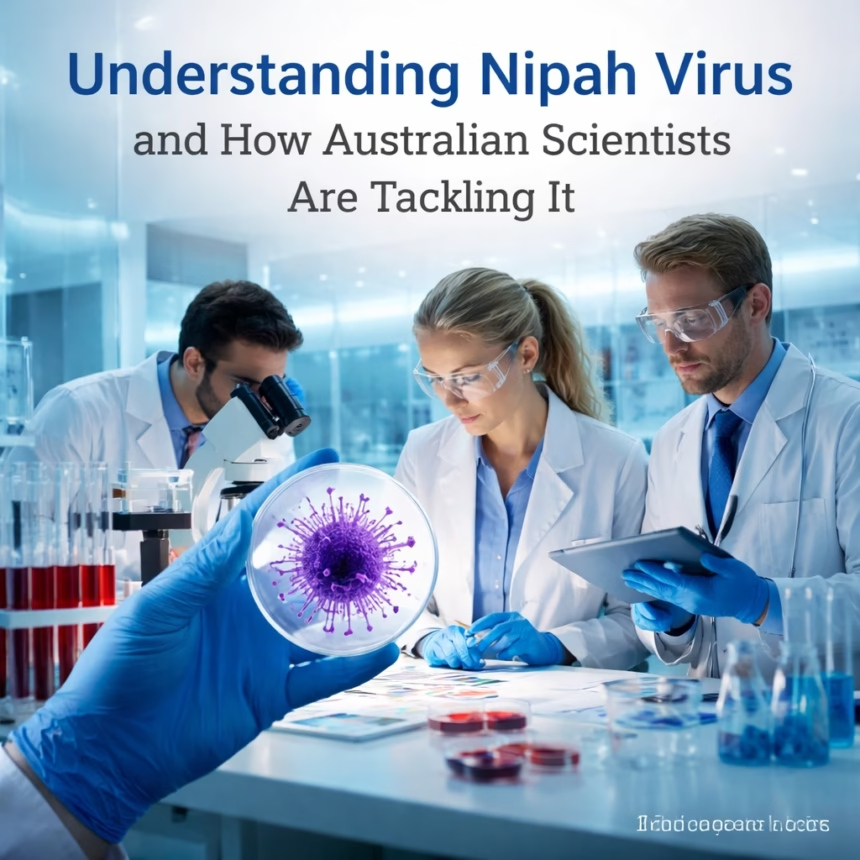
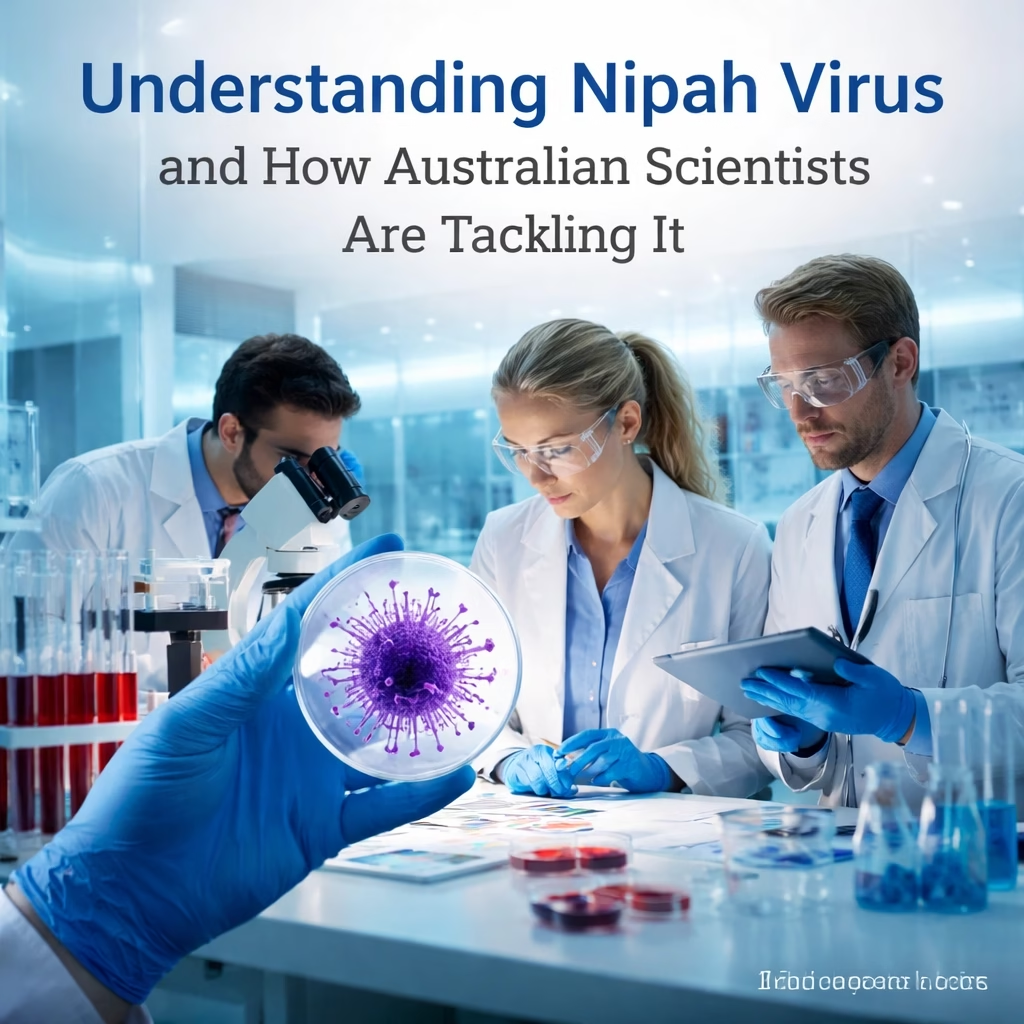
A deadly virus, Nipah, poses a significant public health concern, particularly in Southeast Asia. Australian scientists are at the forefront of research and development aimed at understanding, preventing, and treating this rapidly evolving threat, with efforts intensifying in 2024.
Background: A History of Outbreaks
Nipah virus (NiV) was first identified in 1999 during a severe outbreak in Malaysia and Singapore, linked to fruit bat populations. The virus is zoonotic, meaning it can be transmitted from animals to humans. Primary transmission routes involve consuming contaminated fruit (like dates and mangoes) or through contact with infected animal bodily fluids, particularly from fruit bats, pigs, and humans.
Subsequent outbreaks have occurred sporadically in Malaysia, Indonesia, Bangladesh, India, and the Philippines. These outbreaks have resulted in varying numbers of cases and fatalities, with mortality rates often exceeding 50%. The virus causes a range of symptoms, from mild flu-like illness to severe neurological complications like encephalitis and respiratory distress.
Key Developments: Innovation in Detection and Treatment
Australian researchers have made significant strides in several key areas. The University of Queensland's Institute for Molecular Medicine has been actively researching NiV for over a decade, focusing on developing rapid diagnostic tests and potential antiviral therapies.

A recent breakthrough involves the development of a novel, highly sensitive PCR-based diagnostic test capable of detecting NiV RNA with greater speed and accuracy than existing methods. This test, developed in collaboration with researchers in Southeast Asia, offers a crucial advantage in early diagnosis, leading to faster treatment and potentially reducing the severity of illness.
Furthermore, Australian scientists are exploring new antiviral drug candidates, including modified nucleoside analogs, designed to target the virus's replication process. Pre-clinical trials are underway, focusing on efficacy and safety profiles. Research is also investigating the potential of monoclonal antibody therapies for preventing severe disease.
Vaccine Development
While a widely available NiV vaccine remains elusive, Australian researchers are contributing to vaccine development efforts. The focus is on developing a safe and effective vaccine targeting multiple nipah virus strains. Clinical trials are planned to begin in 2025, with the goal of having a vaccine available for high-risk populations by 2028.
More Read

Impact: Vulnerable Populations and Global Health Security
The impact of Nipah virus outbreaks is felt most acutely in rural communities in Southeast Asia, where agricultural practices, close proximity to fruit bat habitats, and limited access to healthcare contribute to increased risk.
Agricultural workers, particularly those involved in date palm cultivation, are at higher risk due to potential exposure to infected fruit bats. Pigs, which can act as intermediate hosts, also play a role in the transmission cycle. Outbreaks often strain local healthcare systems, which may lack the resources to effectively manage the surge in patients requiring intensive care.
Beyond Southeast Asia, the emergence of NiV poses a global health security concern. Increased international travel and trade could facilitate the virus's spread to new regions. Therefore, robust surveillance systems and coordinated international responses are crucial to prevent future outbreaks.
What Next: Towards Prevention and Control
The immediate priorities for Australian researchers include expanding the availability of rapid diagnostic tests in high-risk areas, accelerating antiviral drug development, and refining vaccine candidates.
Longer-term, efforts are focused on strengthening surveillance systems in Southeast Asia to detect NiV early, improving public health education to reduce human-animal contact, and developing sustainable agricultural practices that minimize the risk of spillover events. Collaboration with governments, international organizations like the World Health Organization (WHO), and local communities will be critical to achieving these goals.
More Read
The Australian government has committed substantial funding to NiV research and response efforts, recognizing the urgent need to address this emerging threat. Ongoing research is expected to yield further insights into the virus's biology, transmission dynamics, and potential vulnerabilities. The focus remains on building a comprehensive, multi-pronged approach to prevent future Nipah virus outbreaks and protect vulnerable populations worldwide.