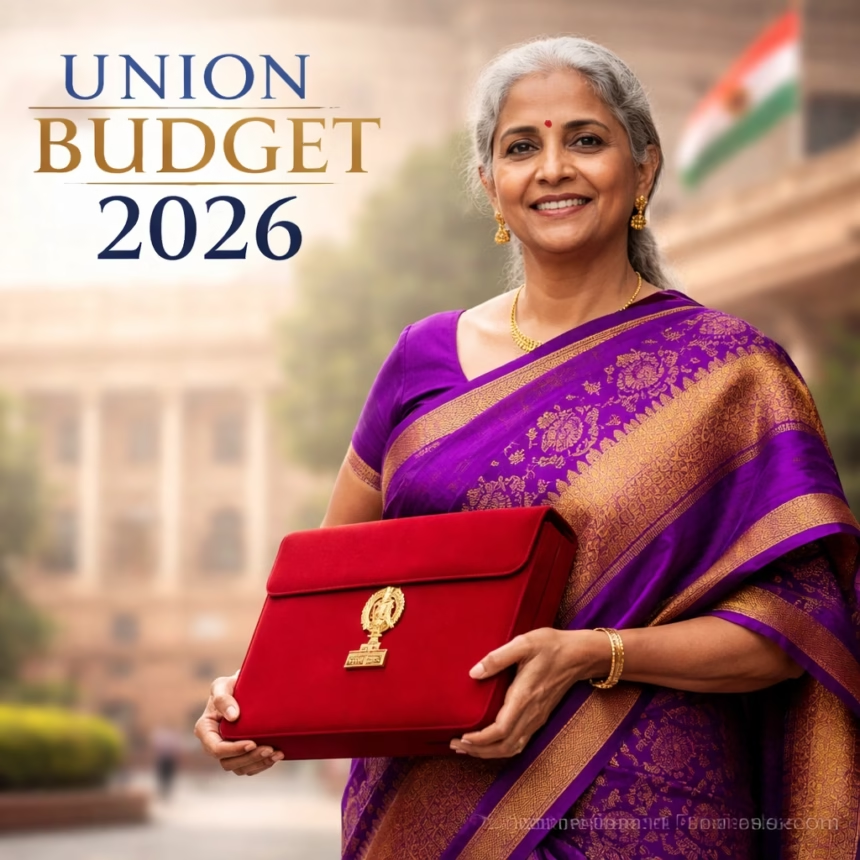
Budget 2026: Sitharaman's Kanjeevaram Choice Sparks National Dialogue on Heritage
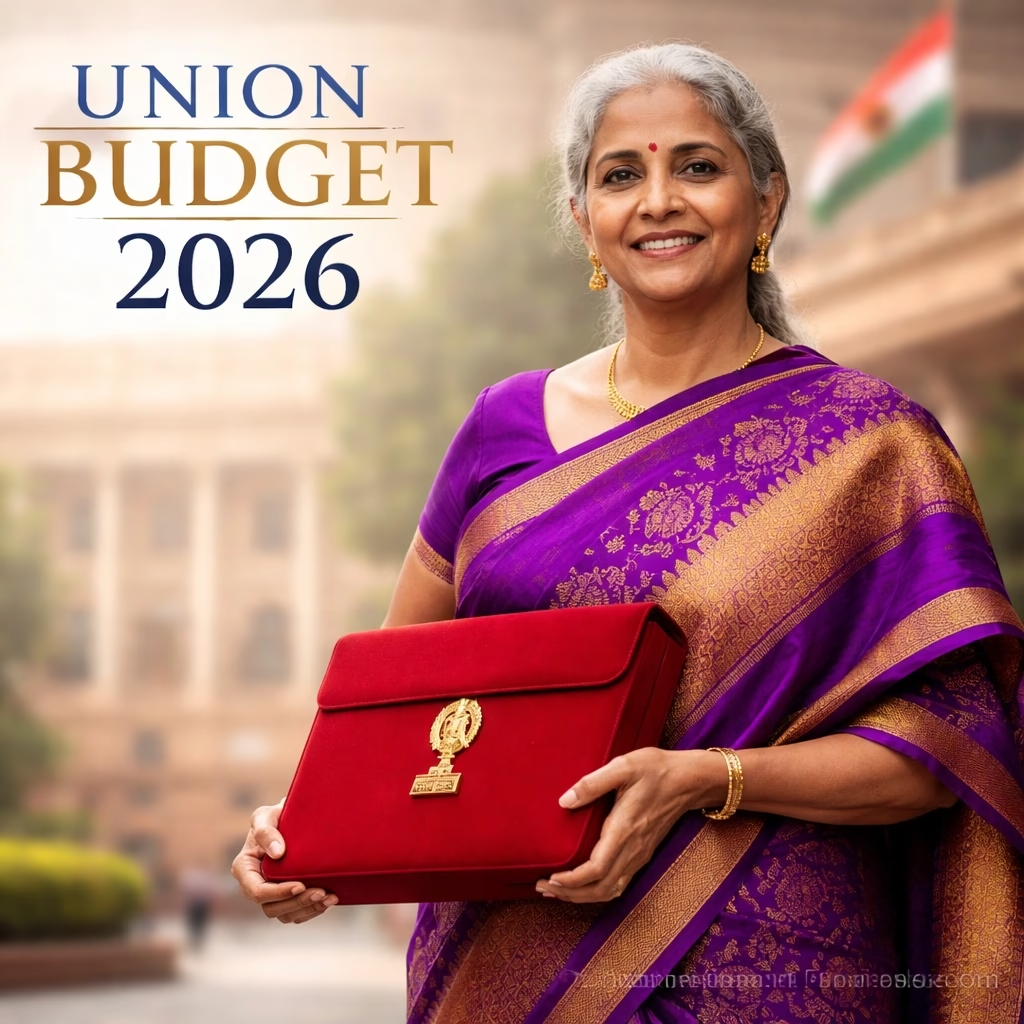
As Finance Minister Nirmala Sitharaman prepared to present the Union Budget 2026 on February 1st, 2026, her sartorial choice once again captured national attention. Opting for a resplendent Kanjeevaram saree from Tamil Nadu, the minister continued her well-established tradition of showcasing India's rich handloom heritage on a significant national platform.
The choice resonated deeply, not just for its aesthetic appeal but for its powerful symbolism, underscoring a commitment to indigenous craftsmanship and cultural pride ahead of one of the nation's most crucial economic announcements.
A Legacy of Handloom: Background to a Modern Tradition
Nirmala Sitharaman's tradition of donning handloom sarees for the Union Budget presentation began early in her tenure as Finance Minister. This practice consciously moved away from the more conventional Western business attire or simpler Indian wear, establishing a distinctive visual signature for the budget day.
Each year, her choice of saree has sparked discussions, highlighting diverse weaving traditions from across India. In previous years, she has been seen in sarees representing various states, including a deep blue Pochampally from Telangana for the 2020 budget, a red and white Sambalpuri from Odisha in 2021, and an elegant Ikkat from Gujarat for the 2024 interim budget.
From Briefcase to Bahi Khata: Evolving Budget Symbolism
This personal tradition aligns with a broader shift in the symbolism surrounding the Union Budget. In 2019, Sitharaman famously replaced the colonial-era budget briefcase with a 'Bahi Khata' – a traditional red cloth folder, signifying a departure from Western practices and an embrace of Indian customs for financial record-keeping.
The handloom saree further reinforces this narrative, projecting a blend of modernity and deep-rooted tradition. It transforms a solemn economic event into a moment of cultural celebration, drawing attention to India's diverse textile artistry.
The Union Budget itself, presented annually, outlines the government's financial plans, revenue, and expenditure for the upcoming fiscal year. It is a critical document shaping economic policies and development trajectories, making the day of its presentation a focal point for national discourse.

The Kanjeevaram Choice: Key Developments and Details
For the Union Budget 2026, Minister Sitharaman selected a magnificent Kanjeevaram saree. This particular piece, sourced directly from a renowned weaving cluster in Kanchipuram, Tamil Nadu, was a testament to the region's unparalleled silk weaving legacy.
The saree featured a rich magenta body, intricately woven with traditional gold zari motifs of Annapakshi (mythical swan) and rudraksham patterns, bordered by a contrasting bottle green pallu adorned with elaborate temple designs. Crafted from pure mulberry silk, known for its luster and durability, the saree weighed approximately 800 grams, a characteristic of authentic Kanjeevaram silks.
The Kanjeevaram Legacy: A GI-Tagged Marvel
Kanjeevaram sarees hold a Geographical Indication (GI) tag, recognizing their unique origin and the traditional craftsmanship involved. The weaving process is labor-intensive, often taking weeks or even months for a single saree, involving multiple skilled artisans.
The distinctiveness of Kanjeevaram lies in its heavy silk and rich zari work, where silk threads are dipped in liquid gold and silver. The body and border are often woven separately and then meticulously interlocked, creating a robust and seamless join that is a hallmark of its authenticity and strength.
Sitharaman's choice specifically highlighted the weavers of Kanchipuram, a town synonymous with this exquisite craft. The selection was seen as a direct endorsement of their artistry and a nod to the economic significance of the handloom sector in Tamil Nadu, a state with a vibrant textile industry.
Impact: Weavers, Culture, and Public Perception
The Finance Minister's choice of a Kanjeevaram saree for such a high-profile event carries multi-faceted impact, resonating across various segments of society and the economy.
More Read

Boost for Local Artisans and the Handloom Sector
The most immediate and tangible impact is on the weaving community in Kanchipuram and across Tamil Nadu. Such prominent visibility often translates into increased demand and sales for Kanjeevaram sarees. Artisans and cooperatives frequently report a surge in inquiries and orders following the minister's budget day attire.
This economic uplift is crucial for sustaining traditional crafts, providing livelihoods for thousands of weavers, dyers, and ancillary workers. It also encourages younger generations to continue these ancestral skills, ensuring the longevity of India's handloom heritage.
Cultural Diplomacy and National Pride
Beyond economics, the saree choice acts as a powerful statement of cultural pride. It showcases India's rich textile diversity on a national and international stage, fostering a sense of identity and heritage among citizens. It aligns perfectly with initiatives like 'Vocal for Local' and 'Make in India,' promoting indigenous products and craftsmanship.
The tradition also serves as a subtle form of cultural diplomacy, presenting a modern India that is confident in its traditions and values its artistic legacy.
Public Engagement and Fashion Influence
The minister's saree choices consistently generate significant public interest, particularly on social media platforms. Discussions often revolve around the saree's origin, weave, and symbolism, engaging a broad audience in conversations about Indian textiles and fashion.
This engagement can inspire individuals, especially women, to explore and embrace traditional Indian attire for formal occasions, further popularizing handloom products and influencing contemporary fashion trends.
Subtle Political Messaging
While primarily a cultural statement, the selection of a saree from a specific state can also carry subtle political implications. Highlighting a craft from Tamil Nadu, a state with its unique political landscape and cultural identity, can be interpreted as an acknowledgment of regional contributions and a gesture of inclusivity from the central government.
What Next: Sustaining the Momentum
As the nation digests the Union Budget 2026 and its economic implications, the conversation around traditional textiles is expected to continue. The minister's consistent endorsement of handloom sets a precedent that encourages broader support for the sector.
Government Initiatives and Policy Support
The increased visibility from such high-profile choices often prompts renewed focus on government schemes aimed at supporting handloom weavers. This includes initiatives for skill development, market linkages, access to raw materials, and financial assistance for artisan clusters.
Discussions are likely to intensify regarding the need for robust policies to combat challenges faced by weavers, such as competition from power looms, rising material costs, and access to modern design and marketing techniques.

Evolving Traditions and Future Choices
The tradition established by Nirmala Sitharaman is likely to continue, with anticipation building each year for her next handloom selection. This annual reveal has transformed into a cultural event, eagerly awaited by fashion enthusiasts, textile connoisseurs, and the general public alike.
It also paves the way for other public figures and dignitaries to adopt similar practices, further mainstreaming traditional Indian attire and promoting the country's diverse craftsmanship on various platforms.
The Kanjeevaram choice for Budget 2026 is more than just a garment; it is a thread connecting India's economic future with its rich cultural past, woven into the fabric of national identity and pride.