Oman Talks Conclude, US Unleashes New Iran Oil Sanctions
Oman Talks Conclude, US Unleashes New Iran Oil Sanctions
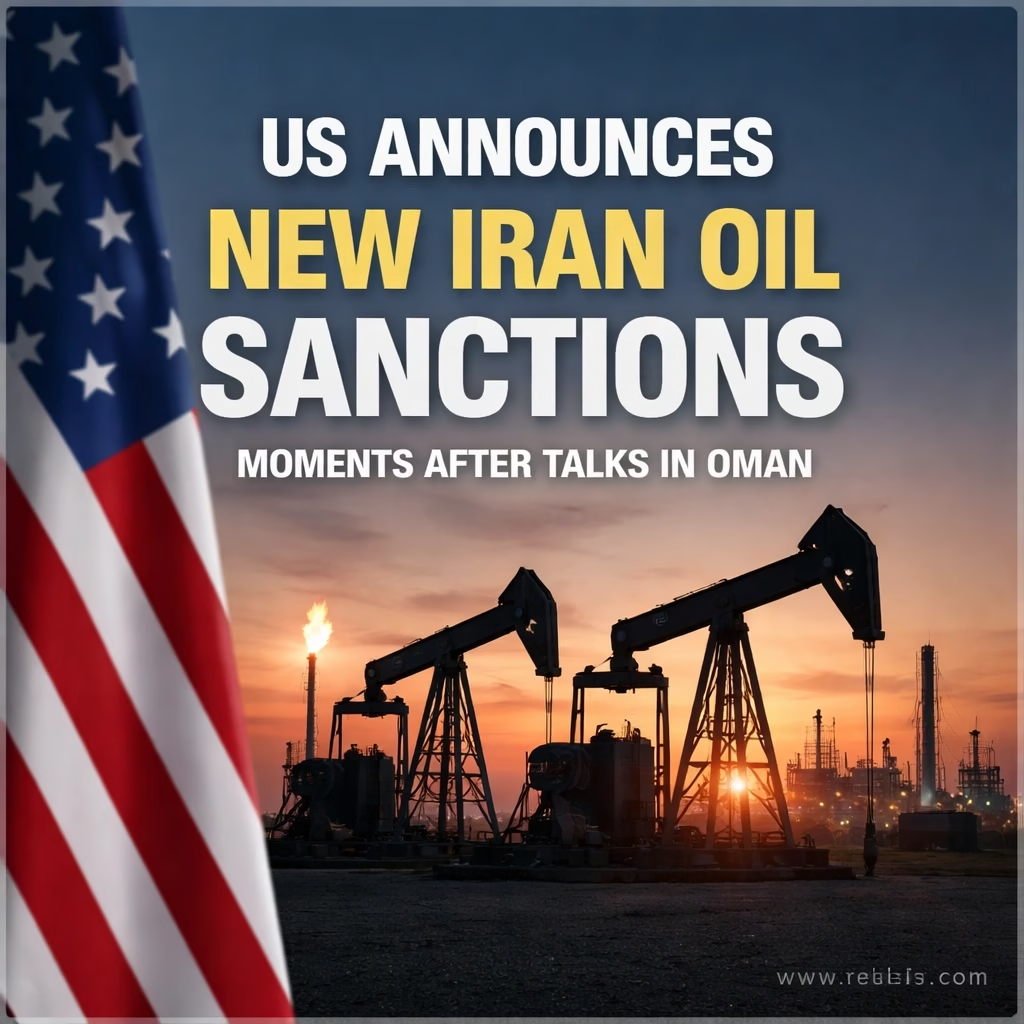
The United States Treasury Department announced a fresh wave of sanctions targeting Iran's oil and petrochemical sales on Thursday, May 16, 2024. This significant move came just hours after American and Iranian officials concluded indirect discussions in Oman, raising immediate questions about the future trajectory of diplomatic engagement between Washington and Tehran.
The new measures aim to disrupt a vast network facilitating the illicit trade of Iranian crude oil and petroleum products, a critical revenue source for the Islamic Republic, further intensifying economic pressure.
Background: A Decades-Long Standoff
The relationship between the United States and Iran has been characterized by decades of profound tension, punctuated by periods of intense diplomatic efforts and stringent economic sanctions. The current phase of heightened pressure largely stems from the 2018 decision by the Trump administration to withdraw from the Joint Comprehensive Plan of Action (JCPOA), commonly known as the Iran nuclear deal.
The JCPOA, signed in 2015 by Iran, the P5+1 group (China, France, Germany, Russia, the United Kingdom, and the United States), and the European Union, provided Iran with substantial sanctions relief in exchange for verifiable limits on its nuclear program. Following the unilateral US withdrawal, Washington reimposed and expanded sanctions, initiating a “maximum pressure” campaign designed to cripple Iran’s economy and compel it to renegotiate a more comprehensive agreement.
The Biden administration, while expressing a desire to revive the nuclear deal and engage diplomatically, has largely maintained a policy of combining diplomatic overtures with continued sanctions enforcement. Numerous rounds of sanctions have targeted various critical sectors of the Iranian economy, including its crucial oil industry, shipping, banking, and petrochemicals, as well as entities linked to the Islamic Revolutionary Guard Corps (IRGC).
Oman, a strategically located Gulf sultanate, has historically played a crucial mediating role in facilitating discreet dialogue between Washington and Tehran. The recent indirect talks in its capital, Muscat, which reportedly lasted several days, were aimed at de-escalating regional tensions, addressing Iran’s accelerating nuclear program, and potentially discussing issues such as prisoner exchanges or broader regional stability.
Key Developments: Sanctions After Diplomacy
The latest sanctions, unveiled by the Treasury Department’s Office of Foreign Assets Control (OFAC), target a sprawling network comprising nearly 50 entities and vessels. These include companies based in the United Arab Emirates, Turkey, and the Marshall Islands, along with several individuals, all accused of facilitating the shipment and sale of Iranian oil and petrochemical products.
According to the Treasury Department, the targeted network has been instrumental in generating significant revenue for the Iranian regime, particularly for the Islamic Revolutionary Guard Corps-Qods Force (IRGC-QF), which the US designates as a terrorist organization. The sanctions freeze any assets these entities and individuals hold under US jurisdiction and generally prohibit American citizens from engaging in transactions with them.
The precise timing of the announcement has drawn particular attention across diplomatic circles. US special envoy for Iran, Abram Paley, and Brett McGurk, the White House’s top Middle East adviser, were reportedly involved in the Omani discussions. The immediate imposition of new sanctions following these high-level talks sends a mixed signal, simultaneously demonstrating a willingness to engage diplomatically while reinforcing a hardline stance on economic pressure.
Brian Nelson, Under Secretary of the Treasury for Terrorism and Financial Intelligence, stated that the US “remains committed to disrupting Iran’s illicit financing efforts.” He emphasized that the sanctions are part of an ongoing strategy to prevent Iran from funding its “destabilizing activities, including its support for terrorist proxy groups and its nuclear program.”
Tehran has consistently condemned US sanctions as economic warfare and an infringement on its national sovereignty. While an immediate official response to this specific round of sanctions was pending, Iranian officials have previously asserted their right to sell their oil and have vowed to circumvent restrictions through various means.
Targeted Entities and Allegations
The sanctions specifically name entities involved in various stages of Iran’s oil and petrochemical supply chain. This includes a complex web of brokers, front companies, and shipping firms, along with numerous vessels used for transporting Iranian crude and petroleum products. The Treasury Department’s press release detailed allegations of these entities creating intricate schemes to obscure the true origin of Iranian goods, facilitating payments, and managing logistics for their sale to buyers primarily in East Asia.
The targeted individuals are accused of owning, controlling, or acting on behalf of these sanctioned entities. The broad scope of the network underscores the significant challenges Washington faces in completely cutting off Iran’s oil exports, as Tehran and its international partners have developed sophisticated methods to evade detection and maintain market access.
Impact: Economic Pressure and Diplomatic Hurdles
The immediate impact of these new sanctions will primarily be felt by the designated entities and individuals, who will face severe restrictions on their ability to conduct international financial transactions. Their assets within US jurisdiction are frozen, and non-US persons engaging in certain transactions with them could also face secondary sanctions, creating a chilling effect.
For Iran, the sanctions are designed to further constrict its access to foreign currency revenues, particularly from oil and petrochemical exports. While Iran has managed to maintain significant oil exports, largely to countries like China, these sales often occur at heavily discounted prices and through opaque channels, limiting Tehran’s overall financial gains.
The broader impact on global oil markets is expected to be minimal. Iranian oil is already largely excluded from mainstream international trade due to existing sanctions, and the new measures primarily aim to tighten enforcement and increase the cost of evasion rather than introduce entirely new restrictions on the volume of oil that can be legally traded.
Diplomatically, the timing of these sanctions could significantly complicate future engagement. While the US maintains that sanctions and diplomacy are not mutually exclusive, Tehran often views such moves as counterproductive to trust-building. It could reinforce the perception in Iran that Washington is not genuinely committed to de-escalation or a return to the JCPOA, potentially hardening Iran’s negotiating position.
Economic Ramifications for Tehran
Iran’s economy remains heavily reliant on oil revenues, despite ongoing efforts to diversify. Sanctions directly impact the government’s ability to fund essential public services, infrastructure projects, and its military apparatus. The petrochemical sector has grown in importance as a source of non-oil exports, making it a critical target for US pressure. By targeting the facilitators of these sales, the US aims to increase the cost and complexity for Iran to maintain these vital income streams.
The continued pressure also contributes to domestic economic challenges within Iran, including persistent inflation, currency depreciation, and unemployment, which can fuel public discontent and socio-economic instability.
What Next: A Precarious Balance
The immediate aftermath of these sanctions will likely see Iran reiterate its defiance against US pressure. Tehran may continue to accelerate its nuclear program, which has already seen uranium enrichment levels reach unprecedented highs, close to weapons-grade purity. This could be viewed as leverage against Western pressure or a direct response to perceived US aggression.
Iran is also expected to further solidify its economic and strategic ties with non-Western powers, particularly China and Russia, to mitigate the effects of sanctions. These countries often remain significant buyers of Iranian oil and provide crucial avenues for trade and financial transactions outside the immediate reach of US enforcement.

For the United States, the strategy remains a delicate and precarious balance. Washington will likely continue to enforce sanctions rigorously while simultaneously keeping open channels for indirect diplomacy. The overarching goal is to prevent Iran from acquiring a nuclear weapon and to curb its regional destabilizing activities, without inadvertently triggering a wider conflict.
Future diplomatic efforts will hinge on whether both sides can find common ground despite the renewed tension. The US presidential election later this year could also introduce new variables into the equation, potentially shifting Washington’s approach to Iran significantly.
Diplomatic Stalemate or Renewed Engagement?
The question of whether these sanctions signal a complete breakdown of diplomatic efforts or merely a continuation of “tough diplomacy” remains open for interpretation. While the immediate timing is jarring, the US has historically used sanctions as a form of leverage in negotiations. The effectiveness of future talks will depend heavily on Iran’s willingness to return to the negotiating table under renewed pressure and the US’s ability to offer credible incentives for de-escalation.
International partners, particularly European nations, will continue to watch the developments closely, often advocating for diplomatic solutions while also expressing deep concerns over Iran’s nuclear advancements. Their role in facilitating any future dialogue or de-escalation efforts will be crucial.