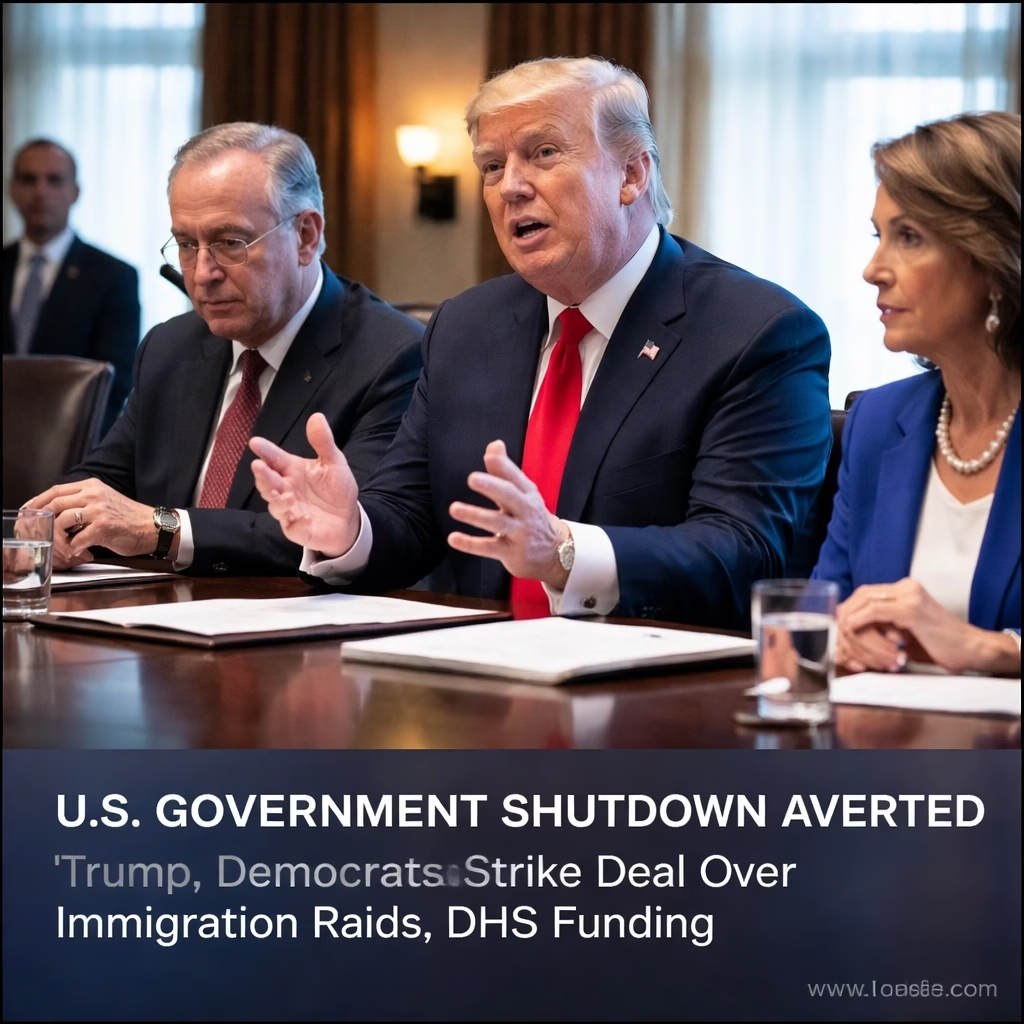
Washington D.C. breathed a collective sigh of relief late last week as President Donald Trump and Democratic congressional leaders announced a tentative agreement to fund the Department of Homeland Security (DHS) and avert another government shutdown. The eleventh-hour deal, reached just hours before a critical funding deadline, temporarily resolves a contentious standoff over border security and immigration enforcement that had threatened to cripple federal operations.
Background
The specter of a government shutdown loomed large over Washington, following a record-breaking 35-day closure that concluded just weeks prior. That unprecedented shutdown, from December 2018 to January 2019, stemmed directly from President Trump's demand for $5.7 billion to construct a wall along the U.S.-Mexico border, a demand fiercely resisted by House Democrats.
The Shadow of the Longest Shutdown
The 2018-2019 shutdown, the longest in U.S. history, saw approximately 800,000 federal employees either furloughed or working without pay. Its economic toll was significant, estimated by the Congressional Budget Office to have shaved $11 billion from the nation's GDP, with $3 billion of that figure permanently lost. Critical services, ranging from airport security to food inspections, were severely impacted, causing widespread disruption and public frustration. The political fallout was equally severe, highlighting the deep partisan chasm over immigration policy.
The Border Wall Impasse
At the heart of the latest dispute was the same issue: funding for border barriers. President Trump had consistently demanded billions for a physical wall, framing it as essential for national security and curbing illegal immigration. Democrats, led by House Speaker Nancy Pelosi and Senate Minority Leader Chuck Schumer, largely opposed this specific funding, advocating instead for what they termed "smart" border security measures, including technology, additional personnel, and improved infrastructure at ports of entry, rather than a contiguous wall.
Looming Deadline
After the initial shutdown ended with a three-week continuing resolution, lawmakers were tasked with negotiating a long-term funding solution for DHS by Friday, February 15, at midnight. Failure to reach an agreement would have triggered another partial government shutdown, impacting hundreds of thousands of federal workers and critical agencies responsible for national security and border protection. The pressure mounted as the deadline approached, with both sides engaging in intense, often public, negotiations.
More Read

Key Developments
The breakthrough came after weeks of often acrimonious negotiations within a bipartisan, bicameral conference committee tasked with finding common ground. The committee, comprised of senior Republicans and Democrats from both the House and Senate appropriations and homeland security committees, worked tirelessly to bridge the divide.
Negotiation Marathon
Key negotiators included Senate Appropriations Chairman Richard Shelby (R-Ala.), House Appropriations Chairwoman Nita Lowey (D-N.Y.), and other influential members. Discussions centered not only on the dollar amount for border security but also on the specific uses of those funds, the number of detention beds for undocumented immigrants, and language regarding the enforcement activities of Immigration and Customs Enforcement (ICE). The White House, through Acting Chief of Staff Mick Mulvaney and other senior advisors, remained in close contact with Republican leadership throughout the process.
Terms of the Compromise
While specific legislative text was still being finalized, initial reports indicated the deal would allocate approximately $1.375 billion for new physical barriers along the U.S.-Mexico border. This figure is significantly less than the $5.7 billion President Trump had originally demanded but more than Democrats initially offered. The funding is earmarked for approximately 55 miles of new fencing, primarily in the Rio Grande Valley of Texas, utilizing existing barrier designs rather than a concrete wall.
More Read

Crucially, the agreement also included language that limited the number of detention beds for undocumented immigrants to around 40,000, a reduction from the approximately 49,000 beds sought by the administration. This provision was a key concession to Democrats, who have criticized the administration's detention policies. Additionally, the deal reportedly contained no new restrictions on ICE's ability to conduct interior enforcement raids, a point of concern for some progressive Democrats.
Bipartisan Support Emerges
The agreement was announced by conference committee leaders late on Monday, February 11, with leaders from both parties expressing cautious optimism. While not a complete victory for either side, it represented a pragmatic compromise aimed at keeping the government open and addressing immediate border security needs. President Trump signaled his willingness to sign the legislation, though he simultaneously reiterated his intent to explore other avenues, including a national emergency declaration, to secure additional wall funding if necessary.
Impact
The immediate and most significant impact of the averted shutdown is the relief it brings to hundreds of thousands of federal workers and the continuity of essential government services across the nation.
Relief for Federal Workers
Approximately 800,000 federal employees, including those at DHS agencies like the Transportation Security Administration (TSA), Customs and Border Protection (CBP), and the Coast Guard, were facing the prospect of another furlough or working without pay. The deal spares them from this financial and emotional hardship, allowing them to continue their work with certainty about their next paycheck. This stability is crucial for their families and for maintaining morale within the federal workforce.
Ensuring Critical Services
A shutdown of DHS would have severely disrupted critical services. Airport security lines, already strained, would have faced further delays as TSA officers worked without pay. Border patrol operations would have continued, but with immense pressure on agents. FEMA, responsible for disaster response, would have seen its funding curtailed for non-essential activities, potentially impacting recovery efforts. The Coast Guard's operations, vital for maritime safety and security, would also have been affected. The agreement ensures these vital functions continue uninterrupted.
More Read

Economic Stability
Avoiding a shutdown also prevents another drag on the U.S. economy. The previous shutdown highlighted how federal spending directly impacts various sectors, from government contractors to local businesses near federal installations. Preventing a repeat scenario helps maintain consumer confidence, business investment, and overall economic stability, which is particularly important as the nation monitors signs of global economic slowdowns.
What Next
While the immediate crisis has been averted, the legislative process still requires completion, and the broader debate over immigration reform remains unresolved.
Path to Enactment
The bipartisan agreement now moves to Congress for a vote. The House of Representatives is expected to vote on the legislation first, likely within the coming days, followed by the Senate. Given the bipartisan nature of the conference committee and the strong desire to avoid another shutdown, the bill is anticipated to pass both chambers. Once approved by Congress, it will be sent to the President's desk for his signature. President Trump has indicated he will sign the bill to keep the government open, even if it falls short of his full demands for border wall funding.
Future Budget Battles
This deal funds DHS only until the end of the current fiscal year, September 30. This means that Congress and the White House will face similar budget negotiations for the next fiscal year's appropriations, starting in October. The fundamental disagreements over spending priorities, particularly for border security, are likely to resurface, setting the stage for future budget battles under a divided government.
The Enduring Immigration Debate
Beyond immediate funding, the larger, more complex issues of comprehensive immigration reform, the fate of DACA recipients, and the long-term strategy for border security remain contentious. This latest agreement is a temporary truce in a prolonged political struggle. Both parties acknowledge that a lasting solution will require sustained negotiation and compromise, a challenge that continues to define U.S. domestic policy. The resolution of this shutdown threat marks a pause, not an end, to the nation's profound debate over its borders and identity.