Narrow Window: Can US-Iran Diplomacy Seize a Precarious Opportunity?
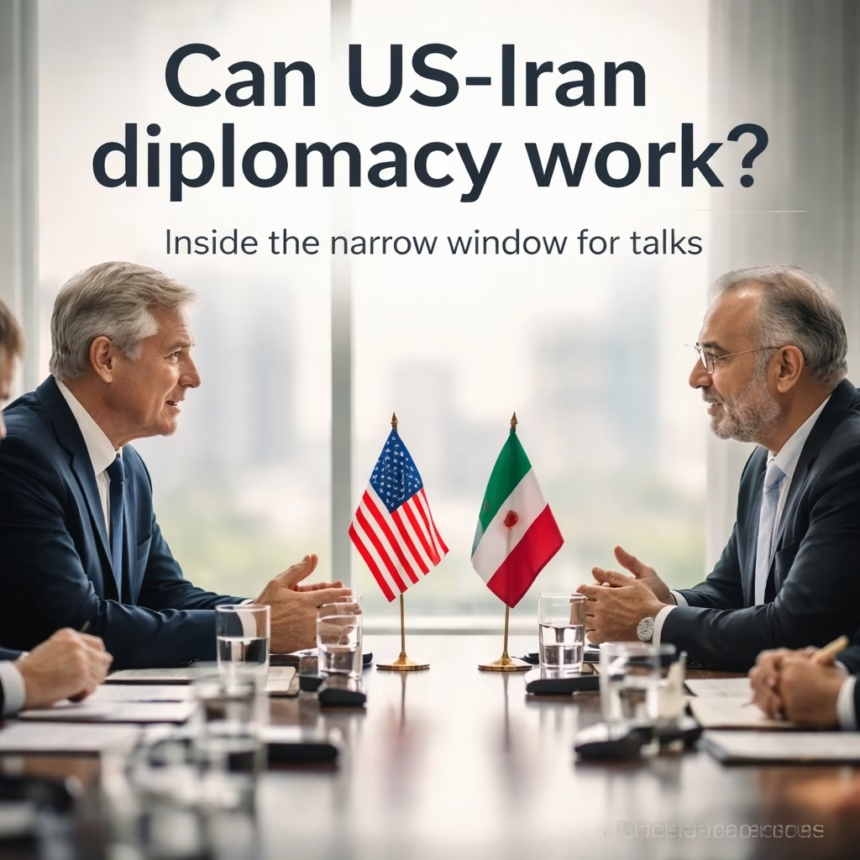
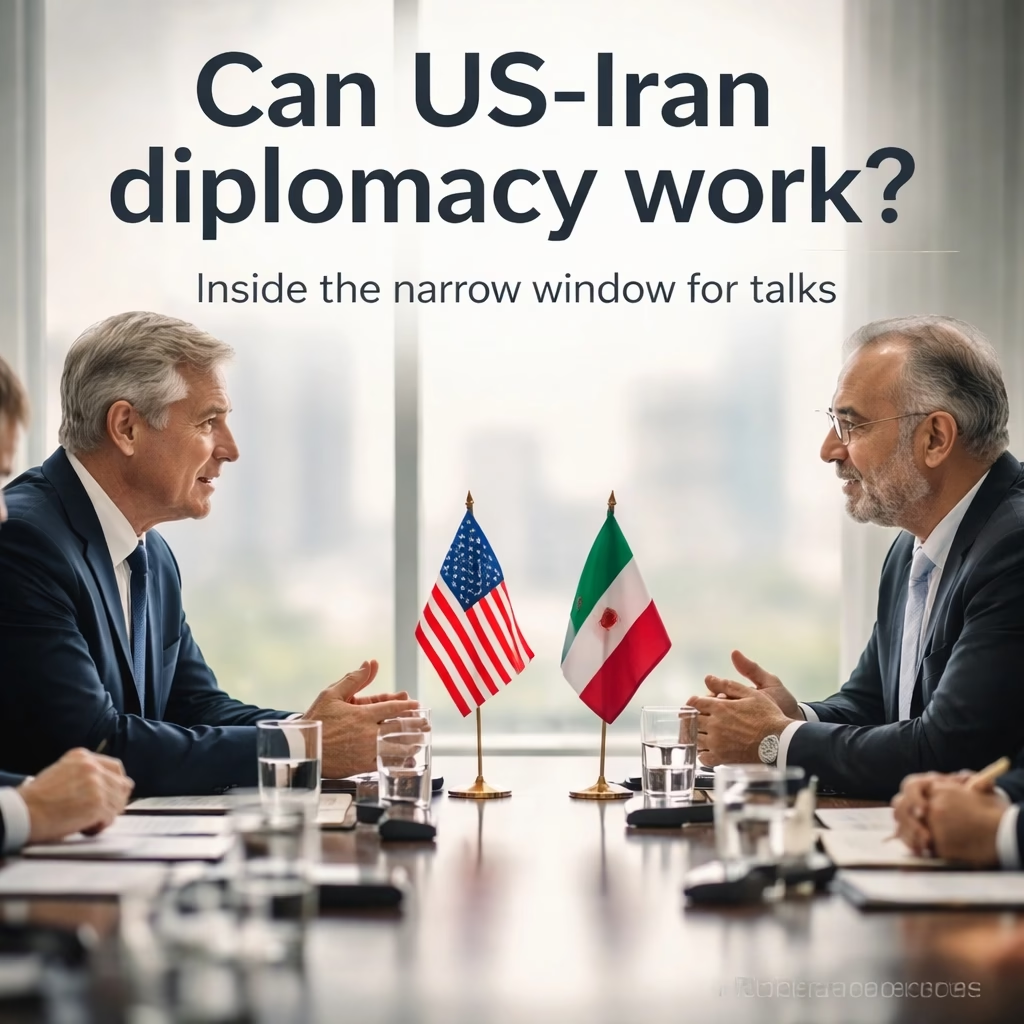
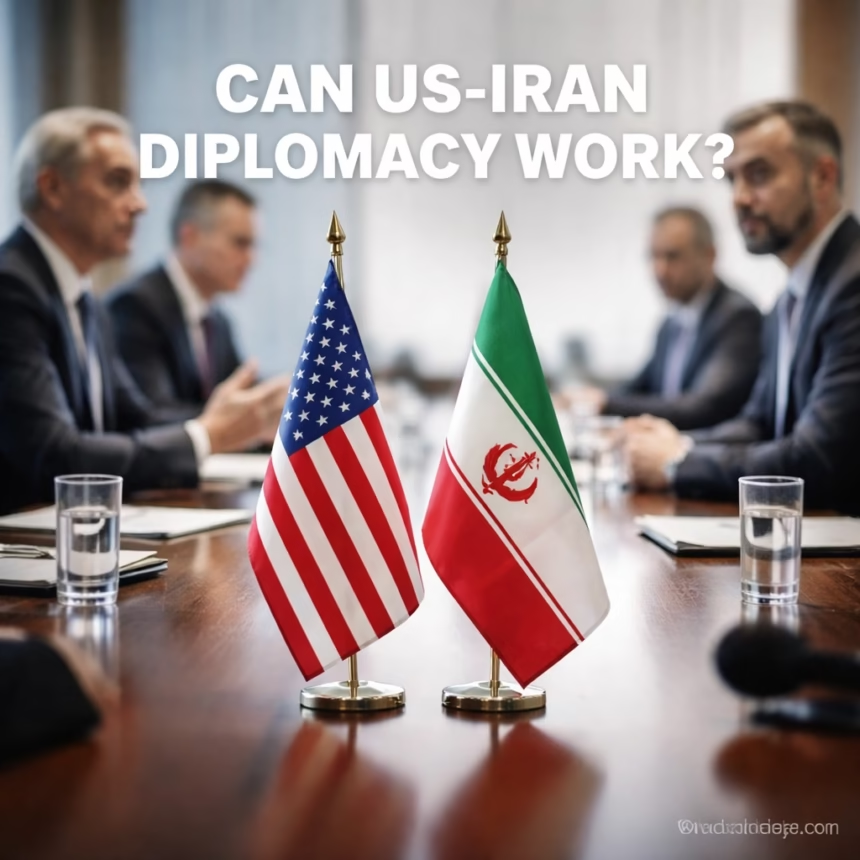
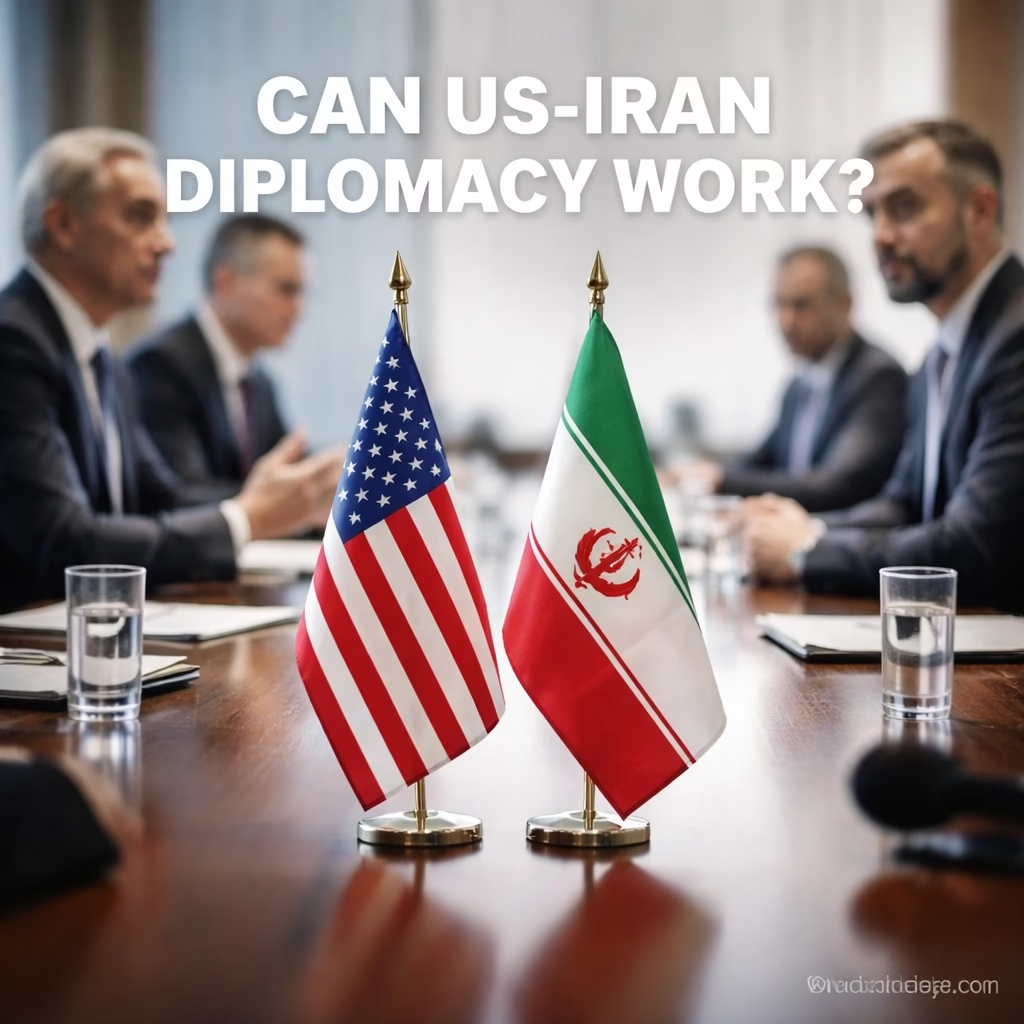
Recent months have seen renewed, albeit indirect, diplomatic overtures between the United States and Iran, raising cautious optimism about a potential de-escalation of long-standing tensions. These engagements, often mediated by regional partners, are unfolding against a backdrop of complex geopolitical shifts and pressing domestic concerns in both Washington D.C. and Tehran. The critical question remains whether this delicate window for dialogue can translate into concrete steps towards stability in the Middle East.
Background: Decades of Distrust and Disruption
The relationship between the United States and Iran has been fraught with animosity since the 1979 Islamic Revolution, which saw the overthrow of the U.S.-backed Shah and the subsequent hostage crisis at the American embassy in Tehran. This foundational rupture set the stage for decades of mutual suspicion, proxy conflicts, and economic sanctions.
Iran's nuclear program emerged as a central point of contention in the early 2000s. Concerns over its potential military dimensions led to stringent international sanctions and a concerted diplomatic effort to curb Tehran's nuclear ambitions. This culminated in the landmark Joint Comprehensive Plan of Action (JCPOA) in July 2015.
The JCPOA Era and its Collapse
The JCPOA, signed by Iran, the P5+1 group (China, France, Germany, Russia, United Kingdom, United States), and the European Union, offered Iran sanctions relief in exchange for verifiable restrictions on its nuclear program. It was hailed as a significant diplomatic achievement, preventing Iran from developing nuclear weapons while integrating it partially into the global economy.
However, the agreement's longevity was cut short. In May 2018, the Trump administration unilaterally withdrew the United States from the JCPOA, reimposing a "maximum pressure" campaign of sanctions on Iran. Tehran, in response, gradually began to exceed the nuclear enrichment limits set by the agreement, accelerating its nuclear activities and reducing cooperation with international inspectors.
This period saw heightened tensions across the Persian Gulf, including attacks on oil tankers, drone incidents, and a direct confrontation in January 2020 with the U.S. killing of Iranian General Qassem Soleimani in Baghdad. The Biden administration, taking office in January 2021, expressed an intent to return to the JCPOA, but indirect talks in Vienna stalled by mid-2022, failing to bridge the divides on sanctions relief and nuclear guarantees.
Key Developments: A Cautious Thaw Amidst Regional Flux
Despite the collapse of formal nuclear negotiations, a subtle shift in the diplomatic landscape has become apparent. Covert and indirect channels have reportedly intensified, primarily facilitated by neutral regional actors.
The Oman-Qatar Nexus
Oman and Qatar, with their established history of mediating complex regional disputes, have emerged as crucial conduits for communication between Washington and Tehran. These Gulf nations have hosted numerous rounds of indirect discussions, focusing on de-escalation, prisoner exchanges, and broader regional security concerns, rather than an immediate return to the JCPOA's original framework.
A notable outcome of these backchannel efforts materialized in September 2023. A significant prisoner swap saw five American citizens, including Siamak Namazi, Morad Tahbaz, and Emad Shargi, released from Iranian detention. In return, the U.S. released five Iranian nationals and unblocked approximately $6 billion in Iranian oil revenues held in South Korea, transferring them to a restricted account in Qatar for humanitarian purposes.
This exchange, while limited in scope, represented a rare instance of direct engagement and a significant trust-building measure. It signaled a potential willingness from both sides to engage on practical, humanitarian issues, even amidst profound disagreements on strategic matters.
Regional Realignments and Internal Pressures
The broader Middle East has also witnessed significant realignments. The China-brokered rapprochement between Saudi Arabia and Iran in March 2023, after seven years of severed ties, introduced a new dynamic. While not directly involving the U.S., it demonstrated a regional appetite for de-escalation that could indirectly create a more conducive environment for U.S.-Iran talks.
Internally, Iran continues to grapple with widespread protests and economic hardship. The "Woman, Life, Freedom" movement, ignited in late 2022 following the death of Mahsa Amini, has put immense pressure on the clerical regime. The regime's need to alleviate economic strain, exacerbated by sanctions, might be a driving factor in its willingness to engage diplomatically, even if subtly.
Furthermore, the eruption of the Israel-Hamas conflict in October 2023 introduced a new layer of complexity. While initially threatening to draw regional actors into a wider war, it has also, paradoxically, highlighted the need for channels to prevent miscalculation, potentially increasing the utility of indirect US-Iran communication.
Impact: Far-Reaching Implications for Global Stability
The trajectory of US-Iran diplomacy carries profound implications, extending far beyond the two nations involved. Regional stability, global energy markets, and the international nuclear non-proliferation regime are all directly affected.
Regional Stability and Security
A reduction in US-Iran tensions could significantly de-escalate proxy conflicts across the Middle East, particularly in Yemen, Syria, and Iraq, where Iranian-backed groups and U.S.-allied forces often operate in close proximity. Gulf Cooperation Council (GCC) states, including Saudi Arabia and the UAE, have a vested interest in a more stable Iran, as evidenced by their recent diplomatic overtures.
Conversely, a breakdown in communication or an escalation could plunge the region into deeper instability, threatening vital shipping lanes in the Strait of Hormuz, through which a significant portion of the world's oil supply passes. Israel, viewing Iran's nuclear program and regional influence as an existential threat, watches these diplomatic maneuvers with intense scrutiny, often advocating for stronger measures.
Nuclear Proliferation Concerns
The status of Iran's nuclear program remains a paramount concern for the international community. Without a renewed diplomatic framework, Iran continues to enrich uranium to higher purities, stockpiling material that brings it closer to weapons-grade levels. The International Atomic Energy Agency (IAEA) reports have consistently highlighted reduced transparency and cooperation from Tehran, raising alarms about proliferation risks. Successful diplomacy could re-establish robust monitoring and verification mechanisms.
Economic Repercussions
For Iran, sanctions relief is a critical driver for engagement. A struggling economy, high inflation, and widespread unemployment fuel domestic discontent. Any diplomatic breakthrough offering even partial sanctions alleviation could provide a much-needed economic lifeline, potentially easing internal pressures on the regime. For the global economy, a stable Middle East and predictable oil flows contribute to market certainty.
What Next: Navigating a Perilous Path Forward
The current diplomatic window is narrow and fragile, susceptible to sudden shifts in geopolitical dynamics or domestic political calculations. Several potential milestones and challenges lie ahead.
Continued Indirect Engagement
Expectations are low for an immediate return to comprehensive nuclear talks akin to the JCPOA. Instead, the focus will likely remain on incremental, indirect engagements facilitated by Oman and Qatar. These could include further prisoner exchanges, de-escalation agreements in specific regional hotspots, or discussions around humanitarian aid and financial channels.
Any movement towards direct talks would represent a significant leap, requiring substantial political will and a demonstrable commitment to de-escalation from both sides. Such a step is unlikely in the immediate future but remains a long-term aspiration for some diplomats.
Navigating Domestic Headwinds
Both the U.S. and Iran face significant domestic constraints. In the U.S., the upcoming 2024 presidential election introduces uncertainty, as a new administration could dramatically alter policy towards Iran. Hardline elements within the Republican Party remain staunchly opposed to any concessions to Tehran.
In Iran, the clerical establishment is deeply divided on engaging with the West. Supreme Leader Ali Khamenei, now in his 80s, holds ultimate authority, and his succession is an ever-present factor. Hardliners often view diplomacy with suspicion, fearing it could undermine the revolution's principles or expose the regime to further internal dissent.

The Shadow of Regional Conflicts
The ongoing Israel-Hamas conflict and its potential for wider regional escalation pose the most immediate threat to any diplomatic progress. Any direct confrontation between U.S. forces and Iranian-backed proxies in Iraq, Syria, or the Red Sea could swiftly derail existing channels and push both nations back towards heightened confrontation. Maintaining de-escalation in these areas will be paramount.
Ultimately, the success of US-Iran diplomacy hinges on a delicate balance: the perceived benefits of de-escalation must outweigh the political costs of engaging with a long-standing adversary. The current window, though precarious, offers a rare chance to prevent further instability and explore pathways, however narrow, towards a more stable future in the Middle East.