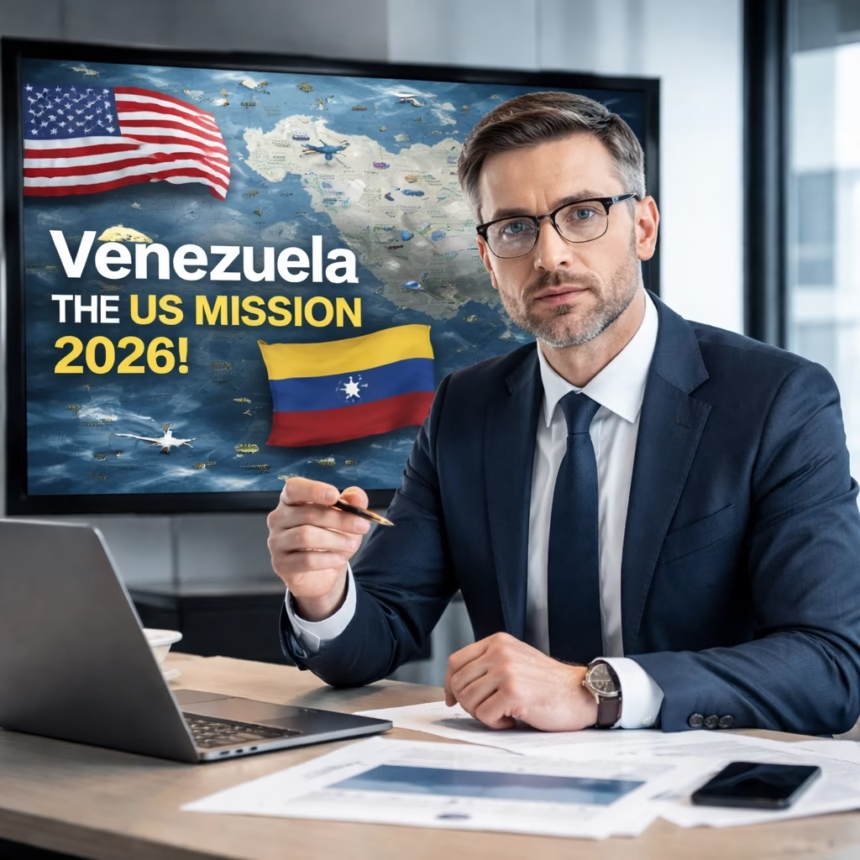
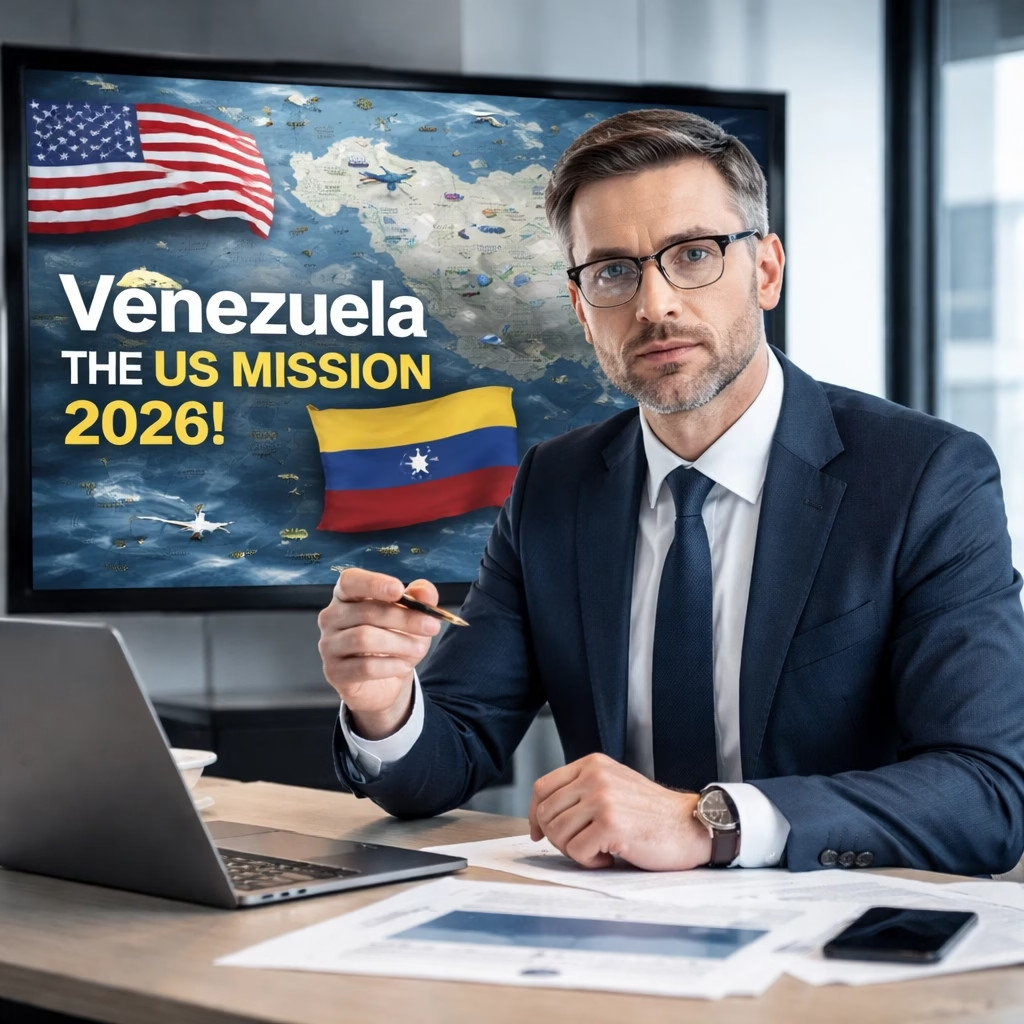
US Mission 2026: The Secret Operation to Oust Venezuela's Government Revealed
Exposed: US Mission 2026 – The Secret Plan to Topple Venezuela's Government
In a shocking revelation, a leaked document has exposed "US Mission 2026," a covert operation allegedly aimed at destabilizing and removing Venezuela's current government. The document, analyzed by independent experts, outlines a multi-year strategy involving economic, diplomatic, and military tactics to achieve regime change in Venezuela by 2026.
The alleged operation has sparked international controversy, with critics accusing the US of interfering in Venezuela's internal affairs. Meanwhile, US officials have neither confirmed nor denied the authenticity of the document.
Background: The US-Venezuela Tensions
The relationship between the United States and Venezuela has been strained for years, particularly since the rise of President Nicolás Maduro in 2013. The US has repeatedly accused Maduro’s government of human rights violations, corruption, and authoritarian practices. In response, Venezuela has accused the US of attempting to undermine its sovereignty.
The tensions escalated in 2019 when the US recognized Juan Guaidó, the leader of Venezuela’s opposition, as the legitimate interim president. This move was part of a broader strategy to pressure Maduro into stepping down. However, Maduro has remained in power despite widespread economic and political crises in the country.
More Read

Key Developments: The Leaked Document
The leaked document, thought to be from early 2024, outlines a detailed plan codenamed “US Mission 2026.” The strategy involves three main phases:
- Phase 1 (2024-2025): Economic and diplomatic isolation of Venezuela, including intensified sanctions and pressure on international allies to cut ties with the Maduro government.
- Phase 2 (2025-2026): Increased support for opposition groups, including military and logistical assistance, to weaken Maduro’s control.
- Phase 3 (2026): A final push to oust Maduro, potentially involving covert military operations or a large-scale rebellion.
The document also references the use of cyber warfare to disrupt Venezuela’s infrastructure and sow internal discord. Experts have noted that the plan bears similarities to previous US-backed regime change operations in the region, such as the 2002 coup attempt in Venezuela and the 2009 coup in Honduras.
Impact: Who Stands to Lose or Gain?
The potential fallout from “US Mission 2026” is far-reaching. If successful, the operation could lead to a power vacuum in Venezuela, with unpredictable consequences for regional stability. Neighboring countries, particularly Colombia and Brazil, could face increased refugee flows and political instability.
More Read

Domestically, Venezuela’s opposition groups would likely be the primary beneficiaries, though internal divisions could lead to further conflict. The US, meanwhile, would gain a strategic ally in the region, but at the risk of further damaging its international reputation.
What Next: The Road Ahead
As of now, the authenticity of the leaked document remains unconfirmed. However, the revelation has already triggered a diplomatic backlash, with several Latin American countries demanding explanations from the US. Venezuela has dismissed the document as a “fabrication” but has also called for an emergency meeting of the Union of South American Nations (UNASUR) to address the allegations.
In the coming weeks, international observers will be watching closely for any signs of escalation. If the plan is real, 2026 could mark a turning point in Venezuela’s political future. If it is a hoax, the incident could still have significant repercussions for US foreign policy in the region.
Possible Scenarios
Scenario 1: The Plan is Real – The US may continue to escalate pressure on Venezuela, leading to a potential crisis in 2026. The outcome could range from a peaceful transition of power to full-scale civil conflict.
Scenario 2: The Plan is a Hoax – If the document is fake, the fallout could still damage US-Venezuela relations and provoke a stronger pushback from Latin American nations.