Venezuela Strikes Pose Minimal Threat to India's Energy Security
Recent industrial unrest and strikes in Venezuela are projected to have negligible impact on India's energy security, according to an analysis of current trade data. The assessment indicates that India's significantly diversified crude oil import portfolio and Venezuela's diminished role in global oil supply have insulated the South Asian nation from potential disruptions.
Background: Venezuela’s Oil Decline and India’s Strategic Shift
Venezuela, a nation possessing the world's largest proven crude oil reserves, once stood as a significant global exporter and a key supplier to India. However, years of political instability, economic mismanagement, and stringent international sanctions, particularly from the United States since 2019, have drastically crippled its oil production capacity.
From Oil Giant to Marginal Player
In the early 2000s, Venezuela consistently produced over 3 million barrels per day (bpd), with a substantial portion directed towards Asian markets, including India. State-owned Petróleos de Venezuela, S.A. (PDVSA) was a dominant force. By 2018, production had already plummeted to around 1.3 million bpd. Following the escalation of U.S. sanctions targeting PDVSA in January 2019, aimed at pressuring the government of President Nicolás Maduro, Venezuela's output saw an unprecedented collapse.
By late 2020, production dipped below 400,000 bpd, a historic low for the OPEC founding member. While there have been minor fluctuations and occasional increases due to limited sanctions relief or illicit trade, the nation's capacity remains severely impaired, far from its historical peaks.

India’s Proactive Diversification
Historically, India was a major buyer of Venezuelan heavy crude, valued by its complex refineries designed to process such grades. Companies like Reliance Industries and Nayara Energy (formerly Essar Oil) were prominent importers. However, anticipating and reacting to the geopolitical shifts and sanctions, Indian refiners proactively sought alternative sources.
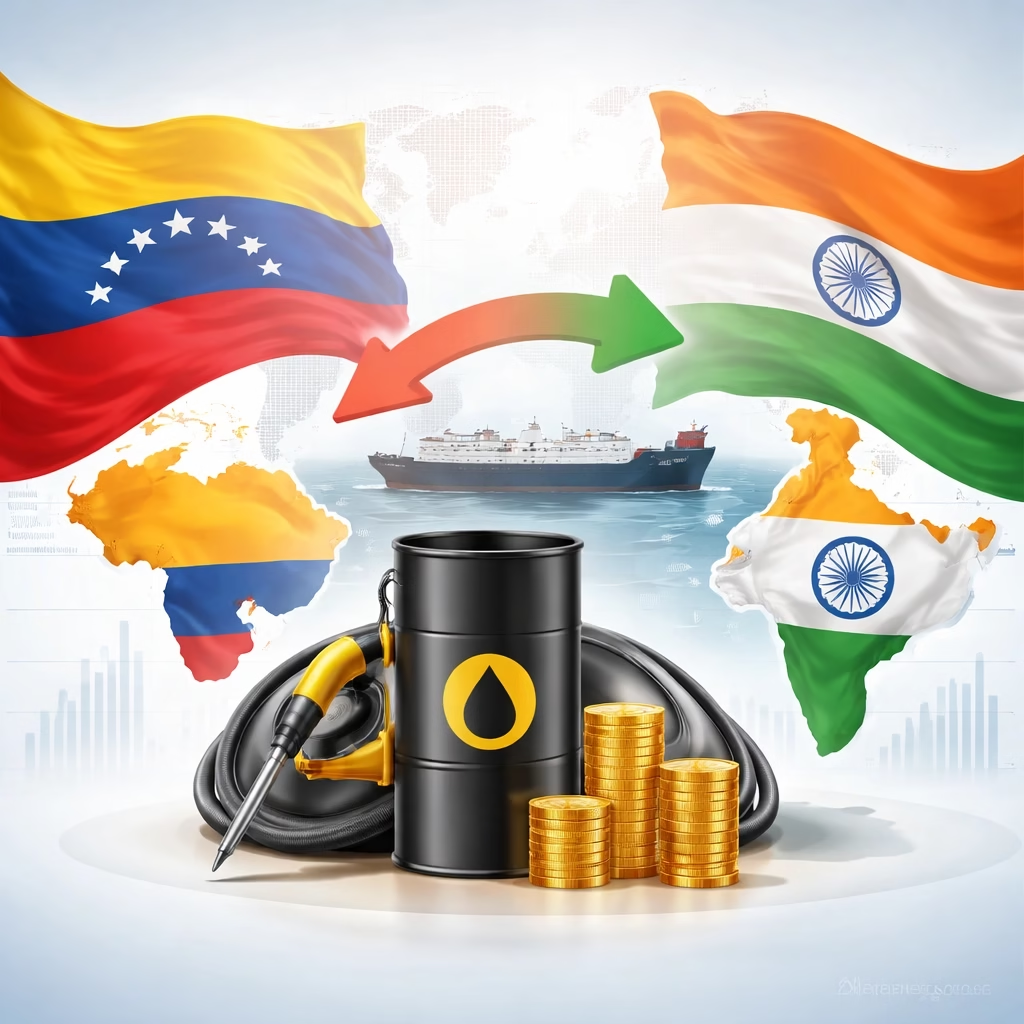
This strategic diversification, initiated well before the most severe sanctions took hold, involved increasing imports from the Middle East, West Africa, the United States, and more recently, Russia. The government's emphasis on energy security has driven this policy, ensuring that no single region or nation dominates India's crude supply chain.
More Read

Key Developments: Current Realities and Import Landscape
Recent reports from Venezuela indicate renewed labor disputes and protests within the oil sector, alongside broader societal unrest fueled by economic hardship. While such events would typically raise concerns in major importing nations, their impact on India is now fundamentally different due to the altered dynamics of global oil trade.
Venezuela’s Current Output and Global Share
Currently, Venezuela's oil production hovers around 700,000 to 800,000 bpd, a mere fraction of global demand which exceeds 100 million bpd. Its contribution to the international market is thus marginal, making any internal disruptions less impactful on global supply-demand balances compared to a decade ago. The country struggles with dilapidated infrastructure, lack of investment, and a brain drain of skilled personnel, rendering quick recovery challenging even if sanctions were fully lifted.
India’s Broadened Import Basket
India, the world's third-largest crude oil importer, has significantly broadened its supplier base. Data for recent fiscal years shows a robust diversification:
Middle East: Continues to be a dominant supplier, with Saudi Arabia, Iraq, and UAE remaining top sources.
Russia: Emerged as India's largest crude oil supplier in 2023, capitalizing on discounted prices following Western sanctions related to the Ukraine conflict.
United States: Has steadily increased its share, becoming a consistent top-five supplier, offering diverse crude grades.
West Africa: Nations like Nigeria and Angola continue to be important sources for specific crude types.
Latin America (excluding Venezuela): Countries like Brazil and Mexico also contribute to India's imports, albeit in smaller volumes compared to pre-sanction Venezuelan levels.
As of late 2023 and early 2024, direct crude oil imports from Venezuela to India are virtually non-existent, or limited to sporadic, small shipments under specific, often humanitarian, sanctions waivers. This stands in stark contrast to periods before 2019 when Venezuela was consistently among India's top five crude suppliers.

Minimal Impact: Why India Remains Resilient
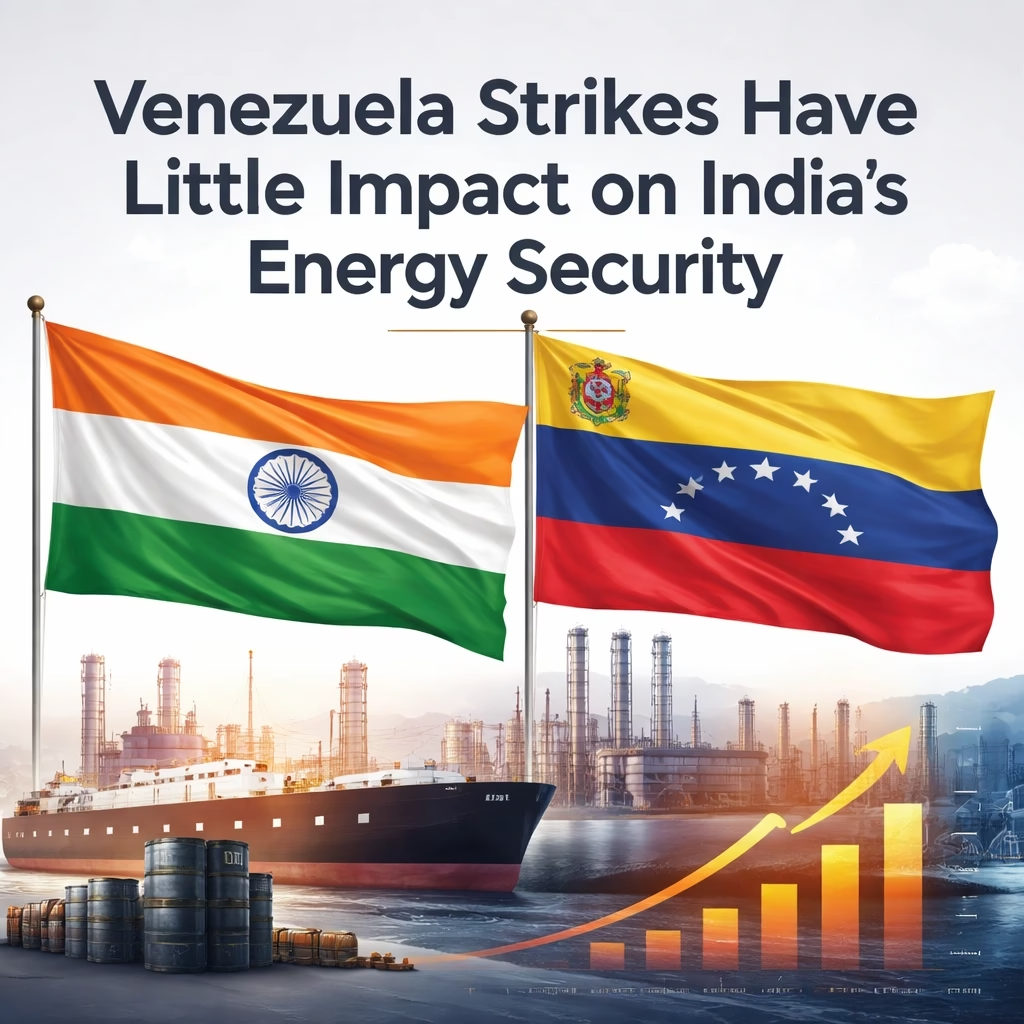
The data clearly illustrates why strikes in Venezuela no longer pose a significant threat to India's energy security. The confluence of Venezuela's reduced output and India's strategic foresight has created a robust buffer.
Diversified Supply Chains and Redundancy
India's refiners have successfully reconfigured their supply chains and adjusted their processing capabilities to handle crude from a wider array of sources. This redundancy means that a disruption from any single minor supplier, or even a historically significant one that has since diminished, can be easily absorbed by increasing imports from other partners. The global oil market remains well-supplied, despite geopolitical tensions, allowing India flexibility in procurement.
Strategic Petroleum Reserves (SPR)
India has also invested in building Strategic Petroleum Reserves (SPRs) at various locations, including Visakhapatnam, Mangaluru, and Padur. These reserves provide an emergency buffer, capable of meeting several days of the nation's crude oil requirements in the event of severe global supply shocks, further insulating the country from distant disruptions.
Long-Term Contracts and Spot Market Agility
While India relies on long-term contracts for a significant portion of its crude needs, particularly from the Middle East, it also maintains robust participation in the global spot market. This allows Indian refiners to quickly procure crude from available sources, often at competitive prices, in response to market conditions or unforeseen disruptions elsewhere.
What Next: Sustaining India’s Energy Security Strategy
Looking ahead, India's energy security strategy is expected to continue its trajectory of diversification and resilience. While potential changes in Venezuela's political landscape or a significant easing of sanctions could theoretically open avenues for renewed trade, any re-engagement would likely be cautious and measured, unlikely to revert to the pre-2019 dependency levels.
Continued Focus on Diverse Sourcing
India will likely maintain its policy of not over-relying on any single region or nation for its crude oil needs. This includes strengthening ties with existing diverse suppliers and exploring new opportunities, such as potential future increases from Guyana or other emerging producers.
Investing in Domestic Production and Renewables
Beyond crude imports, India is aggressively pursuing enhanced domestic oil and gas exploration and production, though its potential is limited compared to consumption. Concurrently, massive investments in renewable energy sources like solar and wind, alongside a push for electric vehicles and green hydrogen, aim to reduce the nation's overall reliance on fossil fuel imports in the long term, strengthening its energy independence.
Monitoring Global Geopolitics
Indian policymakers and energy companies will continue to closely monitor global geopolitical developments, including potential shifts in sanctions regimes affecting countries like Venezuela and Iran. However, the current data underscores that even significant internal turmoil in a historically important, but currently marginalized, oil producer like Venezuela presents minimal immediate threat to India's robust and adaptable energy security framework.