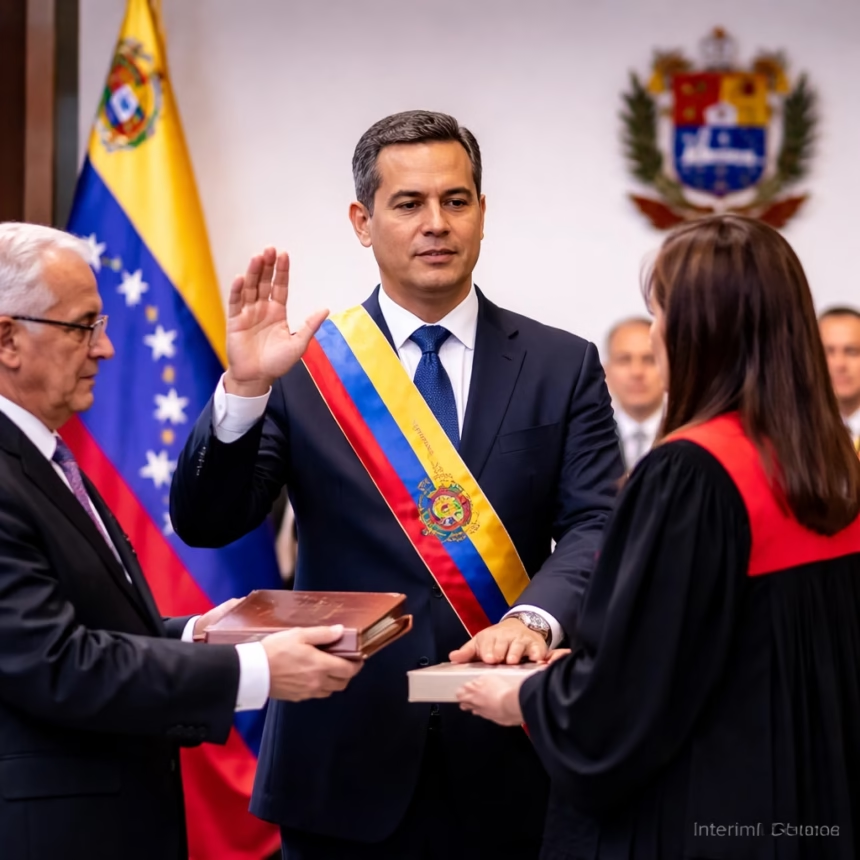
Caracas, Venezuela – In a significant political maneuver this week, Venezuela swore in an interim leader, a move explicitly framed by the government as a demonstration of its sovereign decision-making, free from foreign interference. The ceremony, held at the Federal Legislative Palace in Caracas, signals a new phase in the nation's complex political landscape, aiming to reassert domestic control over its governance and challenge international perceptions of its legitimacy.
Background: A Nation Divided and Under Pressure
Venezuela has been embroiled in a profound political and economic crisis for several years, marked by deep internal divisions and significant international scrutiny. The roots of the current situation trace back to the 2018 presidential elections, which saw incumbent President Nicolás Maduro declared the winner. However, these elections were widely boycotted by the opposition and deemed illegitimate by the United States, the European Union, and numerous Latin American countries, citing irregularities and a lack of fair competition.
The Rise and Fall of the Opposition’s Interim Government
In January 2019, Juan Guaidó, then president of the National Assembly elected in 2015, invoked articles of the Venezuelan constitution to declare himself interim president, arguing that Maduro's presidency was illegitimate. Guaidó quickly gained recognition from over 50 nations, including the United States, Canada, and most members of the Lima Group. This move created a parallel government structure, with Guaidó attempting to exert control over Venezuelan assets abroad and advocating for a transition to democracy.
The U.S. government, under both the Trump and Biden administrations, imposed extensive sanctions on Venezuela, targeting its vital oil industry (PDVSA), state entities, and key individuals within Maduro's government. These sanctions aimed to pressure Maduro to step down and facilitate a democratic transition, but they also severely exacerbated Venezuela's economic woes, contributing to hyperinflation, shortages of basic goods, and a massive exodus of over seven million Venezuelans to neighboring countries and beyond.
Despite international backing, Guaidó's interim government struggled to gain effective control within Venezuela, lacking command over state institutions, the military, or the bureaucracy. Over time, his support waned both domestically and internationally. By late 2022, a significant portion of the opposition itself moved to dissolve Guaidó's interim presidency, citing its ineffectiveness and the need for a new strategy to confront Maduro's government.

Key Developments: A New Chapter in Caracas
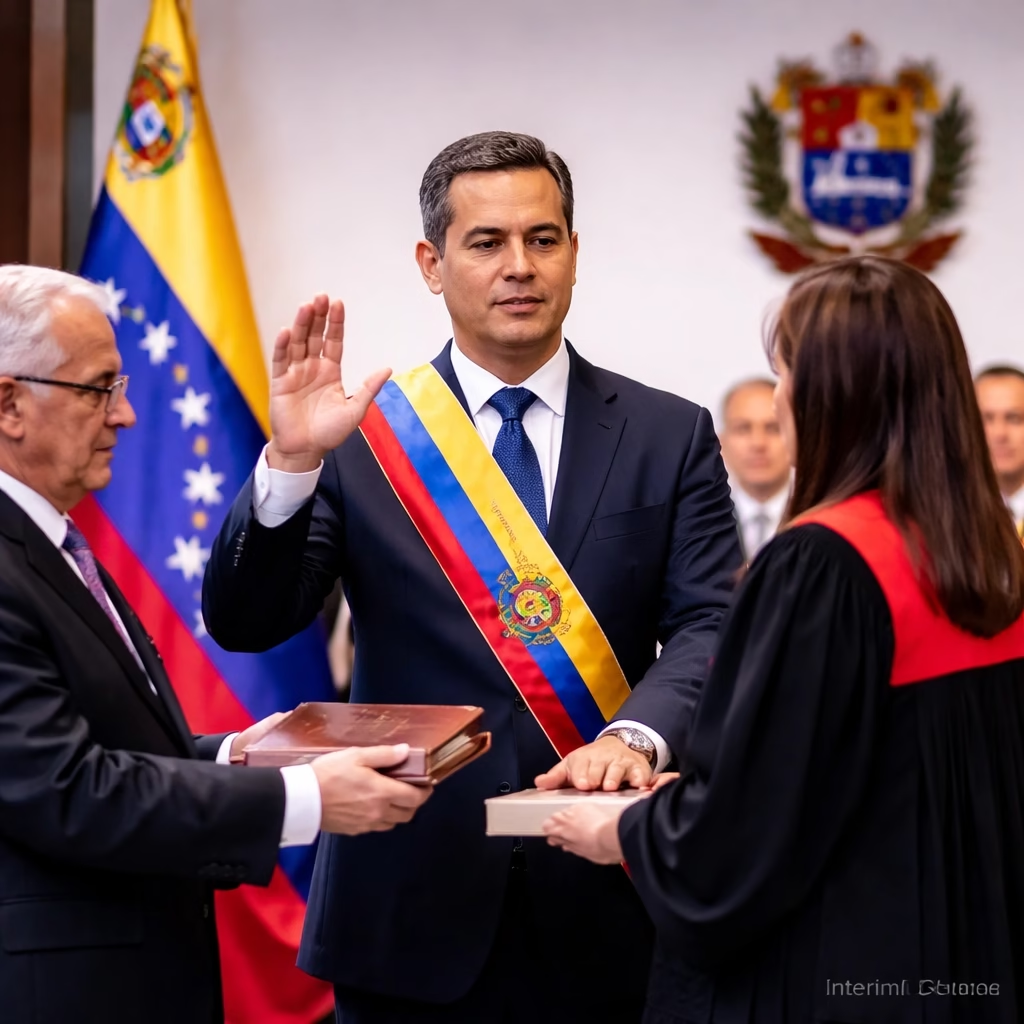
Following the dissolution of the U.S.-backed interim government, Venezuela's government-aligned National Assembly, elected in 2020, moved to establish a new political framework. This week, it formally swore in Dr. Sofia Morales as the nation's new interim leader, a position designed to consolidate domestic political processes and present a unified front against external interference.
The Appointment and Its Mandate
Dr. Morales, a seasoned diplomat and former Minister of Foreign Affairs, was unanimously approved by the National Assembly. Her appointment comes with a clear mandate: to spearhead a new era of national dialogue, prepare for future electoral processes, and rebuild international relations on terms of mutual respect and non-interference. During her inaugural address, Dr. Morales emphasized the importance of Venezuelan sovereignty, stating, "Our nation's destiny will be decided by Venezuelans, within Venezuela, free from the dictates of any foreign power."
More Read

Strategic Reassertion of Sovereignty
This move is perceived by analysts as a strategic effort by the Maduro government to fill the political vacuum left by the collapse of the opposition's interim government and to project an image of a stable, self-governing nation. By appointing an interim leader through its own legislative body, Caracas aims to demonstrate that it possesses the institutional capacity to manage its own transitions and political processes, thereby undermining arguments for external intervention or the recognition of parallel authorities.
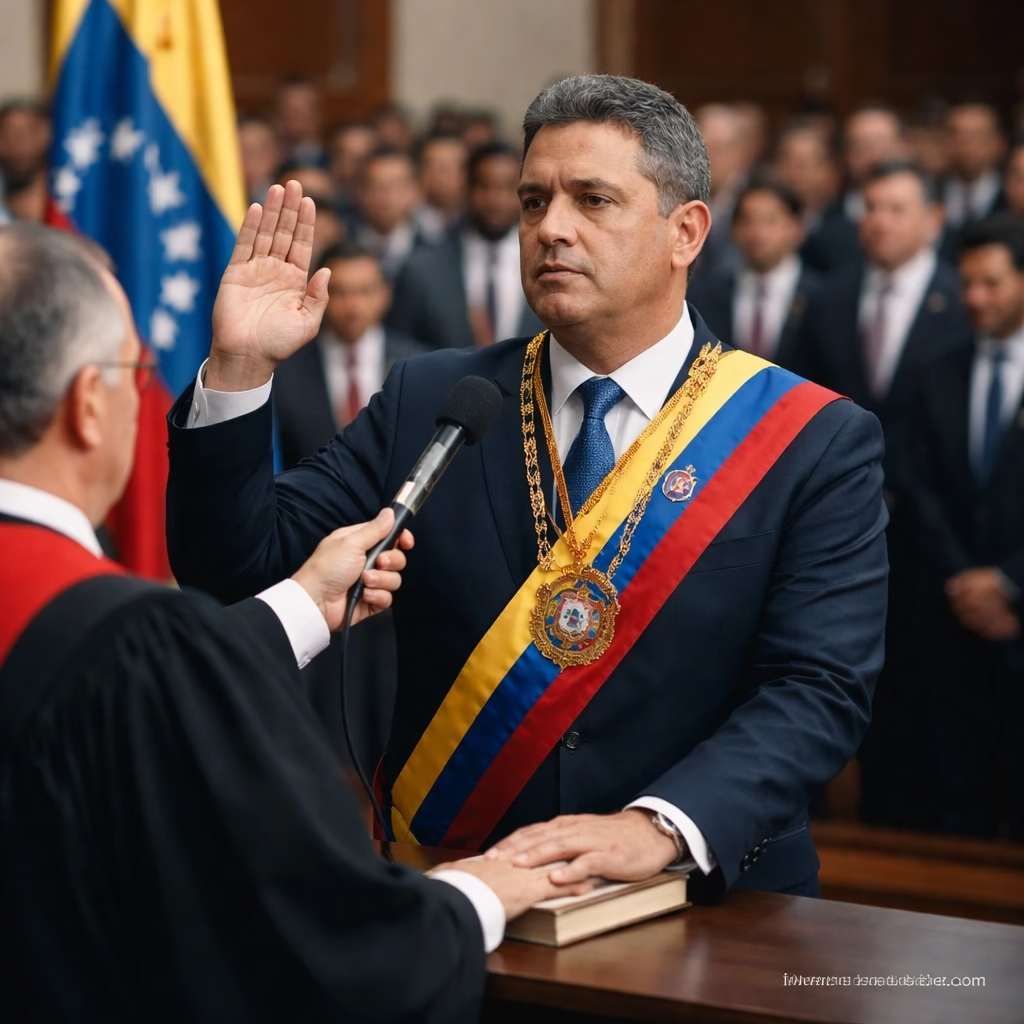
The ceremony was attended by high-ranking government officials, members of the diplomatic corps from allied nations, and representatives from various social movements. State media provided extensive coverage, portraying the event as a triumph of national self-determination and a definitive rejection of what it frequently terms "imperialist aggression."
Impact: Domestic Stability and International Relations
The swearing-in of Dr. Morales is expected to have multifaceted impacts, both within Venezuela and across the international arena. Domestically, the move could potentially stabilize the political landscape by offering a clear, government-backed path forward, distinct from the previous years of dual power claims. However, it also risks further entrenching the current political system, deepening the divide with opposition factions that continue to challenge the legitimacy of the 2020 National Assembly.
Domestic Repercussions and Humanitarian Concerns
For ordinary Venezuelans, the immediate impact on daily life may be limited, as the underlying economic and humanitarian crises persist. However, the government hopes this consolidation of power will facilitate greater efficiency in governance and potentially open avenues for humanitarian aid that bypass previous political obstacles. Critics, however, fear that this move might further marginalize dissenting voices and consolidate power without addressing fundamental democratic deficits or human rights concerns.
Shifting Geopolitical Dynamics
Internationally, the appointment poses a direct challenge to the U.S. and its allies, who previously recognized Guaidó. It forces these nations to reconsider their diplomatic strategies towards Venezuela. The U.S. Department of State has yet to issue a formal statement, but analysts anticipate a reiteration of calls for free and fair elections and a continued stance against the legitimacy of the Maduro government. However, the absence of a recognized opposition interim president complicates the existing framework of sanctions and diplomatic pressure.

For countries like Russia, China, Cuba, and Iran, who have consistently supported Maduro, this development is likely to be welcomed as a sign of Venezuelan resilience and sovereignty. It could strengthen their diplomatic and economic ties with Caracas, potentially leading to new trade agreements or increased cooperation in various sectors. Regional partners, particularly those within the Caribbean and Latin America, will also be closely watching, weighing their own diplomatic responses and the implications for regional stability and migration patterns.
What Next: Navigating a Complex Future
The swearing-in of Dr. Sofia Morales marks a pivotal moment, but it is just one step in Venezuela's ongoing political saga. The path forward remains fraught with challenges and uncertainties, requiring careful navigation from all stakeholders.
Electoral Prospects and Dialogue
A key focus will be on the prospect of future elections. Dr. Morales's mandate includes preparing the ground for credible and transparent electoral processes, potentially including presidential elections. The international community, particularly the U.S. and EU, will likely condition any easing of sanctions or normalization of relations on the conduct of these elections, demanding robust international observation and guarantees of fairness for all political actors. Dialogue with the fragmented opposition remains crucial, and Dr. Morales has indicated a willingness to engage in broad national consultations.
Economic Recovery and Sanctions Relief
Venezuela's economy remains in dire straits, heavily reliant on oil production that has been severely curtailed by mismanagement and sanctions. The new interim leadership will likely prioritize efforts to attract foreign investment and secure relief from international sanctions. Any significant economic recovery will hinge on a complex interplay of domestic policy reforms, global oil prices, and a potential recalibration of U.S. policy, which could be influenced by geopolitical considerations, including global energy security.
International Realignments
The coming months will also see intense diplomatic activity as nations reassess their positions on Venezuela. The U.S. may explore new avenues for engagement, perhaps through multilateral forums, to push for democratic reforms without the direct involvement of an opposition interim president. The role of the United Nations and other international bodies in mediating a peaceful resolution and facilitating humanitarian assistance will become even more critical. Venezuela's bold move to appoint its own interim leader underscores its determination to chart an independent course, setting the stage for a period of dynamic shifts in its domestic politics and international relations.