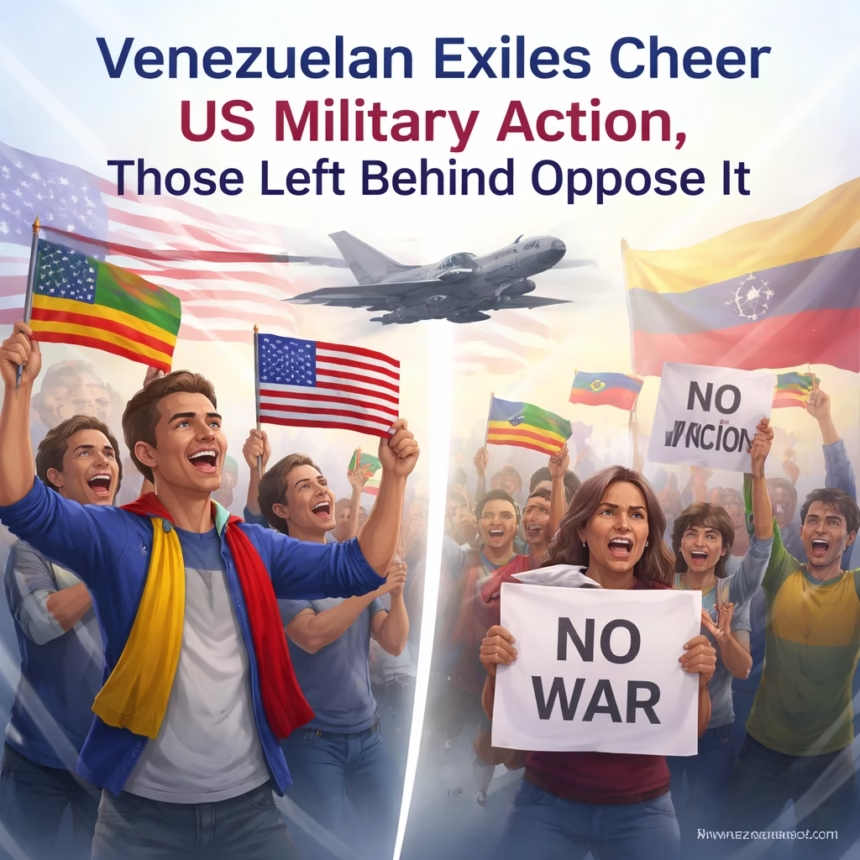
A stark and deeply emotional chasm has emerged within the Venezuelan population, dividing those who have fled the country from those who remain. While many Venezuelan exiles in the United States and elsewhere increasingly voice support for potential US military intervention as a desperate measure to resolve the nation's protracted crisis, a significant portion of the population still residing within Venezuela expresses strong opposition, fearing the catastrophic consequences of armed conflict and an infringement on national sovereignty. This profound disagreement underscores the complex and tragic dimensions of Venezuela's ongoing political and humanitarian emergency.
Background
Venezuela, once one of South America's wealthiest nations due to its vast oil reserves, has been mired in a severe economic and political crisis for over a decade. This prolonged downturn has led to an unprecedented humanitarian catastrophe, prompting a mass exodus of its citizens and creating a deeply polarized society both domestically and internationally.
The Venezuelan Crisis Deepens
The roots of the current crisis can be traced back to the mid-2010s, when a combination of plummeting oil prices, economic mismanagement, and widespread corruption began to dismantle the nation's once-robust social and economic fabric. Under the presidency of Nicolás Maduro, who assumed office in 2013 following the death of Hugo Chávez, the situation deteriorated rapidly. Hyperinflation, which peaked at over 130,000% in 2018 according to the International Monetary Fund, decimated purchasing power. Basic services, including electricity, water, and healthcare, collapsed across the country. Food and medicine shortages became chronic, leading to widespread malnutrition and preventable deaths. The government's increasingly authoritarian grip, marked by suppression of dissent, political arrests, and allegations of human rights abuses, further exacerbated the crisis, pushing millions to seek refuge abroad.
Mass Exodus and the Diaspora
The humanitarian emergency triggered one of the largest displacement crises in recent history. As of late 2023, more than 7.7 million Venezuelans have left their homeland, according to the United Nations Refugee Agency (UNHCR). This diaspora has primarily sought refuge in neighboring Latin American countries, with Colombia hosting over 2.8 million, Peru over 1.5 million, and Ecuador, Chile, and Brazil collectively housing another 1.5 million. Significant communities have also settled in the United States, Spain, and other European nations.
The motivations for leaving are multifaceted, ranging from the immediate need for food and medical care to a desire for political freedom and economic opportunity. Exiles often describe arduous journeys, facing xenophobia, exploitation, and precarious living conditions in their host countries. Despite the hardships, many maintain a fervent hope for a fundamental change in Venezuela that would allow them to return and rebuild their lives. This hope often fuels their advocacy for stronger international action.

US Policy and Sanctions
The United States has long been a vocal critic of the Maduro government, viewing it as an illegitimate regime that has systematically undermined democracy and human rights. Under the Trump administration, US policy adopted a "maximum pressure" campaign, imposing extensive economic sanctions targeting Venezuela's oil industry, gold sector, and key government officials. These measures, initiated in 2017 and intensified through 2019, aimed to cut off revenue streams to the Maduro government and pressure it into democratic concessions.
In January 2019, the US recognized Juan Guaidó, then president of Venezuela's National Assembly, as the interim president of Venezuela, deeming Maduro's 2018 re-election illegitimate. While the Biden administration has continued to recognize the "democratic aspirations" of the Venezuelan people, its approach has shifted slightly, exploring limited sanctions relief in exchange for progress in negotiations between the government and opposition. However, the overarching stance remains critical, with US officials frequently stating that "all options are on the table" – a phrase often interpreted as a veiled reference to potential military action, although typically presented as a last resort.
Key Developments
Recent shifts in rhetoric and the ongoing stalemate in political negotiations have brought the prospect of more assertive international action, including military intervention, back into public discourse, particularly among the Venezuelan diaspora. This has reignited the debate about the efficacy and morality of such measures.
More Read

Escalating Rhetoric and Military Drills
In recent months, statements from some US lawmakers and former officials have become more explicit in discussing potential military options, often framed within the context of humanitarian intervention or restoring democracy. While the official White House position has remained cautious, the persistent use of the "all options" phrase by various US administrations keeps the possibility alive.
In response, the Venezuelan government has frequently condemned what it calls "imperialist threats" from the United States, using the rhetoric to rally nationalistic support. Venezuela's armed forces, the FANB, regularly conduct military exercises across the country, often portraying them as defensive maneuvers against potential foreign aggression. These drills, sometimes involving tens of thousands of personnel, are typically accompanied by strong anti-US propaganda, reinforcing the narrative of national sovereignty under threat.
The Exiles’ Perspective: A Call for Intervention
For millions of Venezuelan exiles, particularly those in the United States, the idea of US military intervention is not a threat but a desperate plea for liberation. Many in communities like Doral, Florida – often referred to as "Doralzuela" due to its large Venezuelan population – view intervention as the only viable path to end the humanitarian crisis and restore democracy.
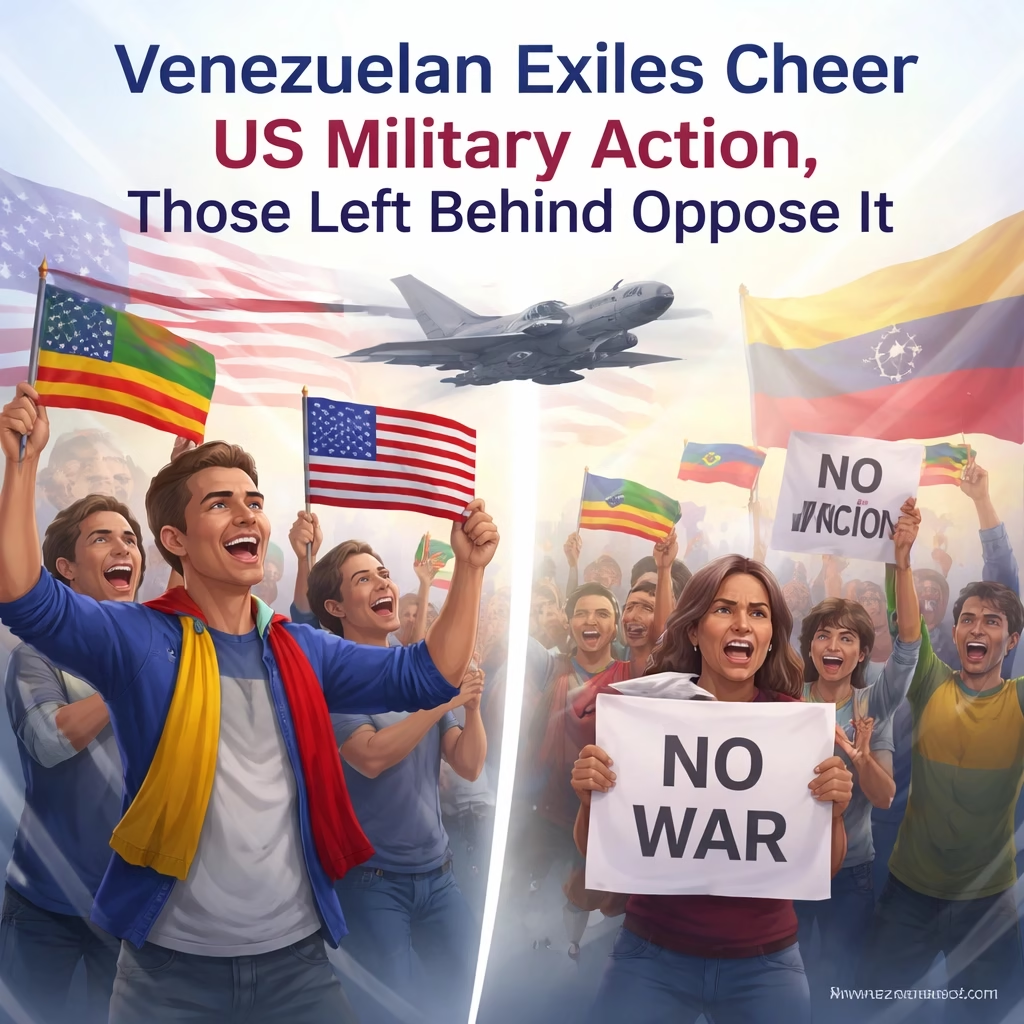
Their support stems from a deep-seated belief that all other avenues, including sanctions, diplomatic negotiations, and internal opposition movements, have failed to dislodge the Maduro government or alleviate the suffering of those left behind. Exiles often speak of the psychological toll of watching their country collapse from afar, feeling helpless as family members struggle with food scarcity, lack of medical care, and political repression. For them, intervention represents a moral imperative, a last resort to save their homeland from what they perceive as a tyrannical regime. They often point to historical precedents, such as interventions in Panama or Grenada, as examples of successful, albeit controversial, operations that led to regime change. Organizations representing the diaspora frequently lobby US officials, advocating for stronger measures, including military options, believing that only external force can break the current deadlock.
The Residents’ View: Fear and Sovereignty
In stark contrast, a significant portion of the Venezuelan population still living within the country largely opposes foreign military intervention. While many citizens are deeply dissatisfied with the Maduro government and yearn for change, the prospect of a US military presence evokes widespread fear and concern for national sovereignty.
This opposition is rooted in several factors. Firstly, there is a profound fear of war and its devastating consequences. Venezuelans have witnessed the suffering caused by internal conflict and instability in neighboring countries and worry about the potential for widespread civilian casualties, destruction of infrastructure, and further displacement. The memories of past US interventions in Latin America, often viewed as destabilizing and self-serving, also fuel a deep-seated distrust of foreign military involvement.
Secondly, the Maduro government's extensive propaganda machine effectively capitalizes on nationalistic sentiment, portraying any foreign military action as an attack on Venezuelan sovereignty and an attempt to seize the nation's oil wealth. This narrative resonates with a segment of the population, including government loyalists and those wary of external influence, who prioritize national independence above all else. Even many who are critical of the government prefer a Venezuelan-led solution, fearing that foreign intervention would only exacerbate existing divisions and lead to a prolonged conflict with unpredictable outcomes. Surveys conducted within Venezuela, though challenging to execute impartially, have generally indicated low support for foreign military intervention, even among opposition sympathizers.
Impact
Any form of military action, whether limited or extensive, would unleash a cascade of profound and far-reaching consequences, affecting not only Venezuela but also the broader region and international geopolitical landscape.
Humanitarian Concerns
The most immediate and devastating impact of military intervention would be on the civilian population. A conflict could trigger a massive surge in refugees and internally displaced persons, overwhelming the already strained resources of neighboring countries like Colombia, Peru, and Ecuador. The existing humanitarian crisis, characterized by food and medicine shortages, would be severely exacerbated, making aid delivery incredibly challenging and dangerous. Infrastructure, already crumbling, would face further destruction, impacting essential services such as electricity, water, and healthcare for millions. The risk of civilian casualties, both direct and indirect, would be exceptionally high, compounding the human tragedy that has already unfolded over the past decade.
Regional Stability
A military intervention in Venezuela would send shockwaves across Latin America, potentially destabilizing an already fragile region. Neighboring countries, particularly those sharing long, porous borders with Venezuela, would face immense pressure from increased refugee flows and the potential for spillover violence. Colombia, which has historically had complex relations with Venezuela and hosts the largest number of Venezuelan migrants, would be particularly vulnerable. The conflict could also ignite proxy battles, drawing in other regional actors and further militarizing border zones. It would challenge existing regional alliances and diplomatic frameworks, potentially leading to a fragmentation of political consensus and increased tensions among nations with differing views on intervention and sovereignty.
Geopolitical Ramifications
Beyond Latin America, military action in Venezuela would have significant geopolitical implications. Countries like Russia, China, Cuba, and Iran, which have maintained strong diplomatic and economic ties with the Maduro government, would likely condemn any intervention as a violation of international law and national sovereignty. This could escalate tensions between major global powers, potentially leading to increased support for the Maduro government from these nations, complicating any post-intervention scenario. The principle of non-intervention in the internal affairs of sovereign states, a cornerstone of international law, would be severely tested, potentially setting precedents for future interventions elsewhere. Furthermore, the US's standing in Latin America, already viewed with suspicion by some due to historical interventions, could be significantly damaged, fueling anti-American sentiment across the continent.
What Next
The path forward for Venezuela remains highly uncertain, with a complex interplay of internal dynamics, regional pressures, and international policies shaping its trajectory. The debate over military intervention is likely to persist as long as the fundamental crisis remains unresolved.
Diplomatic Efforts and Sanctions
Despite the calls for military action, diplomatic solutions and targeted sanctions remain the primary tools employed by the international community. Negotiations between the Venezuelan government and the opposition, often facilitated by Norway or Mexico, have seen intermittent progress but frequently stall over key issues such as electoral conditions, political prisoners, and sanctions relief. The international community, including the United Nations and the Organization of American States (OAS), continues to advocate for a peaceful, negotiated settlement that respects human rights and democratic principles. US sanctions, while partially eased at times to encourage dialogue, continue to exert economic pressure, with their effectiveness and humanitarian impact remaining subjects of intense debate. Future developments will largely hinge on the willingness of both the government and the opposition to make genuine concessions for the sake of national stability.
Political Landscape in Venezuela
Internally, Venezuela's political landscape is characterized by deep divisions and a persistent power struggle. The Maduro government maintains control over state institutions and the military, effectively quashing most forms of internal dissent. The opposition, while ideologically diverse, has struggled to present a united front, often hampered by internal disagreements and government repression. Upcoming elections, particularly the presidential elections anticipated in 2024, will be a critical test. The credibility and fairness of these elections, including the participation of all political actors and international observation, will significantly influence the country's political future and the international community's response. Any perceived lack of democratic guarantees could further entrench the crisis and intensify calls for external pressure.
US Posture and Regional Dynamics
The United States' approach to Venezuela will continue to be a crucial factor. While the Biden administration has shown a preference for diplomatic engagement over military confrontation, the "all options on the table" rhetoric remains. Future US policy will likely be influenced by the outcomes of Venezuelan elections, the humanitarian situation, and the broader geopolitical context. Regional dynamics also play a significant role. The stance of neighboring countries, their capacity to manage refugee flows, and their willingness to engage in multilateral diplomatic efforts will collectively shape the environment surrounding Venezuela. The ongoing debate within the Venezuelan diaspora, with its passionate pleas for intervention, will also continue to exert pressure on policymakers, ensuring that the question of military action, however remote, remains a part of the broader conversation about Venezuela's future.