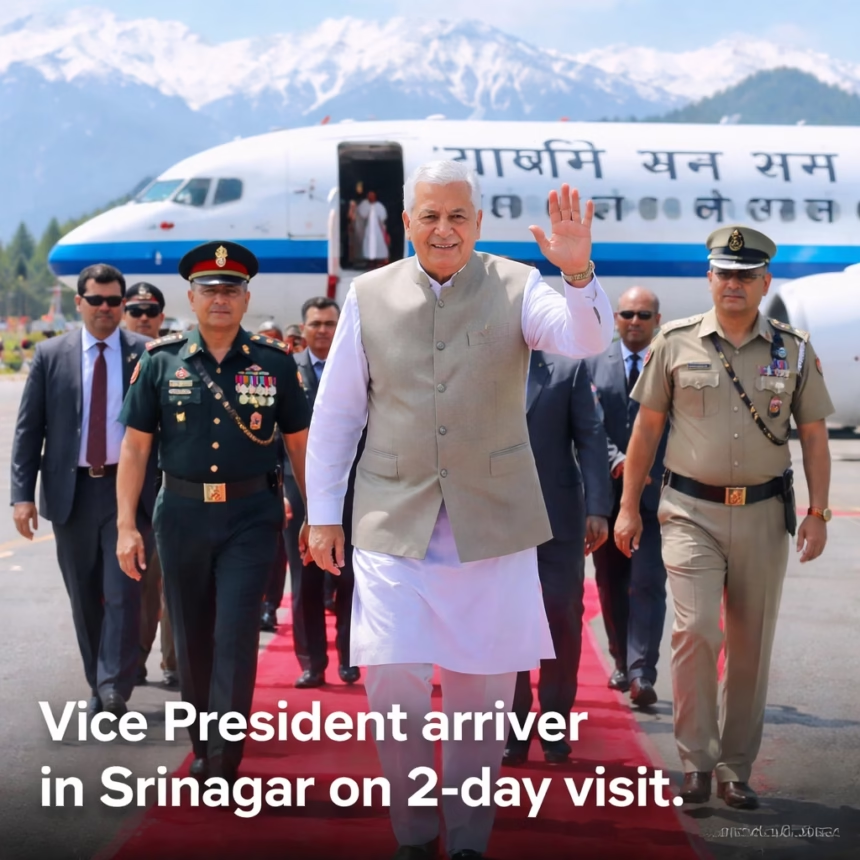
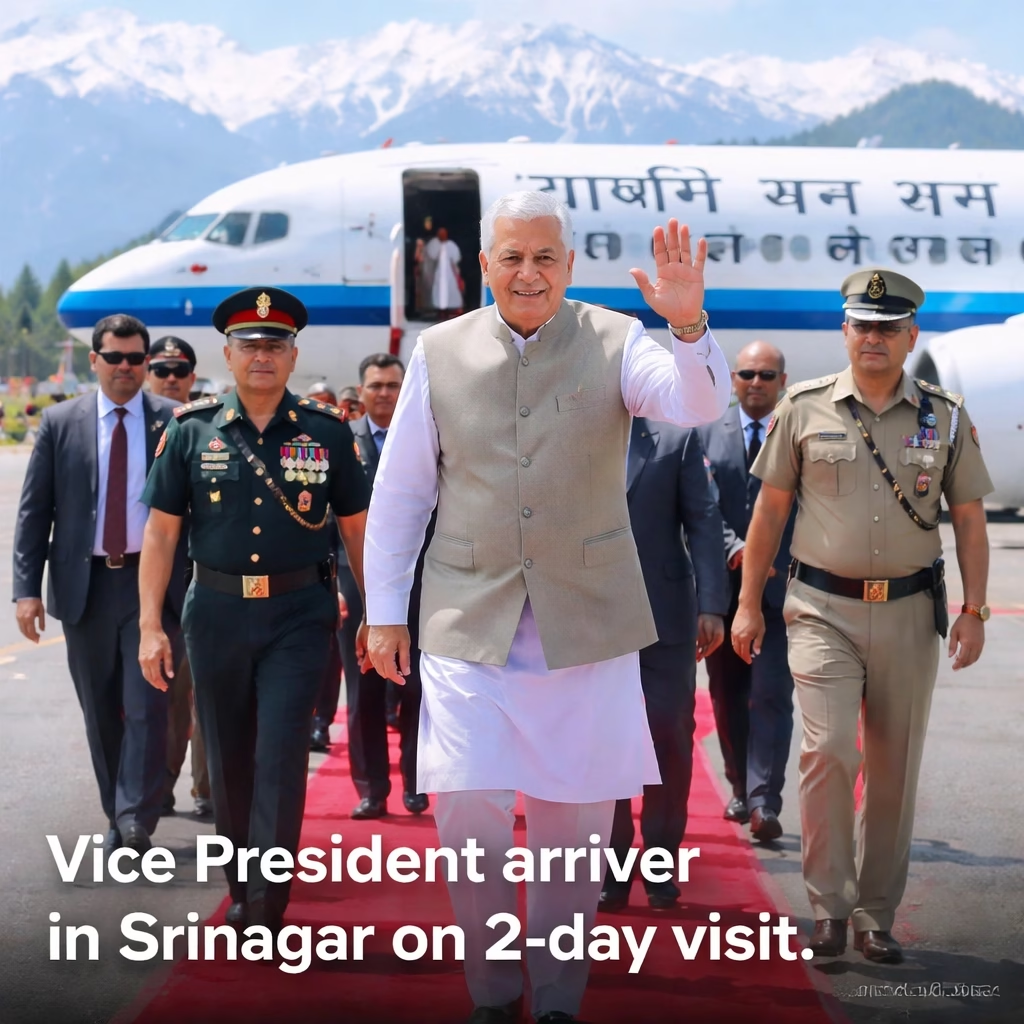
The Vice President of India, Jagdeep Dhankhar, arrived in Srinagar on Tuesday, October 24, 2023, for a significant two-day visit aimed at reviewing developmental initiatives, engaging with local stakeholders, and reinforcing the central government's commitment to Jammu and Kashmir. His arrival marks another high-profile engagement in the region, underscoring New Delhi's sustained focus on its integrated development and security landscape. The visit is packed with a series of high-level meetings and public interactions, signaling a renewed push for progress and stability in the Union Territory.
Background: A Region in Flux
Jammu and Kashmir, a strategically vital region, has been at the forefront of national discourse, particularly since the abrogation of Article 370 in August 2019. This constitutional change led to the reorganization of the erstwhile state into two Union Territories: Jammu and Kashmir, and Ladakh. The move was heralded by the central government as a step towards greater integration, development, and the eradication of terrorism, promising to bring the region on par with other parts of the country in terms of governance and economic opportunities.
Historical Context of J&K
The region has a complex history marked by geopolitical sensitivities, internal political dynamics, and a persistent security challenge. For decades, Article 370 provided special status, but critics argued it hindered full integration and fostered separatism. The post-2019 era has seen a concerted effort by the central government to dismantle what it describes as a "separatist ecosystem" and to usher in an era of peace and prosperity through a development-centric approach. This includes massive infrastructure projects, direct implementation of central schemes, and efforts to boost tourism and investment.
Post-2019 Landscape and Central Outreach
Since the constitutional changes, Jammu and Kashmir has witnessed a series of administrative reforms, a significant delimitation exercise, and a push for grassroots democracy through Panchayat and local body elections. The central government has consistently emphasized a "Naya Kashmir" (New Kashmir) narrative, focusing on youth empowerment, job creation, and fostering a sense of normalcy. High-level visits by Union Ministers and even the Prime Minister have become more frequent, each visit typically accompanied by announcements of new projects or reviews of ongoing initiatives. These visits are crucial for direct feedback, bypassing traditional political channels that have often been viewed with skepticism by the central leadership. The current visit by the Vice President fits into this broader strategy of direct engagement and oversight.
Economic and Security Imperatives
Economically, Jammu and Kashmir holds immense potential in tourism, horticulture, and handicrafts. However, years of conflict and political instability have hampered its full realization. The government's strategy now involves attracting investment, promoting local entrepreneurship, and showcasing the region's natural beauty to a global audience. The G20 Tourism Working Group meeting held earlier this year in Srinagar was a significant step in this direction, projecting an image of peace and stability. On the security front, while incidents of terrorism have reportedly decreased, vigilance remains high. The Vice President's visit provides an opportunity to review the security preparedness and strategy in light of evolving regional dynamics.

Key Developments: Itinerary and Engagements
Upon his arrival at Srinagar International Airport, Vice President Dhankhar was accorded a ceremonial welcome by Lieutenant Governor Manoj Sinha, senior civil and police officials, and representatives from the local administration. His packed itinerary over the two days is designed to cover a wide spectrum of activities, reflecting the multi-faceted approach to governance in the region.
High-Level Consultations
The Vice President immediately delved into high-level consultations, beginning with a meeting with Lieutenant Governor Manoj Sinha at Raj Bhavan. Discussions are expected to focus on the overall security situation, progress of key developmental projects, and the implementation of central government schemes. These schemes range from infrastructure development under the Prime Minister's Development Package (PMDP) to social welfare programs like Ayushman Bharat and the Jal Jeevan Mission, which aim to improve the quality of life for ordinary citizens. The Vice President is also slated to interact with senior officials from the civil administration, police, and security forces to get a firsthand account of the ground realities and operational challenges.
Focus on Economic Revival and Youth Empowerment
A significant part of the Vice President's visit is dedicated to interacting with various sections of society. He is scheduled to meet delegations from local business chambers, representatives of the tourism industry, and civil society groups. These interactions are crucial for understanding the challenges faced by local entrepreneurs and for gathering feedback on government policies. There is a strong emphasis on youth empowerment during this visit. The Vice President is expected to address students and faculty at a prominent educational institution, likely discussing the importance of education, skill development, and entrepreneurship in shaping the future of Jammu and Kashmir. He may also inaugurate or lay the foundation stone for new educational or skill development centers, symbolizing the central government's investment in the region's human capital.
More Read

Inaugural Events and Public Addresses
While specific details were kept under wraps for security reasons, sources indicate the Vice President may inaugurate a significant infrastructure project or a public facility that has recently been completed. This could include a new section of a highway, a bridge, or a cultural center. Public addresses are also anticipated, where he is likely to reiterate the central government's commitment to peace, development, and the democratic aspirations of the people of Jammu and Kashmir. Such addresses serve to reassure the local populace and project a message of stability and progress to a wider national and international audience.
Impact: Ripple Effects Across the Region
The Vice President's visit is not merely a ceremonial event; it carries significant implications across various strata of society and the political landscape of Jammu and Kashmir. Its impact is anticipated to be felt by the local populace, political entities, and the economic sectors alike.
Local Sentiments and Aspirations
For the common people, such high-profile visits often bring a mix of hope and expectation. There is an anticipation of new development projects, improved public services, and a continued focus on addressing issues like unemployment and infrastructure gaps. The direct interaction with the Vice President offers a rare opportunity for local voices to be heard, even if indirectly through representative groups. The emphasis on youth and education is particularly resonant, as many young Kashmiris aspire for better opportunities and a peaceful future. However, security concerns remain an underlying factor, and the visible presence of security forces during such visits can evoke mixed feelings.
Political Realignments and Future Prospects
From a political perspective, the visit reinforces the central government's direct engagement model, often bypassing traditional regional political parties. It signals a continued push for mainstreaming the political process, potentially laying groundwork for future democratic exercises, including assembly elections. Such visits can influence the political narrative, shaping public opinion and potentially impacting the strategies of regional parties as they navigate the post-Article 370 landscape. It also underscores the central government's unwavering stance on the constitutional changes and its vision for the Union Territory.
Economic Momentum and Tourism Boost
The visit is expected to provide a further impetus to the region's economy, particularly its burgeoning tourism sector. Following the successful G20 event, Srinagar has seen a noticeable increase in tourist footfall. The Vice President's presence further highlights the region's return to normalcy and its potential as a prime tourist destination. Discussions with business leaders could pave the way for new investments in sectors like hospitality, handicrafts, and agriculture, which are vital for local livelihoods. A focus on infrastructure development also contributes directly to economic growth by improving connectivity and logistics.

Reinforcing Security and Governance
For the security apparatus, the visit provides a crucial opportunity for strategic review and coordination. Interactions with top security officials allow for a comprehensive assessment of the counter-insurgency operations, border management, and intelligence gathering. It reinforces the central government's resolve to maintain peace and order. Administratively, the visit serves as an oversight mechanism, ensuring that central schemes are being implemented effectively and that governance remains transparent and accountable.
What Next: Charting the Course Forward
The Vice President's two-day visit is a critical juncture in the ongoing efforts to integrate and develop Jammu and Kashmir. While immediate outcomes include project reviews and stakeholder engagement, the visit also sets the stage for several anticipated milestones and long-term objectives.
Roadmap for Development and Monitoring
The discussions held and feedback gathered during the visit are expected to contribute to refining the existing roadmap for development in Jammu and Kashmir. Specific directives may be issued to the local administration regarding the acceleration of key projects, addressing bottlenecks, and ensuring timely completion. There will likely be a continued emphasis on monitoring mechanisms to track progress on various central schemes and initiatives, ensuring that the benefits reach the intended beneficiaries. This sustained oversight from the central leadership is crucial for maintaining momentum.
Electoral Prospects and Democratic Revival
A significant point of discussion and anticipation revolves around the restoration of statehood and the holding of assembly elections in Jammu and Kashmir. While the Vice President's visit may not yield immediate announcements on this front, it contributes to the broader environment conducive to such political processes. The central government has repeatedly stated its commitment to holding elections once the electoral rolls are finalized and the security situation is deemed appropriate. The ongoing efforts to engage with local communities and strengthen grassroots democracy through Panchayats are seen as preparatory steps towards this larger goal. The visit underscores the central government's desire to see a fully functional, elected government in the Union Territory.
Continued Focus on Security and Counter-Terrorism
The security situation will remain a paramount concern. The insights gained during the Vice President's review of the security apparatus will likely inform future strategies to counter terrorism, prevent radicalization, and maintain law and order. Cooperation between central and local security agencies will be further strengthened. The long-term vision includes creating an environment where security threats are minimal, allowing for unhindered development and a complete return to normalcy for residents.
Long-Term Vision for J&K
Ultimately, the Vice President's visit is a part of the central government's overarching long-term vision for Jammu and Kashmir: a region that is peaceful, prosperous, fully integrated with the rest of India, and a model for sustainable development. This vision includes leveraging its unique cultural heritage, natural beauty, and strategic location to become a hub for tourism, education, and economic activity. The visit aims to reinforce this commitment, ensuring that the Union Territory is firmly on a path towards sustained growth and stability, contributing significantly to the national fabric.