Beyond BMI: Why Your Waistline is a Better Health Predictor for Seniors
Beyond BMI: Why Your Waistline is a Better Health Predictor for Seniors
Recent scientific findings suggest that the waist-to-height ratio (WHtR) offers a more precise assessment of obesity-related health risks in older adults compared to the long-standing Body Mass Index (BMI). This revelation, stemming from extensive research conducted by an international consortium of health experts, challenges conventional wisdom in geriatric health assessment. The implications could reshape how healthcare providers evaluate metabolic health and intervene to prevent chronic diseases among the aging population.
Background: The Enduring Reign and Growing Doubts of BMI
For decades, the Body Mass Index has served as the primary tool for assessing weight status and obesity risk across populations. Developed in the 19th century by Belgian statistician Adolphe Quetelet and popularized in the 1970s by American physiologist Ancel Keys, BMI offered a simple, non-invasive method for categorizing individuals as underweight, normal weight, overweight, or obese.
BMI’s widespread adoption by medical professionals and public health organizations stemmed from its ease of calculation (weight in kg / height in m²) and its general correlation with health risks at a population level. It became a cornerstone in epidemiological studies and clinical screening, influencing countless health recommendations globally.

However, the limitations of BMI have been a subject of ongoing debate. Critics highlight BMI’s inability to differentiate between fat and muscle mass. This can misclassify muscular individuals as overweight or obese, while those with low muscle and high body fat (sarcopenic obesity) might appear “normal weight,” masking significant health risks.
These limitations become particularly pronounced in older adults. As people age, they naturally tend to lose muscle mass (sarcopenia) and bone density, while often gaining fat, particularly around the abdomen. Height can also decrease with age. These physiological changes mean an older adult’s BMI might remain stable or even decrease, giving a misleading impression of stable or improving health, even as their body composition shifts towards higher fat and lower muscle, increasing their risk for metabolic diseases.
More Read

The concept of waist-to-height ratio, which directly measures central adiposity (belly fat), has been discussed in scientific circles for many years as a potential alternative, offering a more direct assessment of a key risk factor that BMI overlooks.
Key Developments: WHtR Emerges as a Superior Predictor
The recent validation for WHtR comes from robust scientific evidence, notably a pivotal study by the Global Aging and Health Initiative (GAHI), published earlier this year in the esteemed journal *Age & Metabolism*. This prospective cohort study meticulously tracked over 10,000 participants aged 65 and older across diverse geographical regions for more than 15 years, collecting comprehensive data on their anthropometric measurements, lifestyle factors, and health outcomes.
The GAHI researchers meticulously compared the predictive power of BMI and WHtR for a range of age-related health conditions. Their findings were unequivocal: WHtR consistently outperformed BMI in predicting the onset of metabolic syndrome, cardiovascular disease (including heart attacks and strokes), type 2 diabetes, and even all-cause mortality among older adults. For example, the study indicated a statistically significant 15% increased risk of cardiovascular disease for every 0.1 increase in WHtR, independent of BMI.
One critical insight from the research was how BMI frequently misclassified older individuals. Many participants with a “normal” BMI were, in fact, at high risk due to excessive abdominal fat, a condition often masked by age-related muscle loss. Conversely, WHtR accurately identified these individuals, highlighting the critical role of central adiposity as a direct indicator of visceral fat, which surrounds vital organs and is metabolically active, releasing inflammatory compounds.
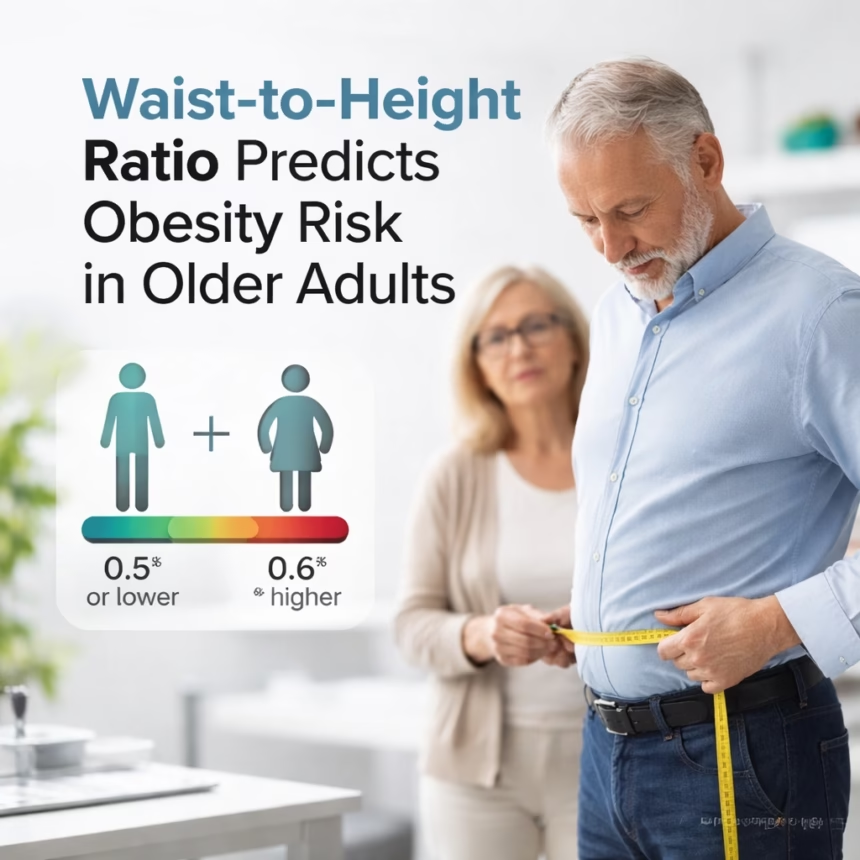
The study also reinforced the simplicity and effectiveness of the “0.5 rule” for WHtR: an individual’s waist circumference should ideally be less than half of their height. This straightforward guideline offers a clear and actionable target for both individuals and healthcare providers. Leading organizations, including the European Society of Geriatric Medicine and the International Federation of Clinical Chemistry and Laboratory Medicine, have begun to acknowledge these findings, signaling a potential shift in recommended assessment protocols.
Impact: Reshaping Health Assessment and Intervention
The implications of WHtR’s superior predictive power are far-reaching, poised to impact various stakeholders across the healthcare spectrum and beyond.

For Older Adults and Their Families
This shift offers older adults a more accurate understanding of their health risks. Moving beyond potentially false reassurance from BMI, a simple tape measure can gauge central adiposity, a direct marker of metabolic health. This enables earlier identification of risks for chronic conditions like type 2 diabetes, heart disease, and stroke, leading to more proactive lifestyle adjustments and medical interventions. It helps demystify health risks, moving away from a single number (weight) to a more meaningful measure of body fat distribution.
For Healthcare Providers
GPs, geriatricians, and other specialists will gain a more precise, inexpensive assessment tool. Integrating WHtR into routine check-ups allows for nuanced discussions about body composition, fostering personalized advice on diet and exercise. This identifies at-risk individuals often missed by BMI, leading to more targeted interventions.
For Public Health Policy and Research
The findings are likely to catalyze a re-evaluation of national and international public health guidelines. Organizations such as the World Health Organization (WHO) and the Centers for Disease Control and Prevention (CDC) may consider updating their recommendations for obesity screening, particularly for older populations. This could lead to new public awareness campaigns focusing on the importance of waist circumference. For the research community, these developments will likely spur further studies into age-specific body composition metrics, optimal WHtR cut-offs for diverse ethnic groups, and the development of even more sophisticated risk assessment models.
For the Wellness and Pharmaceutical Industries
The emphasis on central adiposity could influence the development of new wellness programs and pharmaceutical interventions. Companies might focus more on solutions specifically targeting visceral fat reduction, moving beyond general weight loss. This could include tailored exercise regimens, dietary supplements, and medications designed to address the metabolic pathways associated with abdominal obesity.
What Next: A New Era in Geriatric Health
The scientific community anticipates several key milestones as the implications of WHtR’s efficacy become more widely recognized and integrated into clinical practice.
Updates to Clinical Guidelines
Major health organizations, including the American Heart Association and American Geriatrics Society, are expected to review guidelines within one to three years. WHtR will likely be recommended as a primary or supplementary metric for assessing obesity risk in older adults.
Professional Education and Training
Medical schools and continuing education programs will integrate WHtR training, ensuring healthcare professionals can accurately measure, interpret, and act on these findings.
Public Awareness Campaigns
Government health agencies and non-profit organizations are poised to launch widespread public awareness campaigns. These initiatives will aim to educate the general population, particularly older adults, about the significance of their waist circumference and the “0.5 rule.” Such campaigns could empower individuals to take a more active role in monitoring their own health using a simple, accessible tool.
Integration into Health Technologies
The push for WHtR could also accelerate its integration into electronic health record (EHR) systems and health-tracking apps. EHRs could be updated to automatically calculate and track WHtR, flagging individuals who fall into high-risk categories. Wearable technology and smart scales might also evolve to incorporate more sophisticated body composition analysis that goes beyond simple weight and BMI.
Ultimately, the ascendancy of the waist-to-height ratio marks a significant step towards a more nuanced, personalized, and effective approach to assessing and managing obesity risk in older adults. It represents a move away from a one-size-fits-all metric towards a more biologically relevant indicator, promising improved health outcomes for an aging global population.