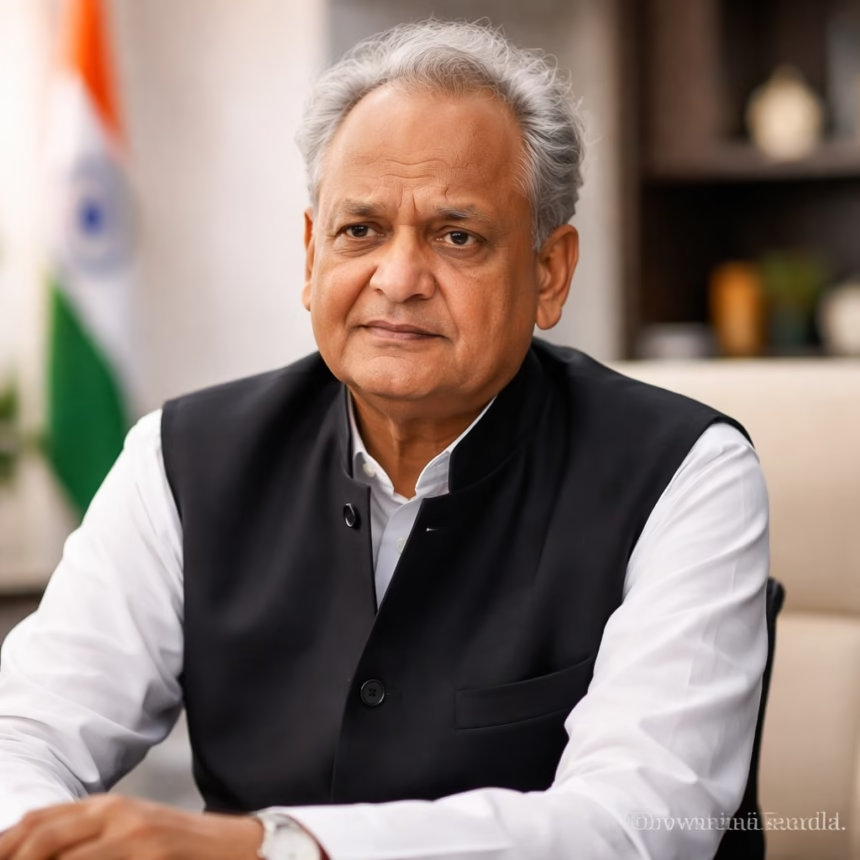
Rajasthan Chief Minister Ashok Gehlot has publicly asserted that a deliberate "conspiracy" derailed his bid for the Congress party's presidency in 2022. Speaking recently, Gehlot detailed his aspirations for the top party post and the unforeseen circumstances that he believes thwarted his path, sending ripples through the political landscape. This revelation sheds new light on the internal dynamics of India's oldest political party during a critical leadership transition.
Background to the 2022 Congress Presidential Election
The period leading up to the 2022 Congress presidential election was marked by significant internal churn. Following Rahul Gandhi's resignation as party president after the 2019 Lok Sabha election defeat, Sonia Gandhi had assumed the role of interim president. However, there was a growing chorus within the party for a full-time, non-Gandhi chief to lead the organisation.
Ashok Gehlot, a three-time Chief Minister of Rajasthan and a staunch loyalist of the Gandhi family, was widely perceived as a strong candidate. His extensive administrative experience, deep-rooted connections within the party, and perceived acceptability among various factions positioned him as a frontrunner. Many believed he was the preferred choice of the Gandhi family, should a non-Gandhi candidate be elected.
In August 2022, the Congress announced the schedule for its presidential elections, with polling set for October 17. The move was aimed at rejuvenating the party's organisational structure and addressing long-standing demands for internal democracy. Initial reports indicated that Gehlot was preparing to file his nomination.
The Rajasthan Crisis of September 2022
As Gehlot's potential candidacy gained momentum, a critical development unfolded in Rajasthan. The prevailing understanding was that if Gehlot were to become Congress President, he would need to resign as Chief Minister of Rajasthan, paving the way for a successor. Sachin Pilot, Gehlot's long-standing political rival within the state, was widely considered the likely choice for the chief ministerial post by the party high command.

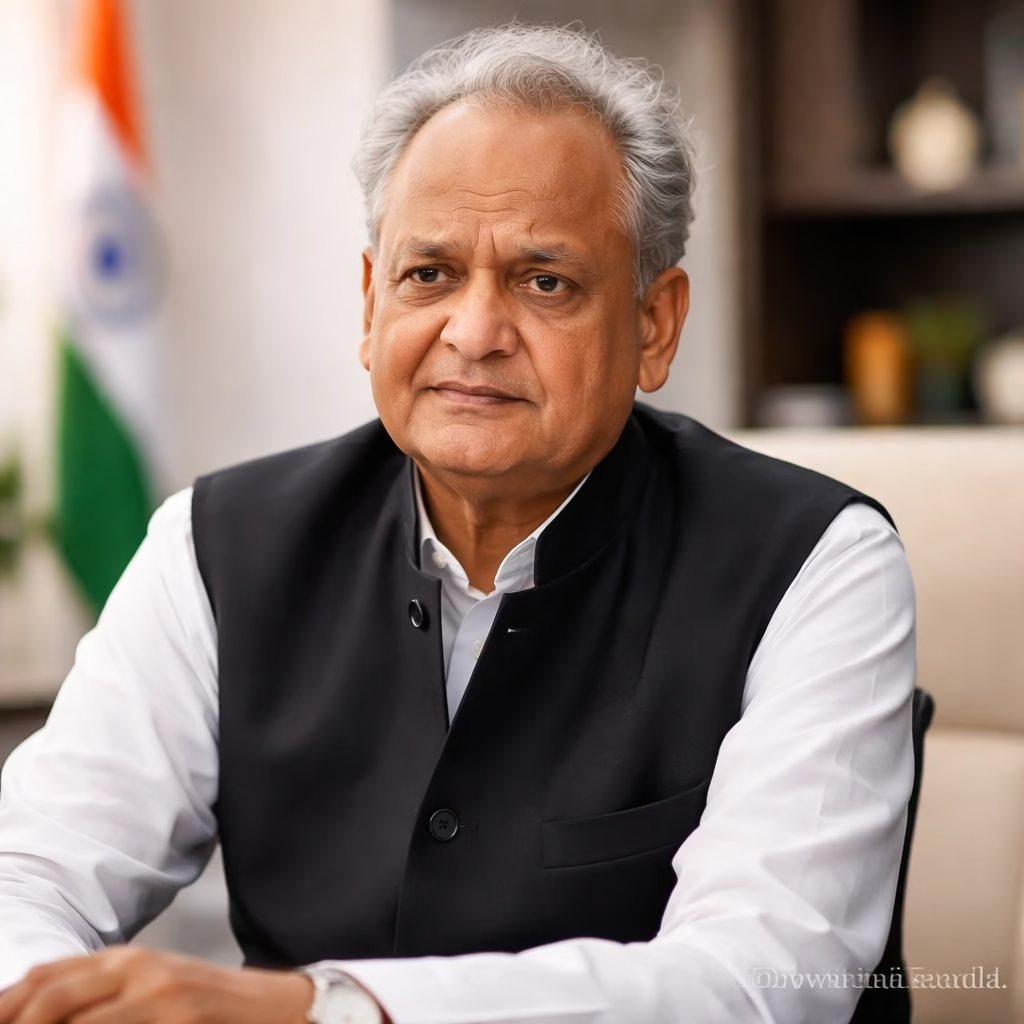
On September 25, 2022, a significant political crisis erupted in Jaipur. Over 90 MLAs loyal to Ashok Gehlot convened a parallel meeting at the residence of state minister Shanti Dhariwal. These MLAs boycotted the official Congress Legislature Party (CLP) meeting, which had been called by central observers Mallikarjun Kharge and Ajay Maken to discuss the succession plan.
The dissenting MLAs subsequently submitted their resignation letters to Assembly Speaker C.P. Joshi. Their key demands included that any new Chief Minister be chosen from among those who had supported the Gehlot government during the 2020 political crisis (when Sachin Pilot had rebelled). They also insisted that the decision on the new CM be deferred until after the results of the presidential election.
More Read
This act of defiance was widely interpreted by the Congress high command as a direct challenge to its authority and an attempt to dictate terms, particularly regarding the potential elevation of Sachin Pilot. The incident caused considerable embarrassment for the party's central leadership. Observers Kharge and Maken submitted a report to Sonia Gandhi, citing "gross indiscipline" by certain leaders in Rajasthan.
Gehlot’s Withdrawal and Kharge’s Election
Facing intense pressure and criticism from the party's central leadership, Ashok Gehlot publicly apologised to Sonia Gandhi, taking moral responsibility for the events in Rajasthan. Shortly thereafter, he announced his decision to withdraw from the presidential race, stating that the circumstances surrounding the Rajasthan crisis made it untenable for him to contest.
With Gehlot out of the fray, Mallikarjun Kharge, another veteran leader and Gandhi loyalist, emerged as a strong contender. Kharge eventually defeated Shashi Tharoor in the election, becoming the first non-Gandhi Congress President in 24 years.
Key Developments: Gehlot’s Recent Allegations
Ashok Gehlot's recent public statements, made during an interaction in Jaipur, represent a significant new development. This marks the first instance where he has explicitly used the term "conspiracy" to describe the events that ultimately led to his withdrawal from the 2022 presidential race.
While Gehlot has refrained from naming specific individuals or factions, his choice of words strongly implies an internal plot rather than an external one. He indicated that certain elements within the party acted deliberately to undermine his candidacy, suggesting a calculated effort to create a narrative against him.
Gehlot articulated that the events of September 2022 in Rajasthan, specifically the defiance by MLAs loyal to him, were manipulated. He believes these actions were deliberately framed to create a perception of indiscipline and disloyalty on his part, thereby sabotaging his chances at the national presidency. The implication is that the controversy surrounding the Rajasthan crisis was intentionally amplified and distorted to discredit him.
More Read

The timing of Gehlot's revelation is particularly noteworthy. It comes amidst renewed political jockeying within the Rajasthan Congress, especially concerning the roles of Gehlot and Sachin Pilot. With the 2024 general elections approaching and state assembly elections in Rajasthan scheduled for later this year, internal stability is paramount for the Congress party.
Gehlot's remarks have inevitably reignited discussions about the unresolved leadership issues in Rajasthan and the underlying tensions between different factions within the state unit. Publicly airing such grievances can potentially widen existing cracks within the party. These claims also indirectly cast a shadow on the circumstances surrounding Mallikarjun Kharge's election, even though Gehlot has consistently expressed full support for Kharge's leadership. The underlying implication is that the path to Kharge's presidency was influenced by the earlier events that forced Gehlot out of the race.
Impact of the ‘Conspiracy’ Allegations
Gehlot's allegations carry significant implications for various stakeholders within the Congress party and the broader political landscape.
Impact on Ashok Gehlot
For Ashok Gehlot, this revelation can be seen as an attempt to reframe his withdrawal from the presidential race. By attributing it to a "conspiracy" rather than solely to his own actions or the indiscipline of his loyalists, he aims to salvage his political image. This narrative could be an effort to assert his continued relevance and influence within the party, particularly in the context of Rajasthan politics, where he remains a dominant figure.
Impact on Congress Party Unity
The public airing of "conspiracy" allegations inevitably strains internal party unity. Such claims can deepen distrust among factions and make it harder for the party to present a united front, especially critical as India approaches a major election cycle. It risks reinforcing perceptions of the Congress as a party plagued by internal strife.
Impact on Mallikarjun Kharge’s Presidency
While Gehlot has consistently affirmed his loyalty to Mallikarjun Kharge, the narrative of a "conspiracy" leading to his own exit from the race could, however subtly, raise questions about the circumstances that cleared Kharge's path to the presidency. It might feed into perceptions that the election process was not entirely free from internal maneuvering, despite Kharge's democratic victory.
Impact on Rajasthan Politics and Sachin Pilot
The remarks have direct implications for Rajasthan, where the long-standing rivalry between Gehlot and Sachin Pilot is well-documented. Gehlot's claims might be interpreted as a veiled reference to those he believes benefited from his weakened position, potentially intensifying the factionalism ahead of state elections. Supporters of Sachin Pilot might view these statements as an attempt to undermine his position or discredit his past actions.
Impact on the Gandhi Family’s Influence
The "conspiracy" narrative, even without explicit naming, touches upon the Gandhi family's enduring influence in party affairs and leadership selection. It raises questions about the transparency of the process and whether the family's preferred candidates are truly chosen through democratic means or internal consensus-building, which can be influenced by various factors and power dynamics.
Impact on Public Perception
For the broader public, such disclosures can reinforce perceptions of the Congress as a party embroiled in constant internal power struggles, potentially diverting attention from its efforts to challenge the ruling BJP on policy issues. It might also lead to cynicism about the party's internal democratic processes and its ability to offer stable leadership.
What Next for the Congress and Gehlot?
The immediate focus will be on how the Congress high command, particularly President Mallikarjun Kharge and the Gandhi family, responds to Gehlot's allegations. While a direct, confrontational response might be avoided to prevent escalating the issue, subtle signals or private admonishments are possible.
Reactions from other senior Congress leaders are expected to be varied. Some might privately agree with Gehlot's sentiment, while others, particularly those aligned with the current leadership or rival factions, might dismiss or downplay the claims. The Sachin Pilot camp, in particular, will be closely watched for any official or unofficial reaction.
With Rajasthan scheduled for assembly elections later this year, Gehlot's statements could significantly influence the internal dynamics of the state unit. The claims might become a talking point for opposition parties, potentially forcing the Congress to address internal divisions publicly. It could also be a strategic move by Gehlot to consolidate his base and rally support ahead of the elections.
There remains a possibility that Gehlot, or others, might elaborate on these claims, perhaps revealing more details or even naming individuals. However, such a move would be high-stakes and could further destabilize the party. The Congress leadership's primary challenge will be to project an image of unity, especially as it prepares for the 2024 Lok Sabha elections, as public disclosures of internal strife are detrimental to this goal. Efforts might be made to mediate tensions and ensure all factions work together.
While an official "probe" into a past "conspiracy" is unlikely, Gehlot's statements might prompt renewed internal discussions about transparency in party processes and the need for stronger mechanisms to prevent factionalism from derailing key decisions. The ramifications could also affect Gehlot's own political trajectory, with his standing potentially either bolstered by having spoken his mind or diminished if his claims are seen as disruptive by the party leadership. His role in the upcoming Rajasthan elections will be closely scrutinized.