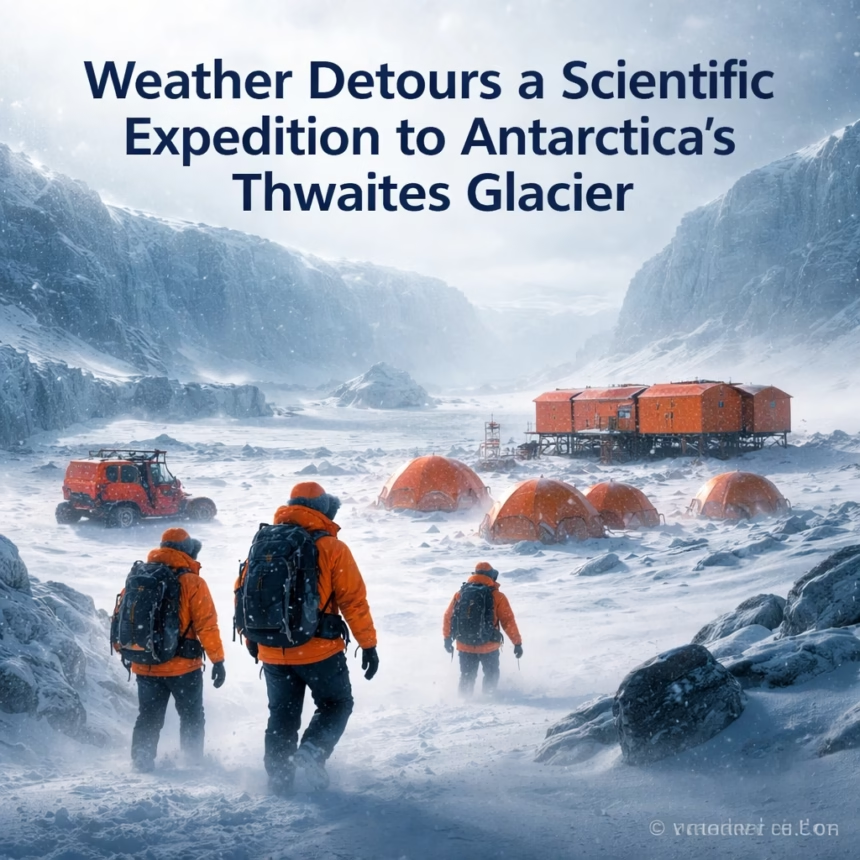
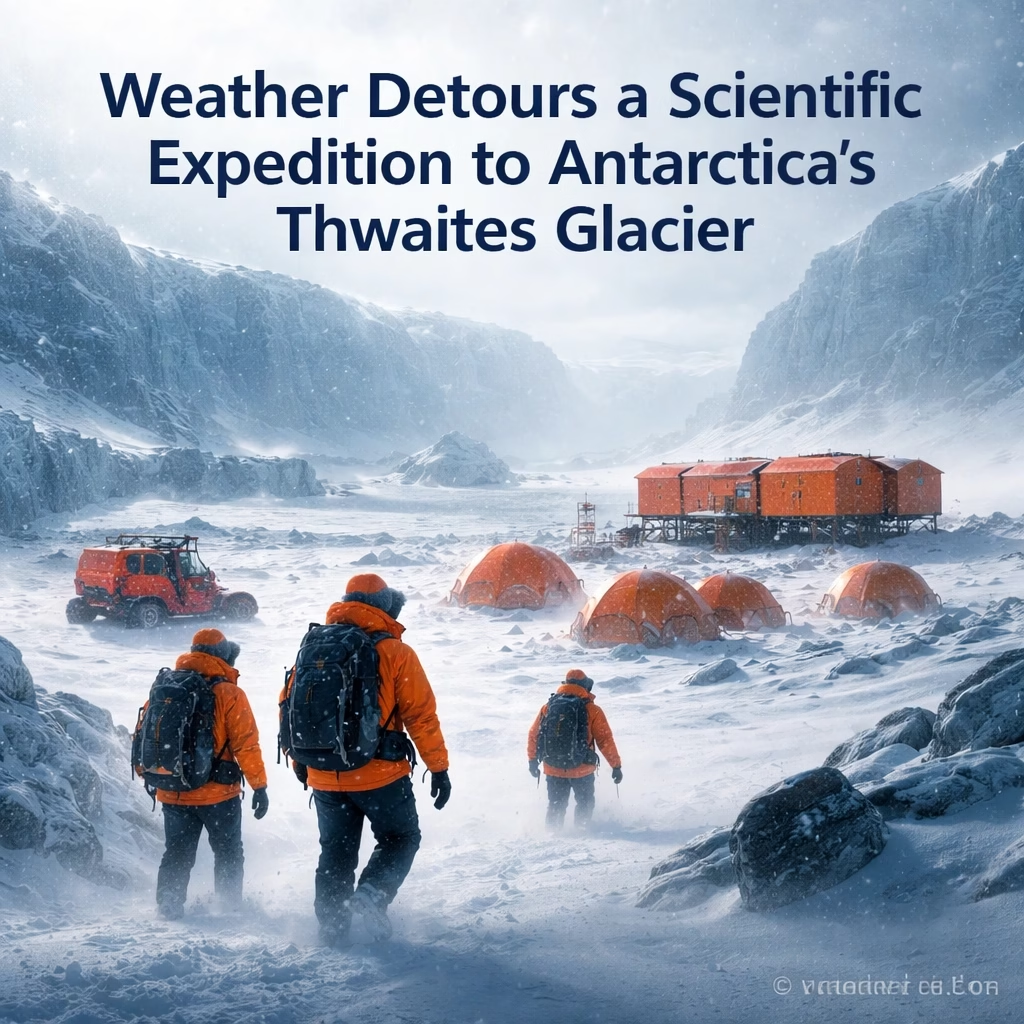
A critical international scientific expedition aiming to study Antarctica's rapidly melting Thwaites Glacier has been forced to reroute its primary research vessel due to unprecedented and severe weather conditions. The unexpected detour, occurring in late January during the current austral summer, impacts a crucial mission seeking to understand the future of one of the world's most significant contributors to global sea-level rise.
Background: Unveiling the ‘Doomsday Glacier’
Thwaites Glacier, located in West Antarctica, has earned the ominous moniker "Doomsday Glacier" due to its immense size and the speed at which it is melting. Spanning an area roughly the size of Florida, its complete collapse could raise global sea levels by over half a meter, and its instability poses a threat to the entire West Antarctic Ice Sheet. This makes it a focal point for climate research worldwide.
The International Thwaites Glacier Collaboration (ITGC)
For years, scientists have monitored Thwaites, observing accelerated ice flow, retreating grounding lines, and increased calving events. In response to the urgency, the International Thwaites Glacier Collaboration (ITGC) was established in 2018, a five-year, multi-million-dollar partnership between the U.S. National Science Foundation (NSF) and the UK Natural Environment Research Council (NERC). This ambitious program brings together hundreds of scientists from over a dozen countries to conduct comprehensive research across the glacier, its adjacent ocean, and the surrounding geological structures.
The current expedition, a key component of the ITGC's final field season, involved the deployment of advanced autonomous underwater vehicles (AUVs), sophisticated oceanographic sensors, and drilling equipment. Its primary objectives included mapping the seafloor beneath the ice shelf, measuring ocean currents and temperatures at the grounding line, and collecting sediment cores to reconstruct past glacier behavior. The U.S. research vessel RV Nathaniel B. Palmer, equipped for polar science, was central to these deep-sea operations, carrying a team of 45 scientists and crew members.

Key Developments: A Wall of Ice and Wind
The RV Nathaniel B. Palmer, having departed from Punta Arenas, Chile, in early January, encountered extreme and persistent adverse weather conditions as it approached the Amundsen Sea, the gateway to Thwaites Glacier. Expedition leaders reported an unusually strong and expanded polar vortex, creating sustained gale-force winds and driving unprecedented amounts of multi-year sea ice into the target research area.
Unprecedented Weather Anomalies
"We've seen challenging conditions in the Amundsen Sea before, but this season's combination of ice thickness and wind persistence is truly exceptional," stated Dr. Eleanor Vance, lead oceanographer for the expedition. "Our ice-strengthened vessel is capable, but safety for our crew and the integrity of our equipment must always take precedence." Satellite imagery and real-time weather models confirmed the severity, showing vast expanses of consolidated sea ice extending much further north than typically observed for this time of year, effectively blocking access to critical research sites near the glacier's ice front.
The Detour’s New Destination
After extensive consultation with the vessel's captain, the expedition's scientific leadership made the difficult decision to reroute. Instead of proceeding directly to the Thwaites ice front, the RV Nathaniel B. Palmer has been redirected approximately 500 kilometers to the east, towards the Dotson Ice Shelf and parts of the neighboring Amundsen Sea Embayment. While not the primary target, this region also hosts significant ice shelves and offers opportunities for valuable oceanographic and glaciological research. Scientists plan to deploy moorings, conduct hydrographic surveys, and collect biological samples, adapting their research plans to the accessible environment. This shift means that several core objectives specifically tied to the Thwaites grounding line and its immediate ocean cavity will be postponed or significantly altered.
More Read

Impact: Scientific Setbacks and Adaptations
The rerouting represents a significant setback for the ITGC's final field season, disrupting meticulously planned research efforts and potentially delaying crucial data collection. The scientific community had high expectations for the data to be gathered from Thwaites, which was intended to provide unprecedented insights into the mechanisms driving its rapid retreat.
Implications for Climate Modeling
For the dozens of scientists aboard, the disappointment is palpable, though they remain committed to making the most of the revised itinerary. "Every day at sea is valuable, and we will certainly gather important data from the Dotson region," commented Dr. Vance. "However, the direct measurements we planned for Thwaites' most vulnerable areas are irreplaceable for refining our climate models and improving sea-level rise projections." The delay in acquiring this specific data could mean a longer wait for more precise predictions regarding the global impact of Thwaites' melting.
The reroute also carries financial implications for the funding bodies, the NSF and NERC, as the expedition's budget and timeline were structured around achieving specific Thwaites-focused objectives. While the alternative research will still yield valuable results, the primary investment in reaching the 'Doomsday Glacier' itself has been temporarily thwarted.
What Next: Adapting to an Unpredictable Future
The expedition's leadership is already evaluating options for future attempts to access Thwaites Glacier. While a return in the current austral summer is unlikely due to the persistent weather patterns and the vessel's schedule, plans for the next research season (late 2024/early 2025) are being discussed.
Leveraging Autonomous Technology
Scientists are also exploring increased reliance on autonomous technologies, such as long-range AUVs and remotely operated vehicles (ROVs), which might be deployed from greater distances or through narrower ice channels in future missions. These technologies could potentially offer a way to gather data even when direct ship access is challenging, though they come with their own set of operational complexities and limitations.
The incident underscores the increasing unpredictability of Antarctic weather patterns, which are themselves influenced by global climate change. Such extreme conditions pose significant challenges for polar research, highlighting the need for flexible expedition planning and robust contingency measures. As the world continues to grapple with the impacts of a warming planet, the 'Doomsday Glacier' remains a critical frontier, demanding persistent scientific inquiry despite the formidable obstacles nature may present.