Iran’s Anti-Khamenei Uprising: Why Protesters Are Targeting the Supreme Leader
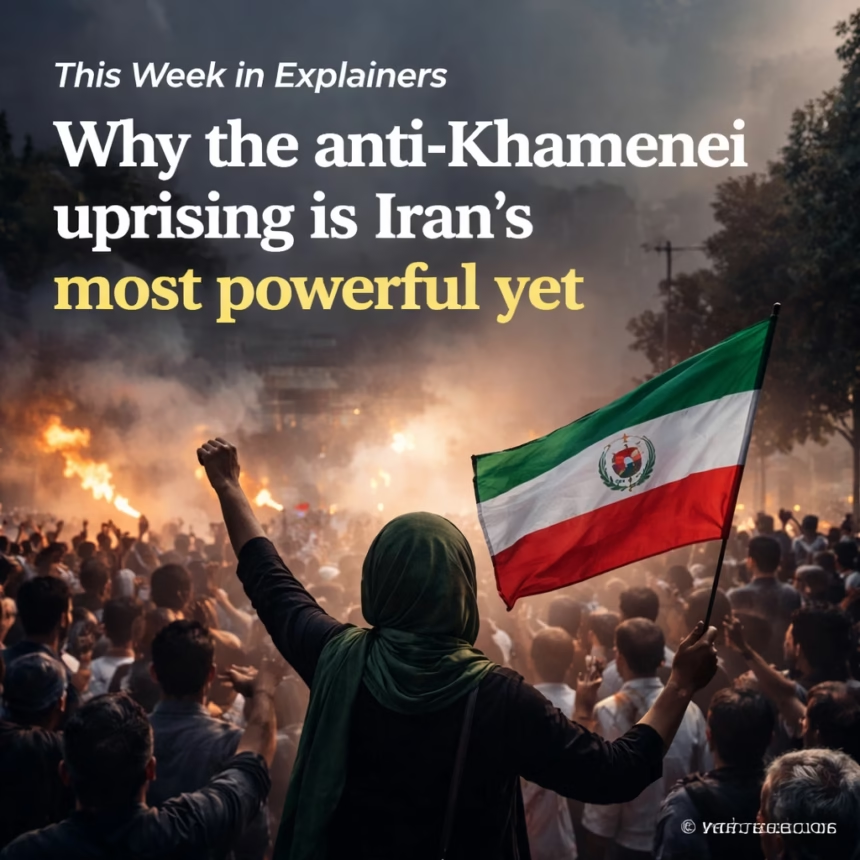
In a rare and significant shift, protests in Iran have escalated to directly challenge Supreme Leader Ayatollah Ali Khamenei, marking the most powerful uprising in the country’s recent history. The demonstrations, which have spread across multiple cities, reflect deep-seated grievances over economic hardships, political repression, and the clerical leadership’s role in perpetuating systemic issues.
Background (Context and Timeline)
The current wave of protests follows years of sporadic but intense dissent. The most recent major uprising began in September 2022 after the death of Mahsa Amini, a 22-year-old woman detained by Iran’s morality police. Those protests, known as the "Woman, Life, Freedom" movement, were met with a brutal crackdown, with hundreds killed and thousands arrested. Despite the suppression, the protests have resurfaced in 2024, this time with a clearer focus on Khamenei himself, reflecting growing frustration with the regime’s inability to address Iran’s crises.
The economic situation in Iran has deteriorated significantly, with inflation exceeding 40% and unemployment reaching record highs. International sanctions, compounded by government corruption and mismanagement, have worsened living conditions, particularly for the working class and youth. The regime’s involvement in regional conflicts, such as its support for Hezbollah in Lebanon and militias in Iraq, has further drained state resources, alienating many Iranians.
Key Developments (Recent Changes)
In a notable escalation, protesters in Tehran, Isfahan, and other major cities have openly chanted slogans calling for Khamenei’s removal, a significant departure from past demonstrations that often targeted specific policies or officials. Videos circulating on social media show crowds burning Khamenei’s posters and demanding an end to theocracy. Security forces have responded with live ammunition, tear gas, and mass arrests, but the protests continue to grow, indicating a loss of fear among the population.
Adding to the unrest, prominent figures within Iran’s political and religious establishment have publicly criticized Khamenei’s leadership. Former reformist president Mohammad Khatami, though largely sidelined, has issued statements condemning the suppression of dissent. Meanwhile, some hardline clerics have called for internal reforms to address the growing discontent, signaling potential fractures within the regime.
Impact (Who Is Affected)
The protests have disrupted daily life in Iran, with businesses closing early, universities suspending classes, and public transportation suffering delays. The internet has been heavily restricted, with social media platforms like Instagram and WhatsApp blocked in an attempt to limit the spread of information. Families of detained protesters report harassment and threats from security forces, as authorities seek to silence dissent through intimidation.
Internationally, the uprising has drawn attention from human rights organizations and foreign governments. The United Nations has condemned the violent suppression of protests, while the U.S. and European Union have imposed additional sanctions on Iranian officials. Regional powers, including Saudi Arabia and Israel, are closely monitoring the situation, as instability in Iran could have broader geopolitical implications.
What Next (Expected Milestones)
The future of the protests remains uncertain, but several key developments could shape their trajectory in the coming weeks. If the demonstrations continue to gain momentum, the regime may be forced to make concessions, such as releasing political prisoners or acknowledging the need for economic reforms. However, given the regime’s history of brutal crackdowns, a violent suppression remains a strong possibility.
Another critical factor is whether the protests will gain traction among the military and security forces, which have traditionally been loyal to the regime. If divisions emerge within the security apparatus, the regime’s control could weaken significantly. Additionally, the international community’s response, particularly in terms of sanctions and diplomatic pressure, could influence how the regime reacts to the unrest.
As the situation unfolds, Iranians are enduring one of the most volatile periods in the country’s post-revolutionary history. Whether this uprising will lead to meaningful change or further repression remains to be seen, but its intensity and scale suggest that Iran’s political landscape is entering a new and unpredictable phase.