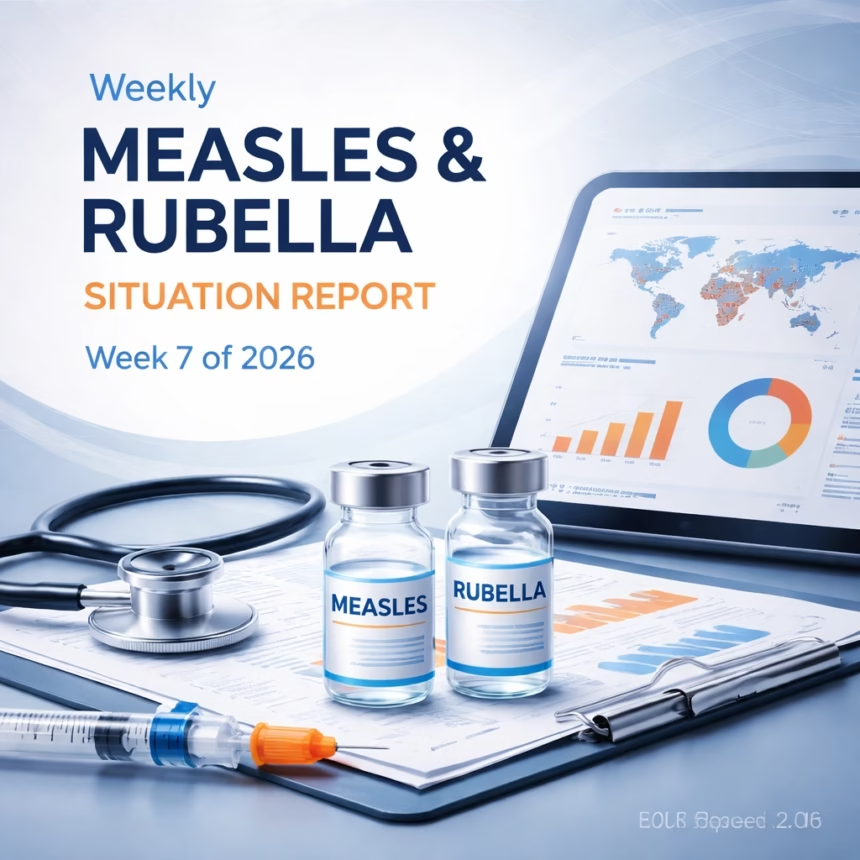
The latest weekly report on measles and rubella, released for week 7 of 2026, reveals a concerning escalation in reported cases across several continents. Published on February 19, 2026, the comprehensive situation analysis highlights significant challenges to public health systems globally, particularly in regions experiencing declines in routine immunization coverage.
This report, compiled by leading international health organizations, provides a critical snapshot of the evolving epidemiological landscape, urging immediate attention and coordinated action to mitigate further spread and protect vulnerable populations worldwide.
Background: A Resurgent Threat
Measles and rubella, once largely controlled through widespread vaccination efforts, have seen a worrying resurgence over the past few years. Following a period of significant global decline in reported cases through the early 2010s, a gradual erosion of immunization rates began around 2020, exacerbated by the COVID-19 pandemic's disruption to healthcare services and routine vaccination schedules.
Historical Context of Immunization
Global immunization programs successfully reduced measles incidence by 80% between 2000 and 2018. Rubella, often less severe but with devastating congenital implications, also saw substantial control. However, by 2023, the World Health Organization (WHO) reported that over 60 million children had missed at least one dose of measles-containing vaccine (MCV) since 2020, creating vast immunity gaps.
Factors Contributing to Resurgence
Multiple factors underpin the current crisis. Vaccine hesitancy, fueled by misinformation, has played a significant role in several high-income countries. In low-income settings, disruptions due to conflict, natural disasters, and inadequate cold chain infrastructure have hampered consistent vaccine delivery. Urbanization patterns and increased international travel further facilitate rapid disease dissemination.
Key Developments: Week 7, 2026
The report for week 7 of 2026 (February 9-15) indicates a sharp increase in both measles and rubella cases, surpassing projections for this period. A total of 14,875 new confirmed measles cases were reported globally, a 12% increase from week 6. Rubella cases, while fewer, also saw a 7% rise, with 2,130 new confirmations.
More Read

Measles Outbreaks
The most significant measles outbreaks are concentrated in three primary geographical clusters:
- Sub-Saharan Africa: The Democratic Republic of Congo (DRC) and Nigeria account for 45% of new global cases, with 6,694 and 3,210 cases respectively. These outbreaks are largely community-driven, exacerbated by low primary vaccination coverage in rural areas.
- Southeast Asia: India and Pakistan reported 1,870 and 980 new cases. The outbreaks here are predominantly affecting urban slums and migrant populations, where access to healthcare is challenging.
- Eastern Europe: Pockets of high-income countries, notably Romania and Ukraine, registered 750 and 520 cases. These clusters are primarily linked to declining vaccine uptake among specific demographic groups.
Alarmingly, 65% of all new measles cases were in children under five years old, highlighting critical immunity gaps in the youngest cohorts. There were 28 measles-related fatalities reported this week, predominantly in the DRC.
Rubella Surges
Rubella activity, though less widespread than measles, is notable in specific regions:
More Read

- Latin America: Brazil reported 410 new rubella cases, with a significant cluster in São Paulo. This marks a concerning re-emergence in a region that had previously achieved elimination status.
- Middle East: Yemen and Syria, grappling with ongoing humanitarian crises, reported 350 and 280 cases, respectively. The fragility of health infrastructure in these nations makes containment exceptionally difficult.
Of particular concern are 15 new cases of Congenital Rubella Syndrome (CRS) identified this week, primarily in Brazil and Yemen, underscoring the severe impact of rubella on unborn children when pregnant women contract the virus.
Impact: Strain on Health Systems and Communities
The escalating case numbers are placing immense pressure on already stretched healthcare systems. Hospitals in affected regions are reporting increased admissions for severe measles complications, including pneumonia, encephalitis, and severe dehydration, particularly among unvaccinated children.
Healthcare Capacity Challenges
In Kinshasa, DRC, pediatric wards are operating at 150% capacity due to measles admissions. Similar reports are emerging from Karachi, Pakistan, where emergency services are overwhelmed. The diversion of resources to manage these outbreaks strains the capacity to address other critical health needs, including routine maternal and child health services.
Socio-Economic Repercussions
Beyond immediate health impacts, the outbreaks carry significant socio-economic costs. School closures have been implemented in several affected districts in Nigeria and India, disrupting education for thousands of children. Travel advisories issued by national health ministries are impacting tourism and business in affected areas, further hindering economic recovery post-pandemic.
Families are also bearing direct financial burdens, from medical expenses to lost wages due to caring for sick children. The psychological toll on communities facing preventable diseases after years of relative control is also profound.
What Next: Coordinated Global Response
Global health authorities are calling for an immediate, intensified, and coordinated response. The focus is on rapid outbreak response vaccination campaigns, strengthening routine immunization programs, and enhancing surveillance.
More Read

Immediate Response Strategies
Emergency vaccination campaigns are being planned or are underway in key hotspots. In the DRC, a mass vaccination drive targeting 5 million children in affected provinces is scheduled to commence in early March 2026. Similar campaigns are being mobilized in parts of India and Brazil, prioritizing high-risk urban areas.
These campaigns face logistical hurdles, including ensuring vaccine supply, maintaining cold chain integrity in challenging environments, and overcoming community resistance. Public awareness campaigns, leveraging local leaders and trusted community figures, are critical to increasing vaccine acceptance.
Strengthening Routine Immunization
Longer-term efforts center on rebuilding and strengthening routine immunization infrastructure. This includes training more health workers, improving data collection and reporting systems, and integrating vaccination services with other primary healthcare provisions. The goal is to achieve and sustain at least 95% coverage with two doses of MCV globally.
Investment in robust cold chain facilities, particularly in remote and rural areas, is also a priority to ensure vaccine viability from manufacturer to recipient. International partnerships are crucial for funding these extensive infrastructure improvements.
Enhanced Surveillance and Preparedness
Improved surveillance systems are essential for early detection and rapid response to new outbreaks. This involves bolstering laboratory capacity for timely diagnosis and establishing robust alert mechanisms. Health authorities are also reviewing national pandemic preparedness plans to better integrate responses to vaccine-preventable disease outbreaks.
The international community is urged to increase financial and technical support to countries most at risk, recognizing that measles and rubella outbreaks in one region pose a threat to global health security. The coming weeks will be critical in determining whether these concerted efforts can stem the tide of this alarming resurgence.