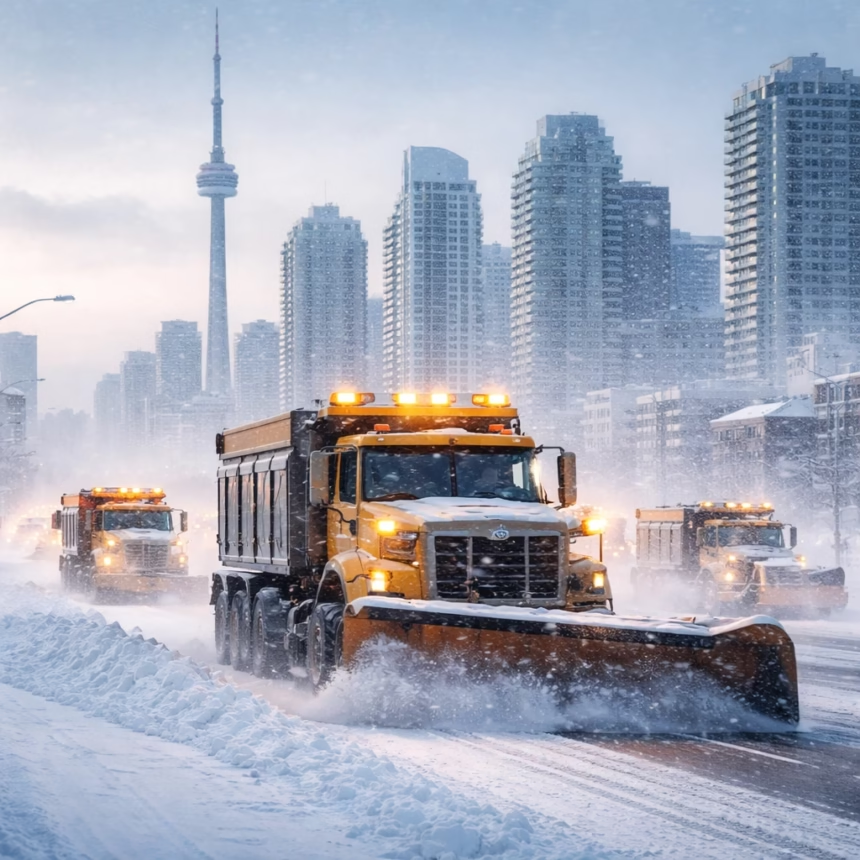
As winter blankets the Greater Toronto Area, a vast and intricate operation swings into action to keep the region moving. This complex network of snow-clearing efforts, spanning multiple municipalities and provincial highways, is a critical annual undertaking designed to mitigate the impact of snowfall on the economic and social fabric of one of North America's largest metropolitan areas. From pre-treatment strategies to post-storm cleanup, the GTA’s winter preparedness is a testament to large-scale urban logistics.
Background: A Region Under Snow
The Greater Toronto Area, encompassing the City of Toronto and the regional municipalities of Peel, York, Durham, and Halton, experiences significant snowfall each winter, averaging between 120 and 130 centimetres annually. With a population exceeding 6.5 million people and a sprawling network of expressways, arterial roads, and residential streets, efficient snow removal is not merely a convenience but an economic imperative. The region’s reliance on road transportation for commuting, commerce, and essential services necessitates a robust and well-funded winter maintenance program.
Historically, snow removal in the GTA has evolved from rudimentary plowing to a sophisticated, technology-driven system. Major snow events, such as the infamous "Snowmageddon" of January 1999 which saw the Canadian Army deployed in Toronto, and the intense blizzard of January 2022, have significantly shaped policies, resource allocation, and public expectations for winter service levels. These events underscored the need for enhanced coordination and investment in resilient infrastructure and operational capacity.
Jurisdictional Responsibilities
Snow clearing in the GTA is a multi-layered responsibility, with different levels of government managing distinct road networks.
* City of Toronto: Manages over 5,600 kilometres of roads and 7,900 kilometres of sidewalks, utilizing a substantial fleet and a budget often exceeding $100 million annually.
* Regional Municipalities: Peel, York, Durham, and Halton operate their own snow removal services for regional roads within their boundaries, each with dedicated budgets and fleets. For instance, Peel Region maintains approximately 1,600 lane-kilometres of roads.
* Ministry of Transportation Ontario (MTO): Responsible for provincial highways, including the crucial 400-series highways (401, QEW, 400, 407, 403) and other provincial routes that crisscross the GTA. MTO contracts out much of its winter maintenance to private service providers.
This distributed responsibility requires intricate planning and, at times, cross-jurisdictional cooperation to ensure seamless transitions between different road classifications and to optimize resource deployment during major weather events.
More Read

Key Developments: Modernizing the Winter Response
Recent years have seen substantial advancements in snow-clearing methodologies and technologies across the GTA, driven by a combination of innovation, environmental concerns, and the need for greater efficiency.
Technological Integration
The use of technology has transformed winter operations. GPS tracking systems are now standard on most plows and salters, allowing municipal and provincial operations centres to monitor fleet location, speed, and material application in real-time. This data optimizes routing, ensures coverage, and provides transparency. Many municipalities, including the City of Toronto with its "PlowTO" tracker, offer public-facing maps that allow residents to see where plows have been.
Advanced weather forecasting models, often incorporating hyper-local data from road-side sensors, enable proactive measures such as pre-wetting roads with salt brine before a storm hits. This anti-icing technique prevents snow and ice from bonding to the pavement, making subsequent plowing more effective and reducing overall salt usage.

Environmental Stewardship
Recognizing the ecological impact of traditional road salt (sodium chloride) on waterways, soil, and vegetation, GTA municipalities and the MTO are increasingly adopting more environmentally friendly de-icing alternatives. These include liquid calcium chloride, magnesium chloride, and organic-based additives like beet juice blends, which lower the freezing point of salt brine and improve its adherence to road surfaces. Efforts are also focused on optimizing salt application rates through calibration and automated systems, ensuring only the necessary amount is used.
Service Level Standards and Expansion
Most jurisdictions in the GTA adhere to specific service level standards, dictating response times based on road classification. Expressways and major arterial roads typically receive priority, with clearing expected within 2-4 hours after snowfall ends or during continuous snowfall. Residential streets and sidewalks follow, often with longer clearance targets of 12-24 hours.
A significant development has been the expansion of mechanical sidewalk plowing. Historically, residents were often responsible for clearing sidewalks in front of their properties. However, due to accessibility concerns and demographic shifts, many municipalities, including Toronto, have expanded their mechanical sidewalk plowing services, particularly on main pedestrian routes and in areas with high foot traffic.
Impact: Keeping the Region Functional
The effectiveness of snow-clearing operations directly impacts millions of residents, businesses, and essential services across the GTA.
Commuter and Economic Flow
For the region’s vast commuter population, efficient snow removal is paramount. Uncleared roads lead to significant traffic delays, increased commute times, and disruptions to public transit services like the TTC and GO Transit. This, in turn, can affect employee punctuality and productivity. Businesses face challenges with supply chain logistics, reduced customer foot traffic, and potential revenue losses during prolonged periods of inaccessible roads.
More Read

Safety and Accessibility
Slippery road conditions and uncleared sidewalks pose significant safety hazards, leading to increased slips, falls, and motor vehicle accidents. Prompt clearing ensures safer passage for pedestrians, cyclists, and drivers. For residents, particularly seniors and those with mobility challenges, cleared sidewalks and pathways are crucial for maintaining independence and access to amenities. Windrows – the snowbanks left at the end of driveways by plows – remain a persistent challenge for homeowners, requiring manual clearing.
Emergency Services
The ability of police, fire, and ambulance services to respond swiftly to emergencies is directly tied to road conditions. A clear path ensures timely arrival, which can be critical in life-threatening situations. Municipalities prioritize routes used by emergency vehicles in their clearing plans.
What Next: Adapting to Future Challenges
As the GTA looks ahead, snow-clearing efforts will continue to evolve, driven by climate change, technological advancements, and ongoing budgetary considerations.
Climate Change Adaptation
Climate change projections suggest an increase in extreme weather events, potentially leading to more intense snowfalls, freezing rain, and rapid temperature fluctuations. This necessitates greater flexibility in winter operations, including investment in equipment capable of handling diverse conditions and strategies for managing freeze-thaw cycles that contribute to ice formation.
Enhanced Technological Integration
Future developments will likely see further integration of artificial intelligence for predictive maintenance of snow-clearing fleets and AI-driven route optimization that adapts in real-time to changing road conditions and traffic patterns. The use of drones for assessing snow depth and road conditions in difficult-to-reach areas could also become more commonplace.
Sustainability and Budgetary Pressures
The push for more sustainable de-icing practices will continue, with ongoing research into new, even more environmentally friendly materials and methods. However, these innovations often come with higher costs, placing additional pressure on already strained municipal and provincial budgets. Balancing high service levels with fiscal responsibility and environmental stewardship will remain a core challenge.
Public Engagement and Communication
Improving communication strategies during winter storms will be key. Real-time updates, clear public service announcements regarding parking restrictions, and accessible information on clearing progress can help manage public expectations and foster cooperation, ensuring the GTA remains resilient in the face of winter’s challenges.