Black Gold Gamble: Small Players Race for Venezuela's Untapped Riches
Black Gold Gamble: Small Players Race for Venezuela's Untapped Riches
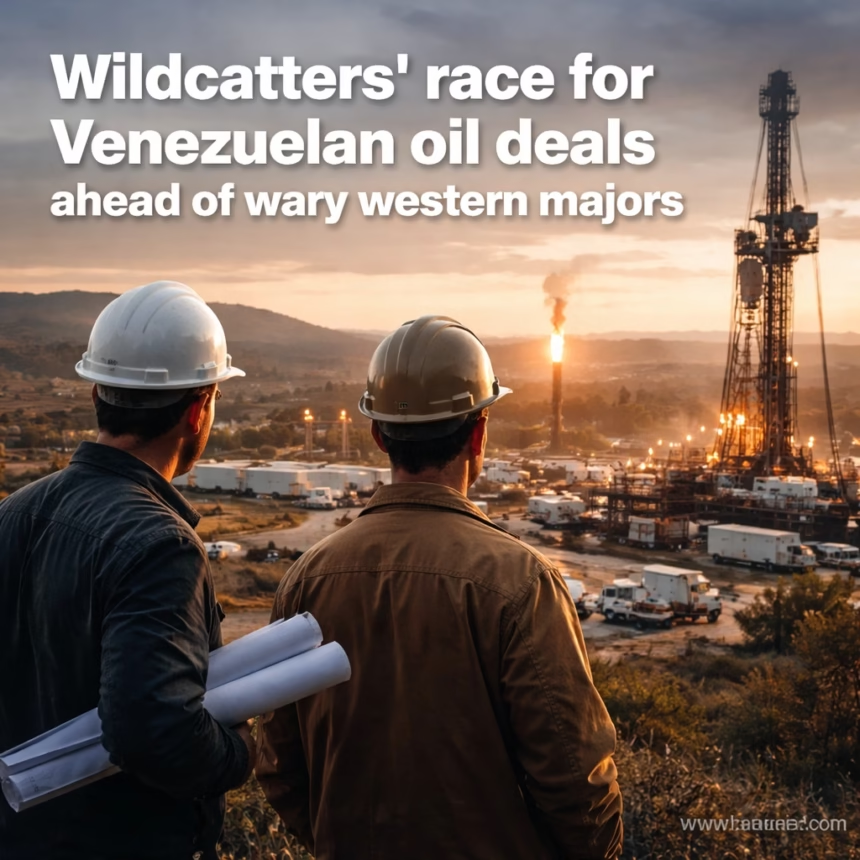
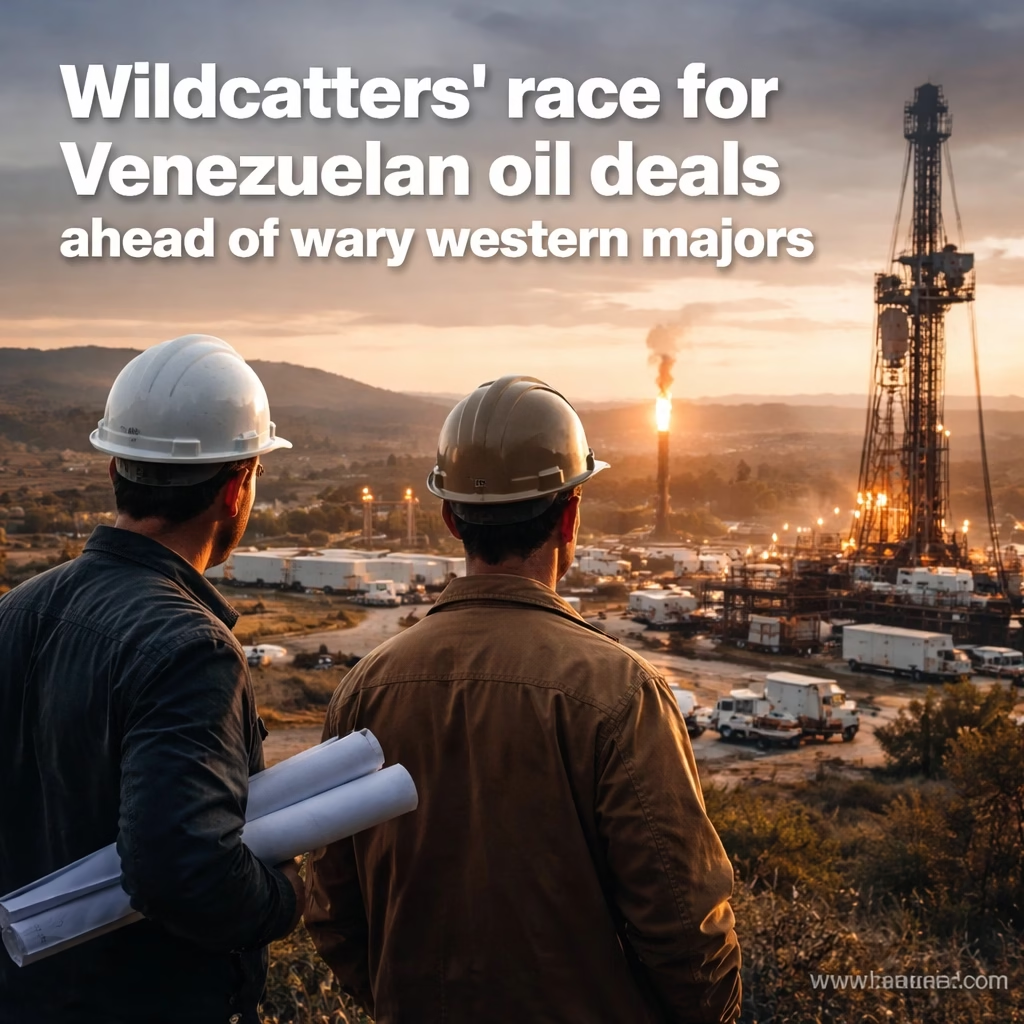
A new breed of independent oil producers, often dubbed 'wildcatters,' is aggressively pursuing exploration and production deals across Venezuela. This intense scramble unfolds as larger Western energy companies remain cautious, navigating a complex landscape of easing and re-tightening U.S. sanctions and profound political uncertainty.
The race intensified from late 2023 into early 2024, driven by the temporary easing of U.S. sanctions, creating a narrow window of opportunity for those willing to take on significant risk in a nation holding the world’s largest proven oil reserves.
Background: A Nation’s Oil Fortune and Decline
Venezuela boasts an estimated 303 billion barrels of proven crude oil reserves, primarily concentrated in the vast Orinoco Belt. For decades, this immense wealth fueled the nation's economy, with state-owned Petróleos de Venezuela S.A. (PDVSA) once producing over 3 million barrels per day (bpd) in the early 2000s.
However, a combination of political mismanagement, underinvestment, and a mass exodus of technical talent led to a precipitous decline in output. The situation worsened dramatically following the imposition of stringent U.S. sanctions in 2019 by the Trump administration, targeting PDVSA and its ability to export crude, aimed at pressuring the government of Nicolás Maduro.
More Read

These sanctions effectively isolated Venezuela from Western markets and technology, pushing its oil production to historical lows, at one point dipping below 400,000 bpd. While output has since partially recovered to around 800,000 bpd, largely due to limited operations by partners like Chevron under specific U.S. licenses and clandestine exports, the nation’s oil infrastructure remains severely degraded and in desperate need of capital infusion and expertise.
The U.S. Treasury Department's issuance of General License 44 (GL 44) in October 2023 marked a significant, albeit temporary, shift. This license authorized transactions related to oil and gas sector operations in Venezuela for a six-month period, expiring on April 18, 2024. This window created the immediate impetus for the current influx of smaller, risk-tolerant firms.
Key Developments: The Wildcatter Influx
The term 'wildcatter' traditionally refers to independent oil drillers who explore in unproven or high-risk areas. In the Venezuelan context, it signifies smaller, often privately held companies, investment funds, and even individuals with deep industry connections, characterized by their agility, lower overheads, and a higher tolerance for geopolitical and operational risks compared to multinational energy giants.

These entities are not typically burdened by the extensive compliance departments, shareholder pressures, and public scrutiny that constrain major Western oil companies. Their strategy involves targeting marginal fields, reactivating dormant wells, and proposing rapid, smaller-scale projects that can yield quicker returns.
PDVSA’s Open Door
PDVSA, starved of foreign investment and technical know-how for years, has reportedly welcomed these smaller players with open arms. The state oil company is offering attractive terms, including direct equity stakes in joint ventures, favorable production sharing agreements, and potentially less bureaucratic hurdles than historically encountered. These deals often involve commitments to bring in specialized equipment, repair dilapidated infrastructure, and inject working capital directly into operational units.
Majors’ Continued Caution
In stark contrast, most major Western oil companies, despite their significant financial capacity and technical expertise, have largely remained on the sidelines. Their hesitancy stems from several critical factors:
- Sanctions Uncertainty: The temporary nature of GL 44 and the unpredictable U.S. foreign policy environment create significant legal and reputational risks.
- ESG Pressures: Environmental, Social, and Governance (ESG) mandates from investors and stakeholders make operating in politically unstable or sanction-prone regimes increasingly difficult.
- Rule of Law Concerns: A lack of clear legal frameworks, potential for contract disputes, and a history of asset nationalization deter long-term, large-scale investments.
- Debt and Infrastructure: Venezuela’s massive outstanding debt and severely degraded infrastructure require substantial, long-term capital commitments that majors are currently unwilling to risk.
While some majors, like Spain’s Repsol and Italy’s Eni, have maintained limited operations under specific authorizations, they have not embarked on new, significant expansion plans. Chevron remains the most prominent Western major with an active, albeit constrained, presence under its specific U.S. Treasury license (GL 41), allowing it to lift Venezuelan crude to repay past debts.
Impact: Reshaping Venezuela’s Energy Future
The influx of wildcatters, if successful, could have multifaceted impacts on Venezuela and the broader energy landscape.
Economic Lifeline for Venezuela
For Venezuela, these deals represent a crucial lifeline. Increased oil production translates directly into much-needed foreign currency revenues, potentially easing the severe economic crisis that has gripped the nation for years. It could also create employment opportunities, stimulate local economies, and facilitate the import of essential goods and services.
More Read

Potential for Modest Production Gains
While unlikely to restore Venezuela to its peak production levels overnight, the combined efforts of numerous smaller operators could collectively add hundreds of thousands of barrels per day to the national output. This incremental supply, particularly if it reaches international markets, could exert a marginal downward pressure on global oil prices, or at least help stabilize them amidst ongoing geopolitical tensions.
High-Stakes Gamble for Wildcatters
For the wildcatters themselves, the stakes are extraordinarily high. Success could mean substantial profits from undervalued assets and favorable contract terms. However, the risks are equally profound: sudden re-imposition of sanctions, political instability leading to asset seizure, operational challenges in a decaying infrastructure, and the potential for legal disputes. These firms often operate with smaller capital bases, making them more vulnerable to adverse shifts.
A Missed Opportunity for Majors?
The cautious approach of Western majors could be a calculated move to avoid risk, but it also carries the potential for a missed opportunity. If the political and sanctions environment eventually stabilizes more favorably, these majors might find that the most attractive and easily accessible assets have already been secured by the more audacious wildcatters, leaving them to contend with less lucrative prospects or higher entry costs.
What Next: Navigating the Uncertain Horizon
The immediate future of this wildcatter race hinges critically on the U.S. policy regarding General License 44, which is set to expire on April 18, 2024. The Biden administration faces a complex decision, balancing its desire to promote democratic elections in Venezuela with broader energy market stability and geopolitical considerations.
Three primary scenarios are anticipated: Reinstatement of Full Sanctions: If the U.S. determines that the Maduro government has not sufficiently adhered to electoral agreements made in Barbados, GL 44 could be allowed to expire without renewal. This would likely halt most new deals and make existing wildcatter operations precarious, potentially forcing their withdrawal.
Targeted Sanctions: A middle ground could involve allowing GL 44 to expire but issuing new, more narrowly tailored licenses for specific companies or activities. This would introduce further complexity and likely slow down investment.
Extension of GL 44: Less likely given recent tensions, but a full extension would signal continued U.S. willingness to allow Venezuelan oil to flow, albeit under conditions.
Beyond sanctions, the Venezuelan political landscape remains a significant variable. Presidential elections are anticipated later in 2024, and the outcome, along with the government's approach to foreign investment, will profoundly shape the long-term viability of these oil deals.
For the wildcatters, the coming months will be a race against time to finalize agreements, mobilize equipment, and demonstrate initial production gains before any potential shift in U.S. policy. Their success or failure will not only determine their own fortunes but could also dictate the pace of Venezuela's potential oil recovery and its reintegration into the global energy market.