Victoria's public hospitals are implementing significant new guidelines for maternity care, fundamentally reshaping how pregnant individuals engage with risk and choice during childbirth. These updated directives, rolled out progressively across the state from late 2023, aim to empower women with greater autonomy over their birth plans, even in scenarios previously deemed high-risk, while ensuring robust informed consent processes are in place. The changes affect every birthing hospital in Victoria, from major metropolitan tertiary centres to regional facilities, prompting both praise for patient-centred care and discussions regarding clinical responsibility.
Background: A Shifting Paradigm in Obstetric Care
For decades, obstetric care in Victoria, like much of Australia, has evolved from a paternalistic model towards one that increasingly values patient involvement. Historically, clinical guidelines often presented prescriptive pathways, particularly when managing conditions or histories that carried elevated risks. While safety has always been paramount, the emphasis was frequently on medical recommendations guided by statistical probabilities, sometimes overshadowing individual preferences.
This paradigm began to shift more noticeably in the early 21st century, driven by a global movement towards shared decision-making and patient-centred care. Reports from bodies like Safer Care Victoria and the Royal Australian and New Zealand College of Obstetricians and Gynaecologists (RANZCOG) highlighted the importance of a woman's voice in her birthing journey. Public discourse, advocacy groups, and research consistently pointed to improved maternal satisfaction and mental health outcomes when women felt respected and in control of their birth choices. The COVID-19 pandemic also underscored the need for adaptable and patient-focused healthcare delivery, further accelerating discussions around flexible birthing options.
Key Developments: Empowering Informed Choice
The core of Victoria's new birth rules centres on a revised approach to risk assessment and the concept of "informed refusal" or "informed choice." While specific details are outlined in comprehensive clinical guidelines issued by the Department of Health Victoria, the overarching principle is to facilitate a woman's ability to make choices that may deviate from standard medical advice, provided she is fully informed of all potential risks and benefits.
Reframing Risk Conversations
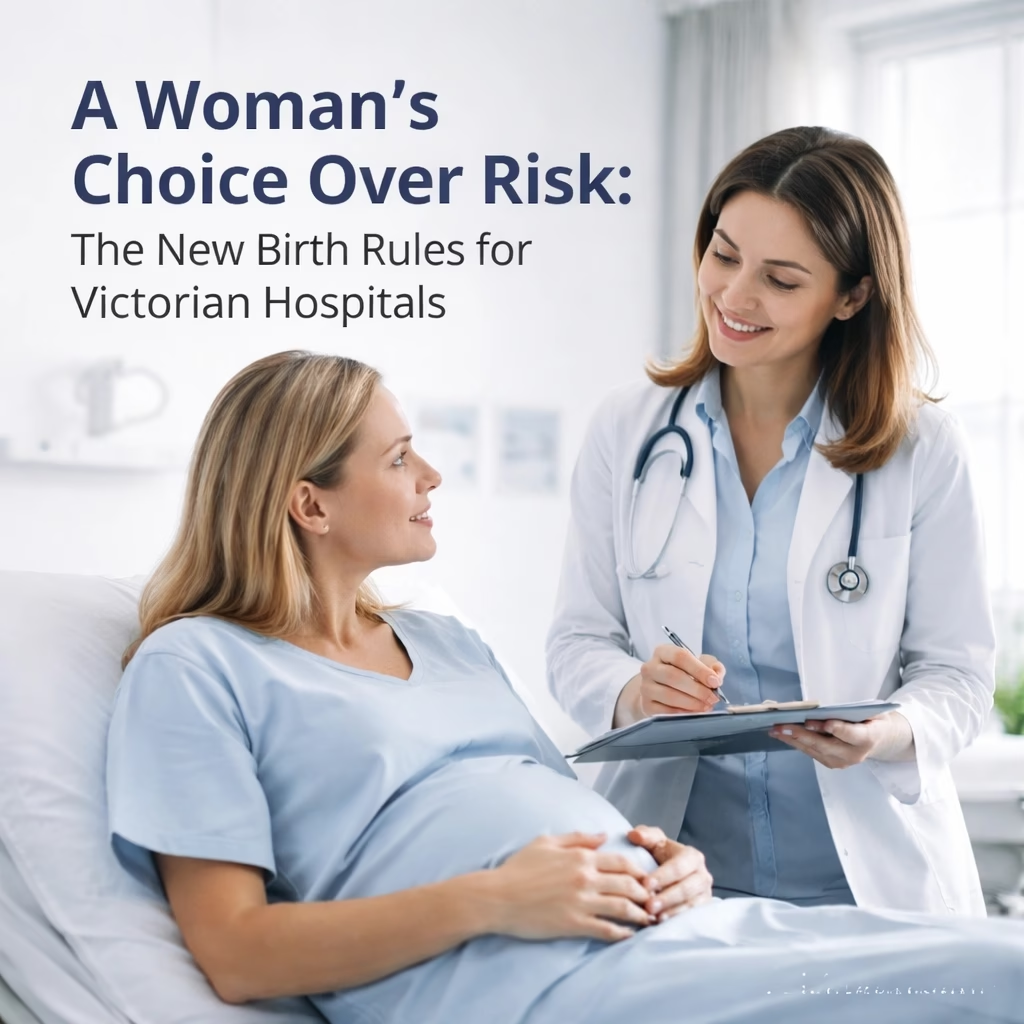
Under the new framework, clinicians are mandated to engage in detailed, empathetic, and non-coercive discussions about a woman's preferences. This includes scenarios such as Vaginal Birth After Caesarean (VBAC) for women with multiple previous caesareans, or opting for a vaginal birth in cases of certain medical conditions that traditionally warranted automatic caesarean sections. The guidelines emphasize that while clinicians must present evidence-based recommendations, the ultimate decision, after thorough counselling, rests with the pregnant individual.

Expanding Birthing Options
The guidelines also address areas like "maternal request" caesarean sections and the management of post-term pregnancies, offering more flexibility in how these situations are approached. For example, a woman may request a caesarean without a purely medical indication, and while clinicians are expected to explore her reasons and provide information on vaginal birth, her informed preference is to be respected. Similarly, the timing and method of induction for post-term pregnancies are now subject to a more nuanced discussion, rather than a rigid protocol.
The Role of Multidisciplinary Teams
To support these complex decisions, the new rules promote the involvement of multidisciplinary teams. This means obstetricians, midwives, anaesthetists, and other specialists may collaborate to provide comprehensive information and support, particularly for choices that carry higher perceived risks. This collaborative approach aims to ensure that women receive a holistic understanding of their options from various expert perspectives.
Impact: Navigating Autonomy and Responsibility
The implementation of these new rules carries profound implications for various stakeholders within Victoria's healthcare system.
More Read

For Pregnant Women and Families
For many pregnant women, these guidelines represent a significant step towards greater bodily autonomy and a more personalized birthing experience. It promises to reduce feelings of disempowerment and foster a stronger sense of partnership with their care providers. The ability to advocate for a desired birth plan, even if it involves a degree of elevated risk, can lead to increased satisfaction and potentially more positive psychological outcomes post-birth. However, this empowerment also places a greater onus on women to thoroughly understand complex medical information and bear the weight of potentially difficult decisions.
For Clinicians and Hospitals
Obstetricians, midwives, and hospital administrators are navigating a new landscape of clinical responsibility. While the guidelines aim to support shared decision-making, they also raise questions about professional liability when a patient's informed choice diverges from standard medical advice and results in an adverse outcome. Training and resources are crucial to equip staff with enhanced communication skills, particularly in explaining complex risks without coercion. Hospitals may need to review their staffing levels and resources to accommodate more extensive counselling sessions and potentially more complex birthing scenarios. The Department of Health Victoria is working with Safer Care Victoria to provide ongoing education and support for healthcare professionals.
Ethical and Legal Considerations
The updated rules prompt significant ethical and legal discussions. The balance between a woman's right to choose and a clinician's duty of care to ensure safety is delicate. Legal frameworks surrounding informed consent are being rigorously tested, with an emphasis on documenting thorough discussions and ensuring a woman's understanding is unequivocally clear. This necessitates meticulous record-keeping and a culture of open, honest communication within healthcare teams.
What Next: Implementation and Ongoing Evaluation
The rollout of these new guidelines is an ongoing process. Hospitals across Victoria are adapting their internal protocols, conducting staff training, and updating patient information resources. The Department of Health Victoria, in conjunction with Safer Care Victoria, is committed to monitoring the implementation and impact of these changes.
Monitoring and Review
Key performance indicators will likely include rates of maternal and neonatal outcomes, patient satisfaction surveys, and feedback from healthcare providers. Regular reviews of the guidelines are anticipated to ensure they remain evidence-based, effective, and responsive to the evolving needs of the Victorian community. These reviews will consider both clinical outcomes and the lived experiences of women and their families.

Support and Education
Continued education for both healthcare professionals and the public will be vital. For clinicians, this includes workshops on communication strategies, ethical decision-making, and navigating complex consent processes. For the public, accessible and clear information about their rights and the new decision-making framework will be essential to truly empower informed choices. The success of Victoria's new birth rules will ultimately hinge on a collaborative effort to uphold patient autonomy while maintaining the highest standards of safety and care.