Diplomatic Ice Thaws: Xi-Lee Summit Reshapes Asia's Strategic Landscape
Diplomatic Ice Thaws: Xi-Lee Summit Reshapes Asia's Strategic Landscape
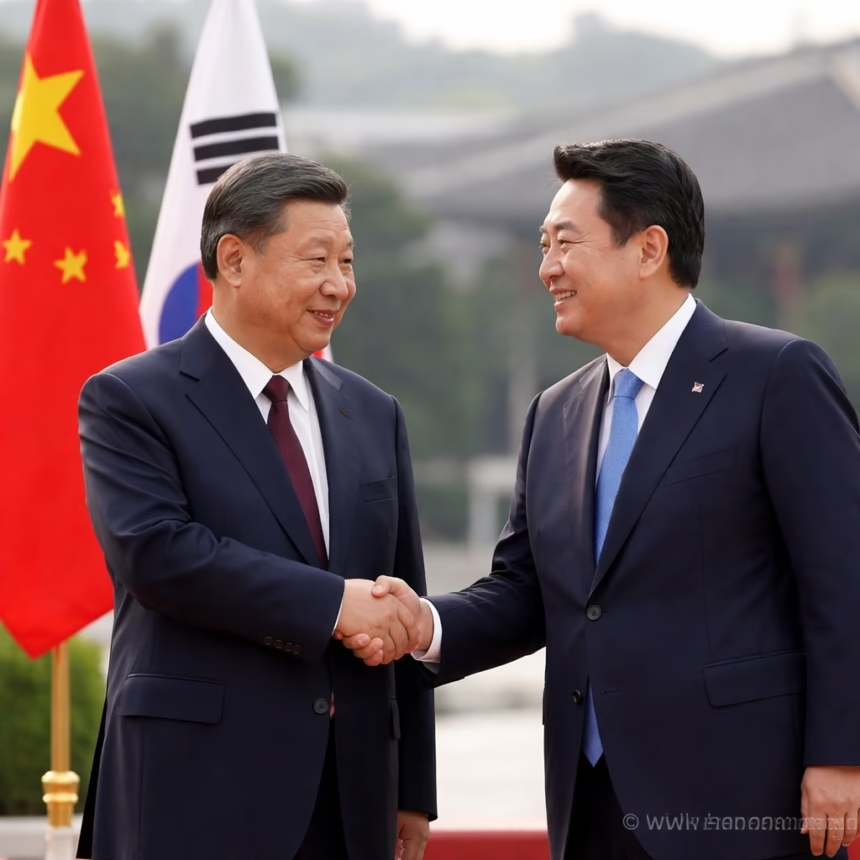
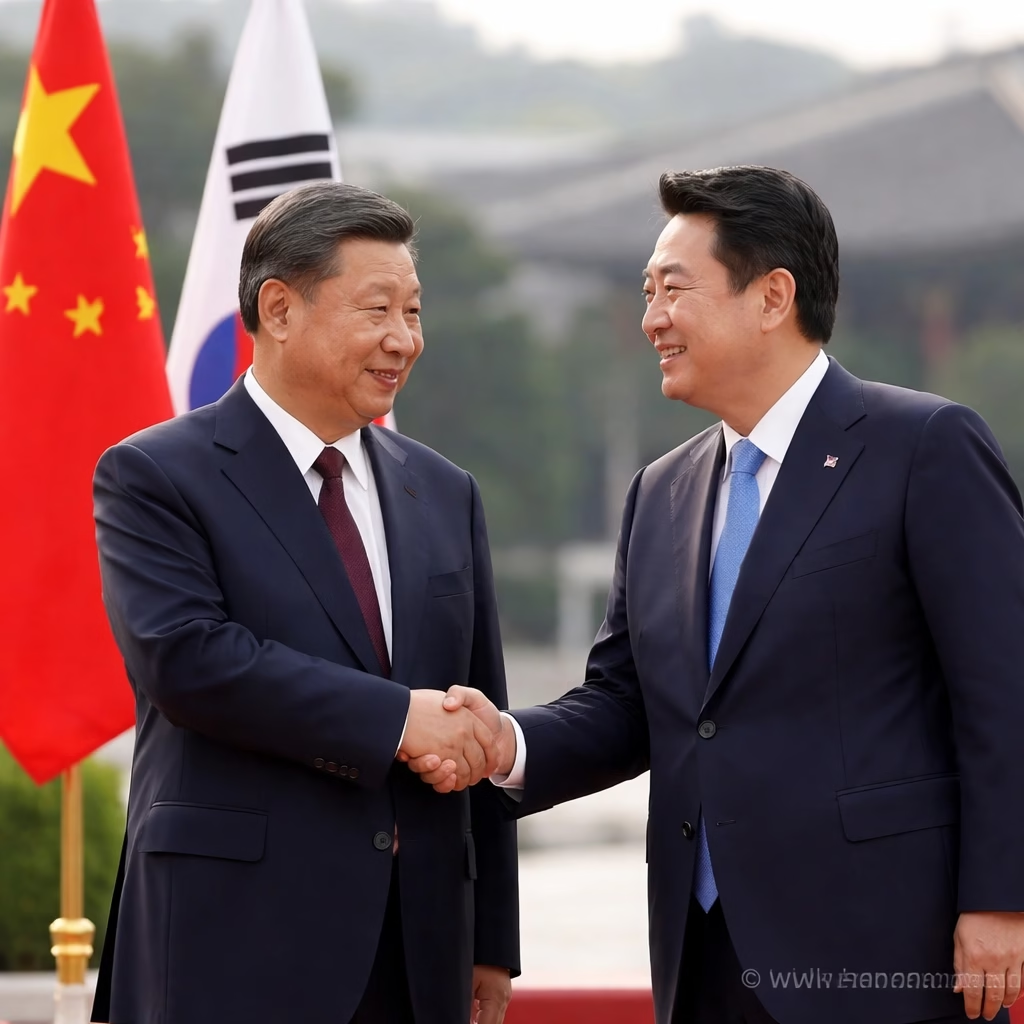
Last week, Chinese President Xi Jinping hosted South Korean President Lee in Beijing for a high-stakes summit, signaling a potential warming of relations between the two East Asian powers. The meticulously choreographed meeting, held at the Great Hall of the People, aimed to reset bilateral ties amidst escalating regional tensions and global economic shifts, sending ripples across the Indo-Pacific.
Background: A Rocky Path to Reconciliation
China and South Korea share deep economic interdependence; China remains South Korea’s largest trading partner. Despite this, political relations have often faced turbulence. A significant downturn occurred in 2016 following South Korea’s deployment of the Terminal High Altitude Area Defense (THAAD) anti-missile system. Beijing opposed THAAD, viewing it as a threat, leading to informal Chinese economic retaliation that impacted South Korean businesses and cultural exports.
More recently, South Korea’s strengthening alliance with the United States and Japan has further strained ties with Beijing. Enhanced trilateral security cooperation, including military exercises, is viewed with suspicion by China, which perceives such alignments as challenging its regional influence. North Korea’s persistent provocations also present a constant point of divergence, complicating coordinated responses. The summit thus occurred against a backdrop of geopolitical rivalries and economic uncertainties.

Key Developments: A Cautious Embrace
The summit between President Xi Jinping and President Lee marked a notable shift from recent frosty exchanges, with both leaders emphasizing dialogue and mutual respect. Several key areas of cooperation emerged, signaling a potential pivot in bilateral dynamics.
Economically, leaders pledged to enhance supply chain resilience, particularly in critical sectors like semiconductors, electric vehicle batteries, and rare earth minerals. They agreed to establish a new joint working group to identify and mitigate disruptions. Discussions also included easing trade barriers and promoting greater market access, reflecting a shared desire for stable trade flows.
On regional security, while differences on THAAD and broader alliance structures persisted, both presidents affirmed the necessity of maintaining peace and stability on the Korean Peninsula. They agreed to re-establish a high-level security dialogue channel, dormant for several years, to discuss denuclearization strategies and explore avenues for de-escalation with North Korea. This mechanism is crucial for preventing miscalculation.
More Read

Cultural and people-to-people exchanges also featured prominently. Initiatives to revive tourism, academic cooperation, and youth exchange programs, which had dwindled during political tension, were announced. These efforts aim to rebuild trust and foster positive public perception. A joint statement, though carefully worded, underscored a commitment to upholding multilateralism and addressing global challenges like climate change.
Impact: Shifting Sands in the Indo-Pacific
South Korea’s Strategic Maneuver
For South Korea, the summit represents a strategic recalibration, offering greater diplomatic flexibility. While reaffirming its foundational alliance with the United States, engaging Beijing provides an avenue to manage its largest economic relationship and potentially gain leverage on North Korea. A stable relationship with China is vital for South Korean businesses and offers alternatives to over-reliance on a single geopolitical bloc.
China’s Regional Reassertion
China views the thaw as a significant diplomatic victory. It counters the narrative of isolation and demonstrates Beijing’s capacity to engage constructively with regional partners, even those closely allied with the U.S. A closer relationship with South Korea could weaken U.S.-led alliance structures in Northeast Asia and diversify China’s economic and security partnerships, bolstering its regional influence.
Japan’s Unease
The summit has generated considerable attention in Tokyo. Japan, closely working with South Korea and the U.S. on trilateral security cooperation, may view a closer Seoul-Beijing relationship as potentially diluting these efforts. Tokyo will closely monitor how this thaw impacts regional security dialogues, particularly concerning North Korea and maritime issues, and whether it complicates future trilateral initiatives.
Washington’s Watchful Eye
The United States observes these developments cautiously. While supporting allies’ dialogue, a significant warming between Seoul and Beijing could complicate U.S. efforts to forge a united front against China in the Indo-Pacific. The U.S. will ensure South Korea’s engagement with China does not compromise shared security interests or critical technology supply chain resilience.

North Korea’s Dilemma
For North Korea, the renewed dialogue presents a complex scenario. It could lead to increased coordinated pressure from both powers regarding denuclearization. Alternatively, Pyongyang might seek to exploit any perceived cracks in regional unity through further provocations, asserting its strategic relevance.
What Next: Navigating a New Diplomatic Landscape
The Xi-Lee summit marks a starting point. The immediate aftermath will likely see follow-up engagements at ministerial and working levels, with economic teams meeting to implement agreements on supply chain stability and trade. Cultural exchange programs should also gradually resume.
Diplomatic observers anticipate the newly re-established security dialogue channel will be tested soon, possibly in response to future North Korean actions. The true test of this thaw will be its resilience against inevitable geopolitical pressures and differing national interests.
Reactions from Japan and the United States will be crucial. Both nations are expected to engage in bilateral consultations with South Korea to understand the summit’s implications and reassess their strategic postures. Washington will likely increase diplomatic efforts to reinforce alliances and ensure continued alignment on security and economic fronts.
Future high-level meetings will depend on successful agreement implementation and regional stability. The strategic landscape of Northeast Asia has undeniably shifted, and all regional players will be carefully navigating this evolving diplomatic terrain.