Xiaomi's Flagship Camera Glitch: The Exposure Nightmare Finally Ends
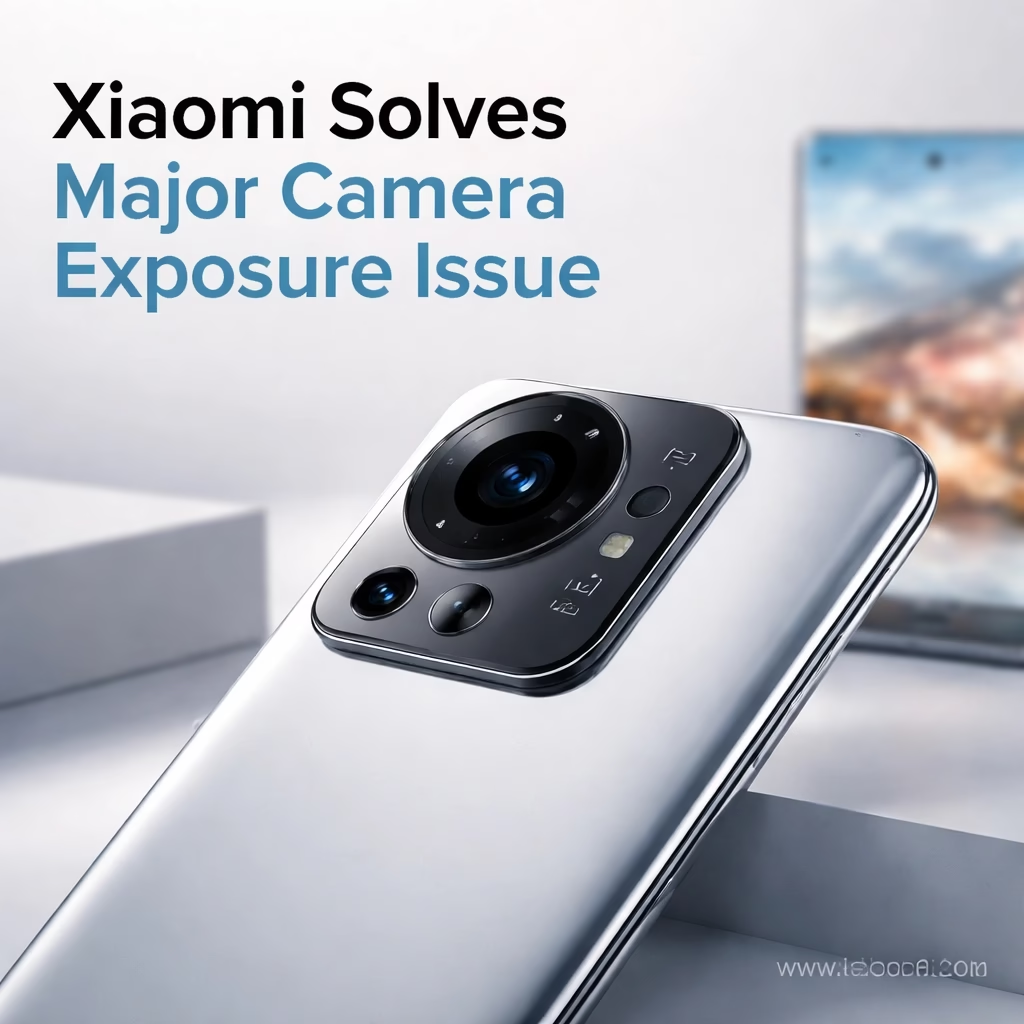
Xiaomi has reportedly resolved a long-standing and frustrating camera exposure issue that plagued its premium flagship smartphones. Recent software updates, primarily integrated into its HyperOS ecosystem, have begun rolling out globally, bringing significant improvements to image consistency and quality for affected users.
This critical fix addresses a persistent problem that often undermined the photographic capabilities of devices like the Xiaomi 13 Ultra and the latest Xiaomi 14 series, much to the relief of its user base and tech enthusiasts.
Background: A Persistent Problem for Premium Devices
For over a year, a noticeable and often debilitating camera exposure inconsistency has been a thorn in the side of Xiaomi's top-tier smartphone users. The issue manifested primarily as unpredictable dynamic range handling, leading to either blown-out highlights in bright areas or excessively underexposed shadows in complex lighting conditions.
This problem was particularly pronounced in high-contrast scenes, such as capturing subjects against a bright sky or in environments with mixed indoor and outdoor lighting. Despite featuring cutting-edge camera hardware, including large sensors like Sony's IMX989 and the newer LYT-900, and a celebrated partnership with legendary camera maker Leica, the software processing frequently struggled to deliver reliable and consistent results.
The Leica Partnership and High Expectations
The collaboration with Leica, announced in 2022 with the Xiaomi 12S Ultra, set a new benchmark for Xiaomi’s mobile photography ambitions. Subsequent flagships, including the Xiaomi 13 Pro, Xiaomi 13 Ultra, and the recently launched Xiaomi 14 and 14 Ultra, all carried the Leica branding, promising an authentic and professional photographic experience.
However, users quickly identified a disconnect between the hardware’s potential and the final image output, especially concerning exposure. This often led to frustrating retakes or heavy post-processing, diminishing the premium user experience expected from devices costing upwards of $1000.

Reports of these issues intensified following the global launch of the Xiaomi 13 series in early 2023 and persisted throughout the lifespan of these devices, continuing even with the initial releases of the Xiaomi 14 series in late 2023 and early 2024. Tech reviewers and dedicated users on platforms like XDA Developers and the Xiaomi Community forums frequently highlighted these exposure quirks. While minor software updates attempted to mitigate the problems, a definitive, system-wide solution remained elusive.
Key Developments: HyperOS Delivers the Fix
The turning point arrived with recent updates to Xiaomi's new operating system, HyperOS. Launched globally in late 2023 as a replacement for MIUI, HyperOS was touted not just for its performance enhancements but also for underlying improvements to core system functionalities, including camera processing.
Specific HyperOS builds, notably those released in late Q1 and early Q2 2024 (e.g., HyperOS 1.0.5.0.UMCCNXM for Chinese variants and corresponding global versions), have been identified by users and tech outlets as containing the long-awaited resolution.
HyperOS: The Software Backbone
The solution appears deeply integrated within HyperOS’s revamped imaging pipeline. While Xiaomi has not provided granular technical details, industry observers suggest the improvements stem from advanced AI-driven exposure bracketing, more sophisticated local tone mapping algorithms, and enhanced scene detection capabilities.
More Read

These algorithmic refinements allow the camera software to make more intelligent and nuanced exposure decisions in real-time. The system now seems to analyze different areas of a scene more effectively, applying localized adjustments to preserve detail in both highlights and shadows, thereby significantly improving overall dynamic range.
Furthermore, the updates have likely refined the interaction between Xiaomi’s internal processing and Leica’s color science and rendering profiles. Users report that both the “Leica Authentic” and “Leica Vibrant” modes now exhibit greater consistency in exposure, ensuring that the chosen aesthetic is applied without introducing unwanted exposure artifacts.
User Validation and Sample Shots
The most compelling evidence of the fix comes directly from the user community. Numerous posts across social media platforms, dedicated forums, and tech review sites now feature side-by-side comparisons and new sample photos demonstrating a marked improvement.
Images captured with the updated software show far more balanced exposures, with previously blown-out skies now retaining cloud detail and formerly crushed shadows revealing subtle textures. This widespread positive feedback signifies that Xiaomi’s engineering teams have successfully tackled a complex computational photography challenge, restoring confidence in their ability to deliver a top-tier camera experience.
Impact: Restoring Confidence and Sharpening Competition
The resolution of this exposure issue carries significant positive implications for both Xiaomi and its extensive user base. For current owners of affected flagship devices, the impact is immediate and tangible.

Restoring User Confidence
Owners of the Xiaomi 13 Ultra, Xiaomi 14 Ultra, and other premium models can now fully unlock the photographic potential of their expensive hardware. The frustration of inconsistent results, which often necessitated multiple shots or extensive post-editing, is largely alleviated. This leads to a more enjoyable and reliable shooting experience, enhancing overall user satisfaction and reinforcing the value proposition of their devices.
For prospective buyers, the fix removes a major deterrent that previously tempered enthusiasm for Xiaomi’s flagships. Camera performance is a critical differentiator in the premium smartphone market, and the assurance of consistent, high-quality exposure makes Xiaomi a far more compelling option against established rivals.
Competitive Edge in Premium Segment
Strategically, this fix significantly strengthens Xiaomi’s position in the fiercely competitive high-end smartphone segment. By addressing a core camera weakness, Xiaomi can now more effectively leverage its powerful sensors, advanced optics, and the prestige of its Leica partnership.
This move places Xiaomi on a more even footing with camera leaders like Apple, Samsung, and Google, who are renowned for their consistent and reliable computational photography. Improved camera performance is crucial for market share growth in the premium segment, where consumers are willing to pay a premium for an uncompromised experience.
Furthermore, tech reviewers, who previously noted the exposure issues as a drawback, are likely to revise their assessments, potentially leading to higher scores and more favorable recommendations for Xiaomi’s flagship lineup. This positive media coverage can translate directly into increased sales and enhanced brand perception globally.
What Next: Global Rollout and Future Innovations
With the core exposure problem largely addressed, Xiaomi's focus will likely shift to ensuring the global dissemination of these crucial updates and continuing to refine its imaging capabilities.
Continued Global Rollout
While many users have already received the HyperOS updates containing the fix, the rollout process is often staggered across regions and carrier networks. Xiaomi will need to ensure that these beneficial updates reach all affected devices worldwide in a timely manner, maintaining transparent communication with its user community regarding update schedules. This includes older flagships that might eventually transition to HyperOS, ensuring that the benefits of the improved imaging pipeline are extended as widely as possible.
Ongoing Optimization and Future Flagships
Even with this significant fix, computational photography is an ever-evolving field. Xiaomi’s camera engineering teams will undoubtedly continue to fine-tune the algorithms, addressing any residual edge cases or specific scenarios (e.g., extreme low light, specific zoom levels, or complex video stabilization).
More importantly, this successful resolution sets a strong foundation for future Xiaomi flagships. Upcoming devices, such as the anticipated Xiaomi 15 series, are expected to integrate these refined exposure algorithms from the outset, ensuring a consistent and high-quality camera experience right from launch, without users having to wait for subsequent software patches. This allows Xiaomi to focus its innovation efforts on introducing new computational photography features, enhancing existing modes, and pushing the boundaries of mobile imaging even further, rather than being preoccupied with fundamental exposure challenges.