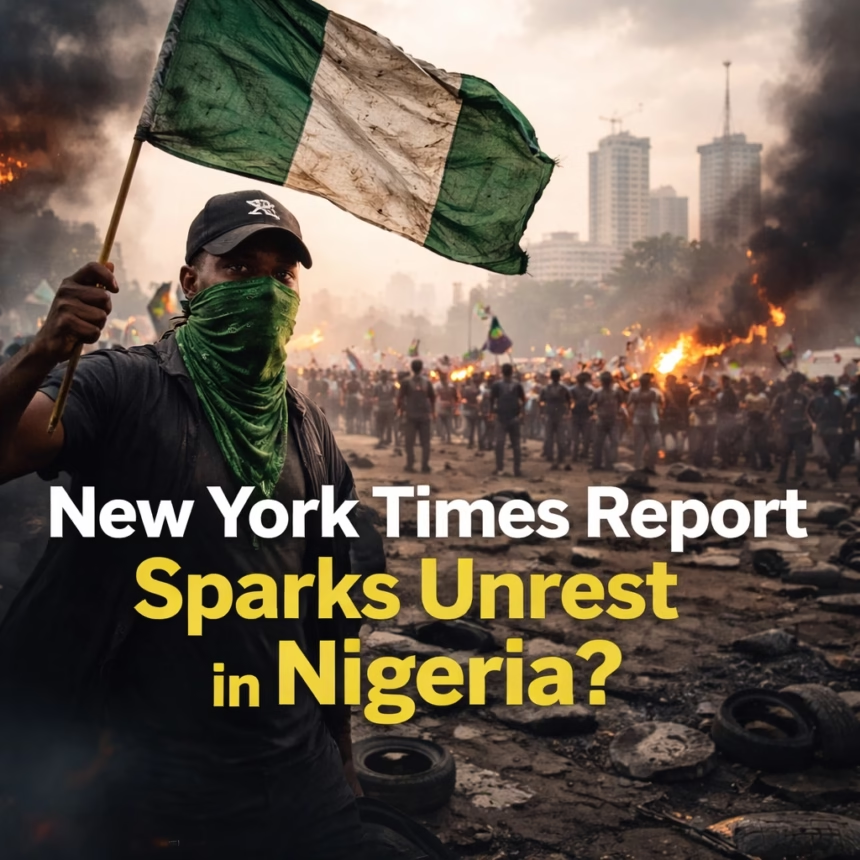
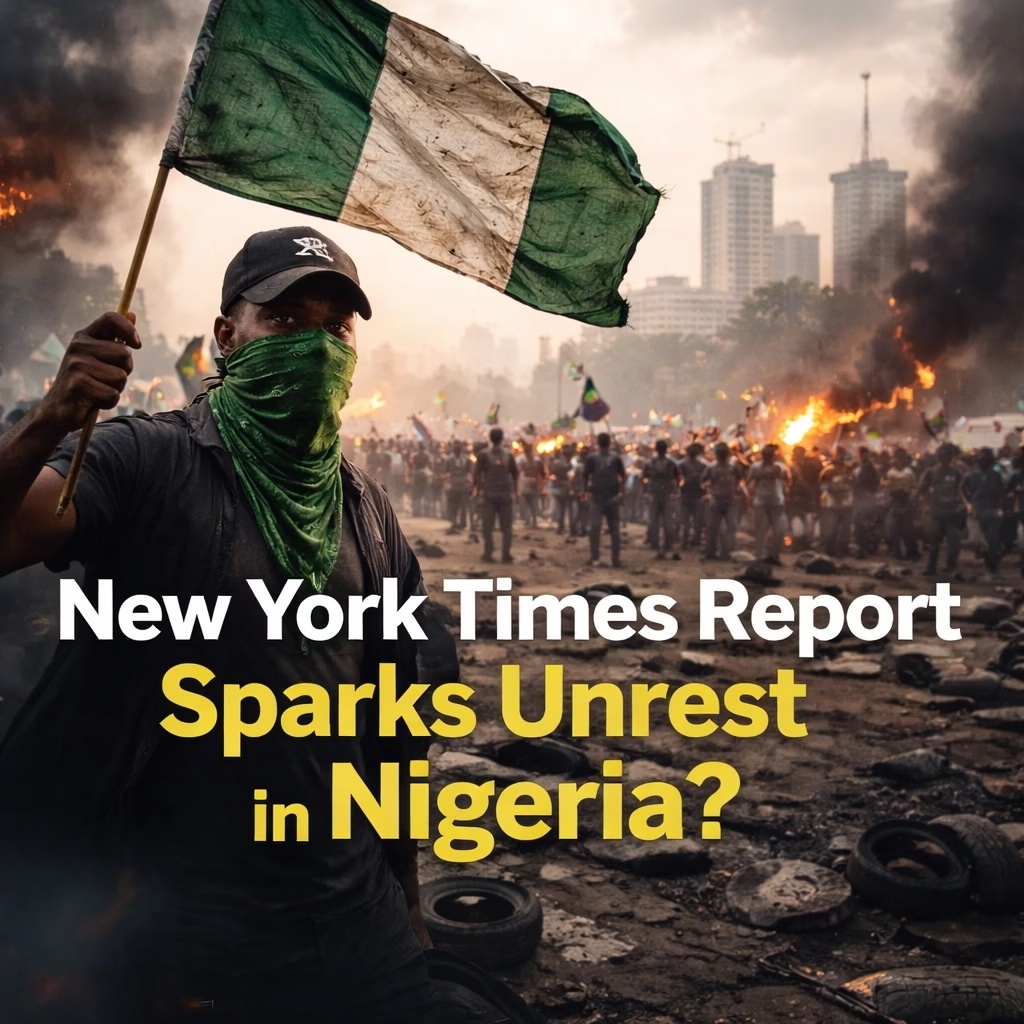
Ohanaeze Ndigbo, the prominent Igbo socio-cultural organization, recently issued a stern warning regarding a New York Times report, asserting its potential to incite widespread unrest across Nigeria. The group specifically highlighted concerns that the article, published by the esteemed American newspaper, could exacerbate existing ethnic and political tensions within the West African nation. This development has prompted calls for caution and national dialogue amidst an already delicate socio-political climate.
Background: A Nation’s Fragile Peace
Nigeria, Africa's most populous nation, is a tapestry of over 250 ethnic groups and diverse religious beliefs, with a history marked by periods of significant political and social upheaval. The country experienced a devastating civil war from 1967 to 1970, largely stemming from ethnic grievances and the attempted secession of Biafra, primarily inhabited by the Igbo people. This historical context deeply informs the current discourse surrounding national unity and the potential for division.
Ohanaeze Ndigbo serves as the apex socio-cultural organization for the Igbo people, advocating for their interests and playing a significant role in national political conversations. Its pronouncements often carry considerable weight, particularly in the southeastern region of Nigeria. The organization has historically been vocal on issues of national integration, resource allocation, and political marginalization.
The specific New York Times report, though not explicitly detailed by Ohanaeze in public statements, is understood to touch upon sensitive aspects of Nigeria's recent general elections held in February and March 2023. These elections, which saw Bola Ahmed Tinubu of the All Progressives Congress (APC) declared president, were fiercely contested and generated substantial debate regarding their fairness and integrity. Opposition parties, notably the Labour Party and the People's Democratic Party (PDP), challenged the results, alleging widespread irregularities and non-compliance with electoral laws. These challenges were ultimately dismissed by the Presidential Election Petition Tribunal and subsequently affirmed by the Supreme Court of Nigeria in late 2023.
More Read

The post-election period has been characterized by lingering grievances among segments of the populace, particularly those who supported the opposition candidates. Social media platforms have amplified these divisions, with narratives of electoral fraud and judicial compromise gaining traction in some quarters. It is against this backdrop of persistent political polarization and ethnic sensitivities that Ohanaeze Ndigbo's warning has emerged, underscoring the potential for external narratives to inflame domestic discontent.
Key Developments: Ohanaeze’s Specific Concerns
The warning from Ohanaeze Ndigbo came through a statement attributed to its Secretary-General, Mazi Okechukwu Isiguzoro. In his address, Isiguzoro reportedly described the New York Times report as "incendiary" and "misleading," expressing deep concern that its content could be misinterpreted or weaponized by disgruntled elements within Nigeria. The organization specifically cautioned against any media narrative that could undermine the legitimacy of the democratically elected government or cast doubt on the integrity of Nigeria's judicial processes.
Ohanaeze's apprehension centers on the potential for the report to validate and amplify existing narratives of injustice and marginalization, particularly among youth and those who feel disenfranchised. The group emphasized that such external reports, even if intended for critical analysis, could inadvertently provide ammunition for those seeking to destabilize the nation through protests, civil disobedience, or even more severe forms of unrest. They reportedly urged the New York Times to exercise greater caution and cultural sensitivity when reporting on complex Nigerian political issues, suggesting that a lack of nuanced understanding could have far-reaching negative consequences.
More Read

While the precise elements of the New York Times article that drew Ohanaeze's ire were not fully disclosed, it is highly probable that the report delved into allegations of electoral irregularities, voter suppression, or the perceived partiality of the judiciary during the election petition process. Such a narrative, especially from an influential international media outlet, could be seen as lending credence to claims that the 2023 elections were fundamentally flawed, thereby fueling calls for resistance against the current administration.
The Nigerian government has, in previous instances, dismissed international media reports critical of its electoral processes or governance as biased, uninformed, or driven by ulterior motives. However, Ohanaeze's warning comes from a prominent domestic socio-cultural organization, adding a unique layer of internal concern to the discourse. The group's statement implicitly calls on both local and international actors to prioritize national stability over potentially divisive narratives.
Impact: A Ripple Effect on Society
The potential impact of the New York Times report, as warned by Ohanaeze Ndigbo, extends across multiple facets of Nigerian society and its international standing. At the most immediate level, there is a heightened risk of increased social tension and polarization among the general populace. If the report is widely circulated and interpreted as validating grievances against the electoral outcome, it could galvanize opposition elements and lead to street protests, demonstrations, or even clashes.
For the political class, the report could reignite debates about the legitimacy of the current administration, potentially complicating governance and hindering efforts towards national cohesion. The government might face renewed pressure to address lingering concerns about electoral reforms and judicial independence, even after the Supreme Court's final ruling. This could divert focus from critical national development issues to managing political fallout.
Ethno-religious relations, already a delicate balance in Nigeria, could also suffer. Depending on how the report frames issues related to the elections and specific geopolitical zones or ethnic groups, it could exacerbate existing fault lines. Ohanaeze's warning, coming from an Igbo organization, implicitly suggests a concern that the report might disproportionately affect or be interpreted in ways that inflame Igbo sentiments regarding marginalization or electoral injustice.
Internationally, a report from a globally respected publication like the New York Times can significantly shape perceptions of Nigeria. If the report paints a picture of a country with deeply flawed democratic processes or on the verge of instability, it could deter foreign direct investment, impact trade relations, and influence diplomatic engagements. This could have adverse economic consequences, affecting job creation, poverty reduction efforts, and overall national development.
More Read
Furthermore, the report and Ohanaeze's reaction highlight the power of media in shaping public opinion and potentially influencing political stability. It underscores the responsibility of both international and local media to report accurately, contextually, and with an awareness of the potential consequences of their narratives in complex, multi-ethnic societies like Nigeria.
What Next: Navigating a Precarious Path
In the wake of Ohanaeze Ndigbo's strong caution, several developments are anticipated as Nigeria navigates this sensitive period. The Nigerian government is expected to issue a formal response, likely through the Ministry of Information or presidential spokespersons, to address the concerns raised by Ohanaeze and potentially to counter the narrative presented in the New York Times report. This response would aim to reassure citizens and the international community about the stability of the nation and the integrity of its democratic institutions.
Ohanaeze Ndigbo, along with other socio-cultural and civil society organizations, may continue to advocate for caution and national dialogue. There might be calls for stakeholders across the political spectrum to engage in constructive discussions aimed at healing post-election wounds and fostering national unity. Religious leaders, traditional rulers, and community elders are also likely to play a crucial role in preaching peace and discouraging any actions that could lead to unrest.
Security agencies across Nigeria will undoubtedly remain on high alert, monitoring public discourse and potential flashpoints to prevent any breakdown of law and order. Measures might include increased intelligence gathering, community engagements, and visible security presence in sensitive areas to deter protests or violent demonstrations.
Diplomatic channels may also become active, with Nigerian embassies and high commissions potentially engaging with international media outlets and foreign governments to present the country's perspective and mitigate any negative international perceptions arising from the report. This could involve providing detailed briefings on the electoral process and the judicial outcomes.
Ultimately, the situation underscores the ongoing need for robust democratic institutions, transparent governance, and inclusive political processes in Nigeria. While the New York Times report has sparked a specific warning, it also serves as a reminder of the underlying vulnerabilities within Nigeria's socio-political fabric. The coming weeks will reveal how effectively the nation's leaders and citizens respond to this latest challenge, striving to uphold peace and stability in the face of potentially divisive narratives.