Regional Tensions Explode: 180 Injured After Iran Missile Strike Near Israeli Nuclear Facility
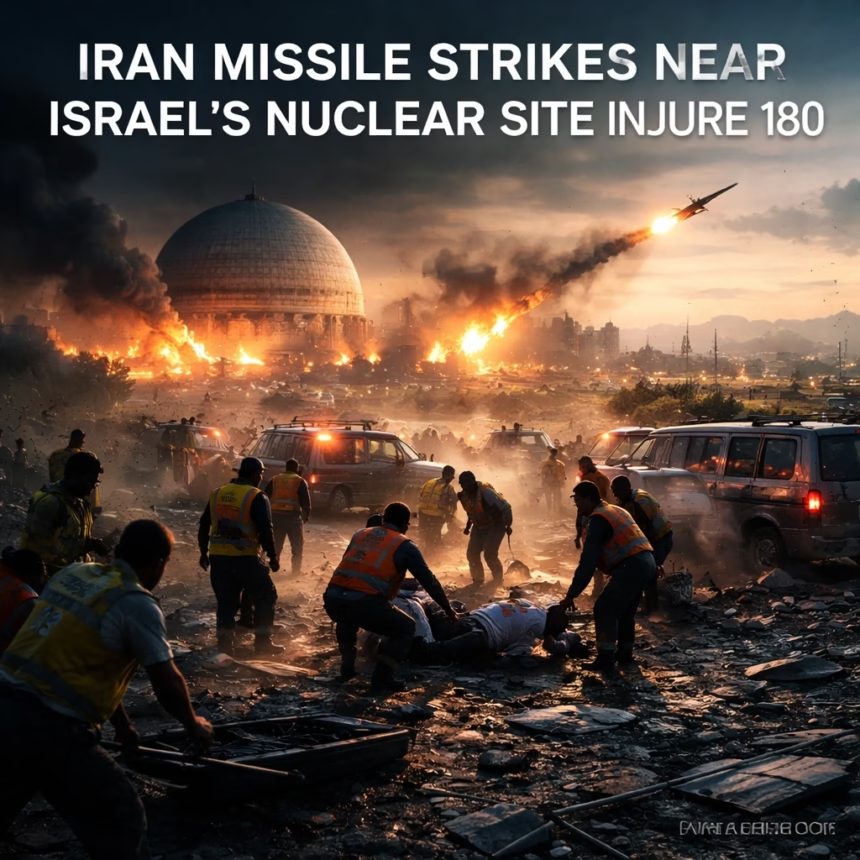
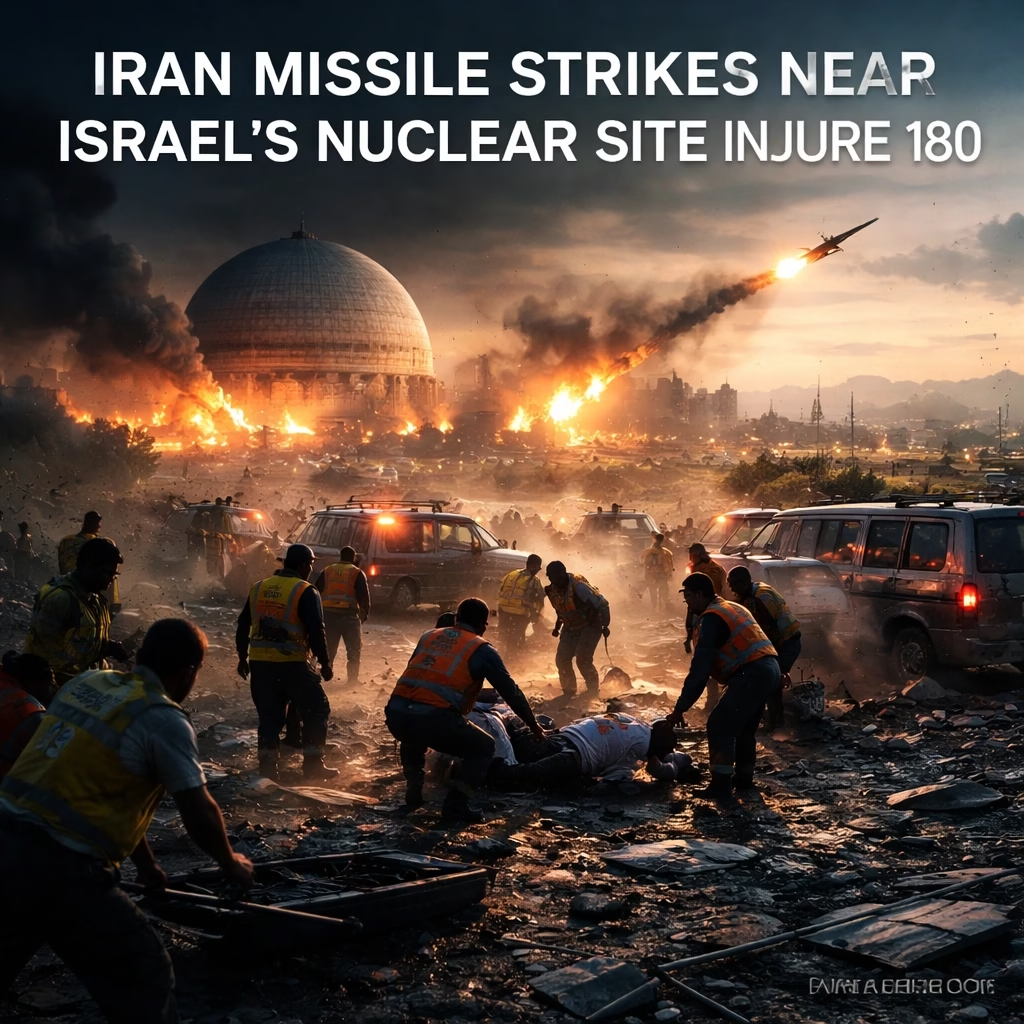
In a dramatic escalation of Middle Eastern tensions, a series of ballistic missiles, reportedly launched from Iranian territory, struck an area in Israel's southern Negev Desert on October 27, 2023. The strike, occurring in close proximity to Israel's highly sensitive Dimona nuclear research center, resulted in injuries to 180 individuals and has ignited widespread international alarm.
Emergency services, including Magen David Adom, responded swiftly to the impact zone, approximately 15 kilometers southeast of the Dimona facility, treating victims for shrapnel wounds, blast trauma, and severe shock. The incident marks a significant direct military confrontation between the two long-standing adversaries, threatening to destabilize an already volatile region.
Background: Decades of Deep-Seated Animosity
The relationship between Iran and Israel has been characterized by decades of animosity, ideological conflict, and proxy warfare across the Middle East. While direct military engagements have historically been rare, both nations have engaged in a shadow war involving cyberattacks, assassinations, and support for opposing factions in regional conflicts.
Proxy Conflicts and Regional Influence
Iran has long supported groups such as Hezbollah in Lebanon, various Palestinian factions in Gaza, and the Houthi movement in Yemen, all of whom are viewed by Israel as direct threats to its security. Israel, in turn, has conducted numerous airstrikes in Syria, targeting Iranian assets and arms shipments intended for Hezbollah, aiming to curb Tehran’s growing regional influence.
The Syrian civil war, in particular, has served as a significant flashpoint, with Iran establishing a military presence and Israel responding with consistent aerial campaigns. This dynamic has created a complex web of alliances and rivalries, contributing to an environment of constant low-level conflict.
More Read

Nuclear Programs and Existential Fears
A central component of the enduring tension revolves around nuclear capabilities. Israel maintains a policy of nuclear ambiguity regarding its own undeclared arsenal, widely believed to be housed at the Dimona complex, officially known as the Shimon Peres Negev Nuclear Research Center. Iran, a signatory to the Nuclear Non-Proliferation Treaty (NPT), insists its nuclear program is for peaceful energy purposes, but its enrichment activities have drawn significant international scrutiny and sanctions.
The 2015 Joint Comprehensive Plan of Action (JCPOA), a multinational agreement to limit Iran’s nuclear program in exchange for sanctions relief, was largely abandoned by the United States in 2018. This withdrawal, followed by Iran’s gradual rollback of its commitments, further intensified fears of a nuclear arms race in the region and deepened the security dilemma for both nations.
Recent Escalations
In the months preceding the missile strike, tensions had notably intensified. Reports of increased Israeli intelligence operations within Iran, coupled with alleged Iranian cyberattacks against Israeli infrastructure, painted a picture of a rapidly deteriorating security landscape. Analysts point to a series of specific events, including an alleged Israeli drone strike on an Iranian military facility in January 2023 and the interception of Iranian-supplied weaponry en route to proxy groups in March 2023, as precursors to the latest direct confrontation.
More Read

Both sides had issued increasingly strident warnings, with Tehran vowing “decisive retaliation” for any perceived Israeli aggression on its soil, and Jerusalem reiterating its commitment to prevent Iran from acquiring nuclear weapons or establishing a permanent military foothold near its borders.
Key Developments: The Strike and Its Aftermath
The missile barrage commenced at approximately 02: 30 AM local time on October 27, 2023. Israeli defense systems, including elements of the Iron Dome and Arrow missile defense batteries, were activated, but several projectiles managed to penetrate, striking open ground and residential areas in the Negev.
Missile Trajectory and Impact
Initial assessments by Israeli defense officials indicate that at least six ballistic missiles, believed to be of the Emad or Qiam class, were launched from western Iran. These missiles, known for their precision and range, traveled approximately 1,200 kilometers before entering Israeli airspace. While some were intercepted, three significant impacts were recorded, causing widespread damage and injuries.
The closest impact point to the Dimona nuclear facility was approximately 15 kilometers, near the town of Yeruham, a community heavily affected by the blast. Debris and shrapnel were scattered across a wide area, leading to most of the reported injuries.
Emergency Response and Casualties
Within minutes of the first impact, sirens blared across the Negev, and emergency protocols were initiated. Magen David Adom (MDA) paramedics, firefighters, and police units converged on the affected areas. Hospitals in Beersheba, including Soroka Medical Center, were placed on high alert, receiving the bulk of the 180 injured individuals.
The injuries ranged from minor cuts and abrasions to severe shrapnel wounds and concussions. A significant number of victims also suffered from acute shock and psychological trauma. No fatalities were reported, a detail widely attributed to robust civilian defense measures and the timing of the strike when many residents were in reinforced shelters.
More Read

Official Statements and International Reaction
Following the strike, Israeli Prime Minister Benjamin Netanyahu convened an emergency security cabinet meeting, condemning the attack as an “act of unprovoked aggression” and vowing a “proportionate and decisive response.” Defense Minister Yoav Gallant stated that Israel would “not tolerate such blatant attacks on its sovereignty and citizens.”
From Tehran, a spokesperson for the Islamic Revolutionary Guard Corps (IRGC) claimed responsibility, stating the strike was a “pre-emptive defensive measure” against “Zionist aggression” and a “warning” against further Israeli incursions. They did not explicitly mention targeting a nuclear site, framing the attack as a response to recent Israeli actions in Syria.
International reactions were swift and largely condemnatory. The United Nations Secretary-General António Guterres called for immediate de-escalation, warning of the catastrophic consequences of a regional war. The United States, through Secretary of State Antony Blinken, reiterated its “unwavering commitment” to Israel’s security and condemned Iran’s actions, while urging restraint from all parties. European Union leaders expressed deep concern, calling for diplomatic solutions to prevent further escalation.
Impact: Far-Reaching Consequences
The missile strike has had immediate and potentially long-lasting impacts across multiple domains, from humanitarian concerns to geopolitical stability.
Humanitarian and Social Toll
Beyond the immediate physical injuries, the psychological impact on the affected communities in the Negev Desert is significant. Residents in towns like Yeruham and Dimona faced prolonged periods in bomb shelters, and the trauma of missile attacks is expected to have lasting effects, particularly on children. Local authorities have initiated mental health support programs for affected families.
Infrastructure damage, while not catastrophic, included shattered windows, damaged roofs, and disruptions to local services. Repair efforts commenced immediately, but the sense of vulnerability in previously considered safer areas has profoundly affected public morale.
Political and Security Implications
Politically, the strike has placed immense pressure on both the Israeli and Iranian leaderships. For Israel, the perceived failure of some missile defense systems to prevent impacts has sparked domestic debate about security readiness. For Iran, the direct military action represents a calculated risk that could invite devastating retaliation.
Regionally, the incident has sent shockwaves through neighboring countries, many of whom fear being drawn into a broader conflict. Gulf states, in particular, have expressed deep concern, with some quietly urging restraint while others have reaffirmed their security alliances with Western powers.
Economic Repercussions
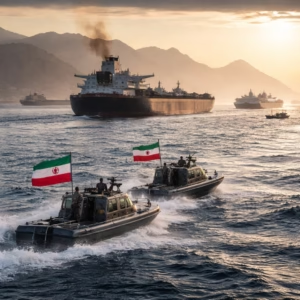
Global financial markets reacted immediately to the news. Oil prices surged by over 5% within hours of the strike, reflecting fears of supply disruptions in the Strait of Hormuz, a critical shipping lane for global energy. Stock markets in Asia and Europe saw initial dips, though they stabilized as diplomatic efforts began to unfold.
The Israeli economy is expected to experience short-term volatility, particularly in sectors like tourism and foreign investment, as perceptions of regional instability increase. Shipping insurance premiums for vessels operating in the Persian Gulf and Red Sea have also seen a notable rise.
Nuclear Safety and Proliferation Concerns
Although the Dimona facility was not directly hit, the proximity of the impacts has raised serious questions about nuclear safety and the potential for an accidental or intentional strike on such sensitive sites. International Atomic Energy Agency (IAEA) officials have privately expressed concern over the incident, emphasizing the need to respect nuclear facilities and prevent actions that could lead to a nuclear incident.
The event also reignited fears of nuclear proliferation, with some analysts suggesting that the perceived vulnerability of conventional defense could push regional actors towards seeking their own nuclear deterrents, further destabilizing the Middle East.
What Next: Pathways to De-escalation or Further Conflict
The immediate aftermath of the missile strike presents a critical juncture for regional stability. The world watches to see if diplomatic efforts can prevent a full-scale war or if the cycle of retaliation will intensify.
Immediate Responses and Retaliation
Israel’s security cabinet is deliberating potential retaliatory measures. Options range from targeted cyberattacks to precision airstrikes against Iranian military installations or proxy assets. The nature and scale of any Israeli response will be crucial in determining the next phase of the crisis. Military analysts suggest that Israel will aim for a response that demonstrates capability without necessarily triggering an all-out war.
Iran, for its part, has stated it is prepared for any Israeli retaliation, with IRGC commanders warning of “even harsher responses” if its territory is attacked. This rhetoric underscores the delicate balance of deterrence and escalation at play.
Diplomatic Efforts and International Mediation
The United Nations Security Council convened an emergency session on October 28, 2023, with calls for restraint dominating the discussions. Special envoys from the United States and European Union are reportedly engaging in back-channel diplomacy with both Tehran and Jerusalem, attempting to establish lines of communication and de-escalate tensions.
Regional powers, including Saudi Arabia and Egypt, are also reportedly involved in quiet diplomatic initiatives, recognizing the potential for widespread instability if the conflict broadens. The effectiveness of these efforts will largely depend on the willingness of both Iran and Israel to step back from the brink.
Long-Term Implications for Regional Security
The missile strike has irrevocably altered the security calculus in the Middle East. It has demonstrated Iran’s capability to directly target Israel with ballistic missiles and highlighted the persistent vulnerability, even with advanced defense systems. This could lead to a significant re-evaluation of defense strategies across the region.
The future of the Iran nuclear deal (JCPOA) also hangs in the balance. The incident could either push world powers to revive the deal as a means of de-escalation or lead to its complete collapse, potentially accelerating Iran’s nuclear program. The international community faces the daunting task of navigating this complex landscape to prevent a wider conflict with potentially devastating global consequences.