Trump Walks Out: 'Crooked or Stupid' Remark Sparks Interview Firestorm
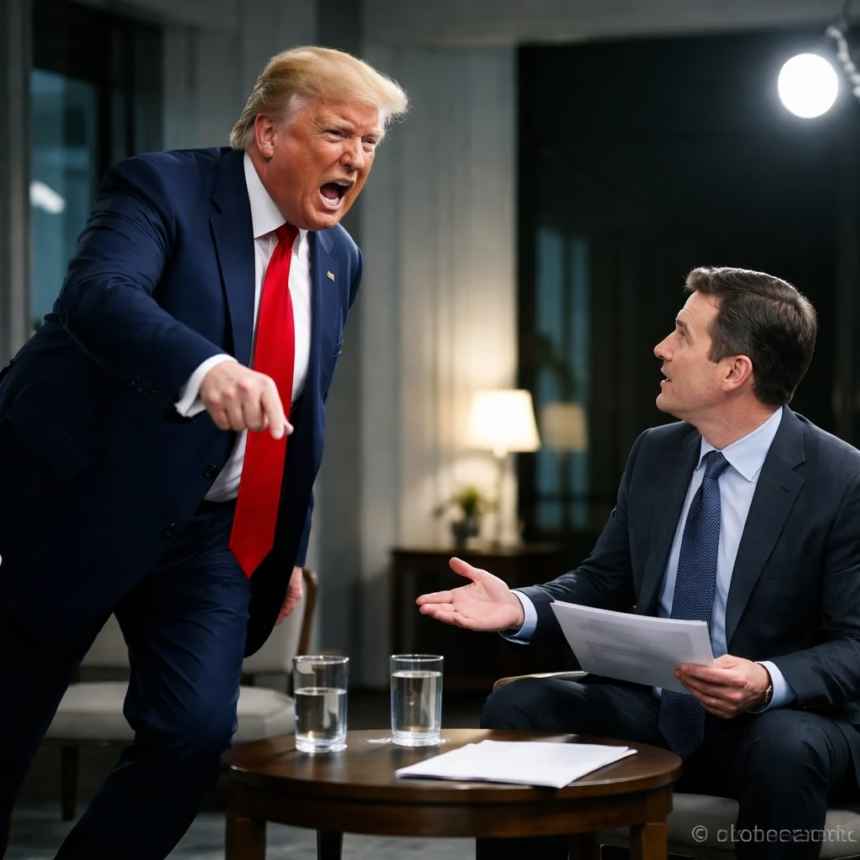
Former President Donald Trump abruptly terminated an interview with a prominent journalist on Tuesday afternoon at his Mar-a-Lago residence in Palm Beach, Florida. The contentious exchange escalated rapidly after Trump accused the journalist of being either "crooked or stupid" in response to persistent questioning regarding his legal challenges and campaign strategy, culminating in his departure from the set.
Background: A History of Contentious Media Relations
Donald Trump's relationship with the press has been characterized by frequent clashes and direct confrontations throughout his political career, both during his presidency and in his post-presidency endeavors. Known for his unfiltered communication style, Trump has often labeled critical news organizations as "fake news" and individual journalists as biased or dishonest, a strategy that resonates strongly with his base.
This latest incident is not an isolated event but rather fits a broader pattern of challenging media scrutiny. During his 2016 and 2020 presidential campaigns, and indeed his entire term in office, Trump frequently engaged in heated exchanges with reporters. He often cut short press conferences or interviews when questions veered into territory he deemed unfair, hostile, or politically motivated. His approach has consistently been to challenge the premise of questions he dislikes, rather than directly answering them, often pivoting to his own narratives of success or perceived injustice.
The current political climate, marked by intense partisan division and an impending presidential election, amplifies the stakes of such encounters. Trump is currently navigating multiple legal battles, including charges related to the January 6 Capitol riot, classified documents, and business fraud. These legal challenges form a significant backdrop to his campaign, often dominating media coverage and becoming a recurring, sensitive theme in interviews.

Journalists covering Trump have often faced the dilemma of how to conduct interviews that are both probing and productive. The journalist for this particular interview, a correspondent for a major news network known for a direct and persistent questioning style, has previously encountered tense moments with various political figures. The interview was intended to cover a range of topics pertinent to his 2024 presidential bid, including policy proposals, his standing in the polls, and the ongoing legal proceedings. However, the conversation quickly veered into familiar territory of personal grievances and accusations.
Key Developments: The Abrupt End
The interview, which began with standard inquiries about his campaign platform and recent rallies, took a sharp turn when the journalist pressed Trump on the specifics of his legal defense strategies and the implications of his various indictments. The line of questioning focused on the credibility of his legal arguments, particularly regarding a recent court filing, and the potential impact of adverse rulings on his electoral prospects.
According to eyewitness accounts from the production crew and the journalist's subsequent statement, the journalist repeatedly asked about a specific legal theory or defense strategy Trump had recently articulated publicly. The questions aimed to clarify the basis for his claims and to challenge their legal soundness, prompting visible irritation and a defensive posture from the former president.
More Read
Trump initially responded by dismissing the questions as "ridiculous" and "politically motivated," reiterating his stance that the legal cases against him are part of a broader "witch hunt" orchestrated by political opponents. However, as the journalist continued to follow up, pressing for more direct answers and challenging his evasions with factual points, the tension in the room escalated significantly. The atmosphere grew noticeably strained, with Trump's tone becoming increasingly sharp.
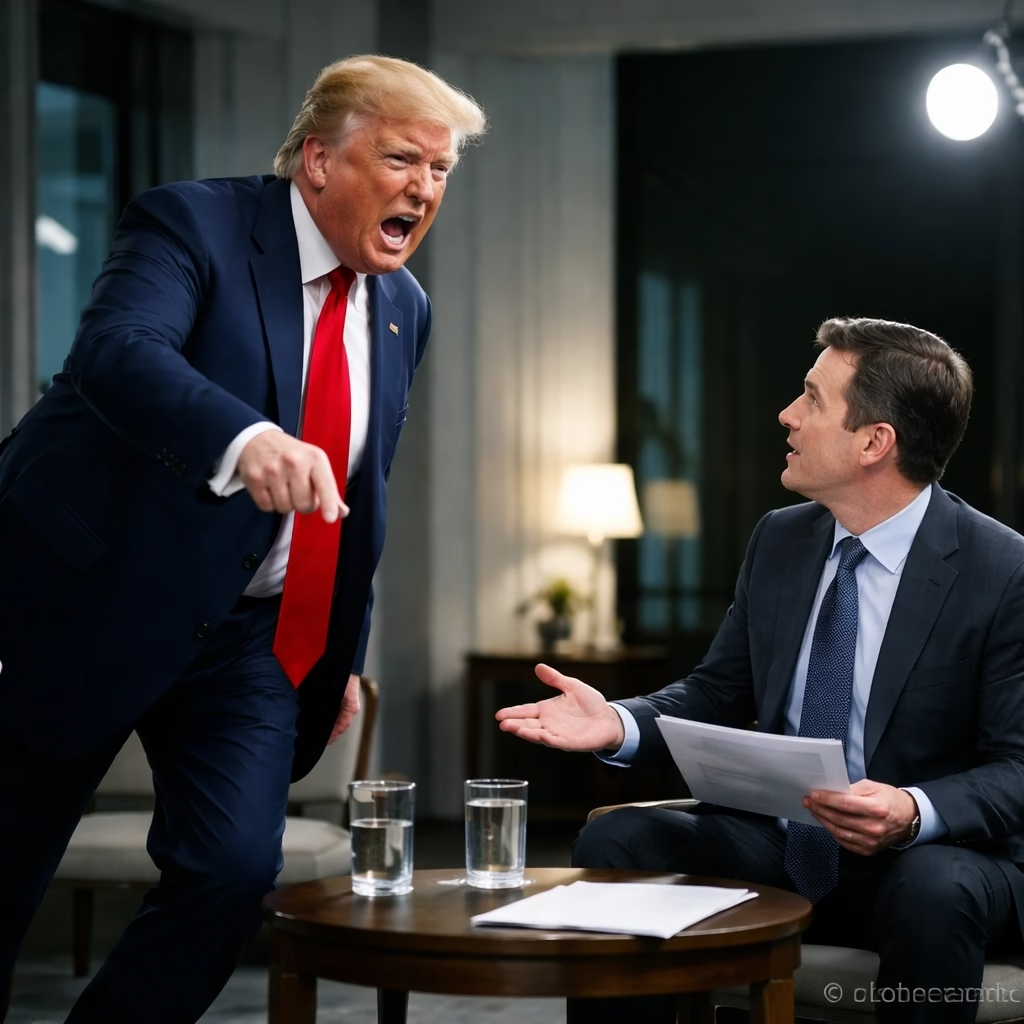
The pivotal moment arrived when the journalist posed a question that Trump perceived as particularly critical, implying a lack of understanding or deliberate misrepresentation on his part regarding a specific legal detail. It was at this juncture that Trump interjected with the pointed accusation, stating, "You're either crooked or you're stupid, one of the two," before abruptly rising from his seat and signaling to his aides that he was finished.
Despite attempts by the journalist to continue the interview and ask for clarification on his remark, Trump walked off the set, leaving the interview abruptly incomplete. The network later confirmed the premature termination, with the journalist expressing disappointment but standing by the integrity and relevance of their questions. The unedited footage, or excerpts released by the network, immediately garnered widespread attention, sparking intense debate across social media platforms and cable news. Critics pointed to the incident as further evidence of Trump's intolerance for scrutiny, while supporters defended his reaction as a justified response to what they deemed hostile and unfair questioning.
Impact: Repercussions Across the Political Landscape
The incident has sent ripples across the political landscape, affecting Trump's campaign, media relations, and public perception in the lead-up to the next election cycle.
Campaign Strategy and Base Mobilization
For Trump’s core base, the walkout and his combative remarks are likely to reinforce their existing perceptions of him as a strong leader unafraid to confront what they view as a biased media establishment. This incident could serve as a rallying cry, energizing his supporters and validating his narrative that he is a victim of unfair attacks from the press and political opponents. His campaign is expected to leverage the footage to portray him as a fighter against hostile forces, further solidifying loyalty among his most ardent followers.
More Read
Media Relations and Journalistic Scrutiny
The event reignites discussions within media circles about the challenges of interviewing high-profile, often confrontational, political figures. It raises critical questions about how to balance persistent, critical questioning with maintaining access to candidates, especially during an election cycle. Some journalists might view this as a cautionary tale regarding the potential for an interview to be cut short, while others may see it as a testament to the necessity of unwavering journalistic integrity, even at the risk of losing access. It also prompts discussions on the ethics of confrontation versus diplomacy in political interviews.
Public Perception and Voter Behavior
For undecided voters or those outside Trump’s staunch base, the incident could be viewed through different lenses. Some might see it as an example of impatience and an unwillingness to engage with legitimate questions, potentially raising concerns about temperament and fitness for office. Others might perceive it as a politician standing his ground against perceived badgering or unfair tactics. The long-term impact on voter behavior will depend on how the incident is framed and re-framed by various media outlets and political commentators in the coming weeks and months.
Precedent for Future Encounters
The walkout sets a potential precedent for future interviews with high-profile political figures. It might embolden other candidates to terminate interviews they find uncomfortable, or conversely, it might encourage journalists to be even more prepared for such eventualities, perhaps by front-loading their most challenging questions or adjusting their interview strategies to account for potential abrupt endings. This dynamic could reshape how political interviews are conducted moving forward.
What Next: Anticipated Reactions and Future Engagements
The aftermath of this interview is expected to unfold over the coming days and weeks, with various stakeholders reacting to the incident and its implications.
Further Commentary and Media Analysis
News networks and political pundits will undoubtedly dedicate significant airtime and column inches to dissecting the exchange. Analysis will focus on Trump’s communication strategy, the journalist’s approach, and the broader implications for political discourse. Expect a surge in commentary from both pro-Trump and anti-Trump media outlets, each offering their distinct interpretations. Experts in communication, political science, and legal affairs are expected to weigh in on the strategic and ethical dimensions of the confrontation.
Campaign Response and Messaging
Trump’s campaign is likely to issue statements or social media posts defending his actions, framing the journalist’s questions as “gotcha” journalism or part of a biased media agenda. They may attempt to pivot the narrative to highlight his perceived strength and resilience against perceived attacks. It’s also possible that Trump himself will address the incident at an upcoming rally or in a separate statement, reiterating his grievances and using the event to energize his supporters further.
Reactions from Political Opponents
Political rivals, both within the Republican party (if applicable) and from the Democratic party, are expected to seize upon the incident. They may use it to criticize Trump’s temperament, his alleged disdain for accountability, and his inability to handle tough questions, aiming to contrast his approach with their own perceived willingness to engage with the press and the public transparently.
Future Interview Access and Strategy
The incident could influence future access granted to journalists. Some outlets might find it harder to secure interviews with Trump, while others might be more cautious in their questioning. Conversely, the high-profile nature of such confrontations might incentivize some journalists to pursue even more direct lines of inquiry, understanding the potential for an explosive outcome. The event underscores the ongoing tension between political figures and the media, a dynamic that will continue to evolve as the election cycle intensifies.
As the 2024 election cycle intensifies, such confrontations are likely to become more frequent. The incident serves as a stark reminder of the volatile nature of political interviews in an era of heightened polarization and digital virality, where every soundbite and gesture is magnified and scrutinized across multiple platforms.