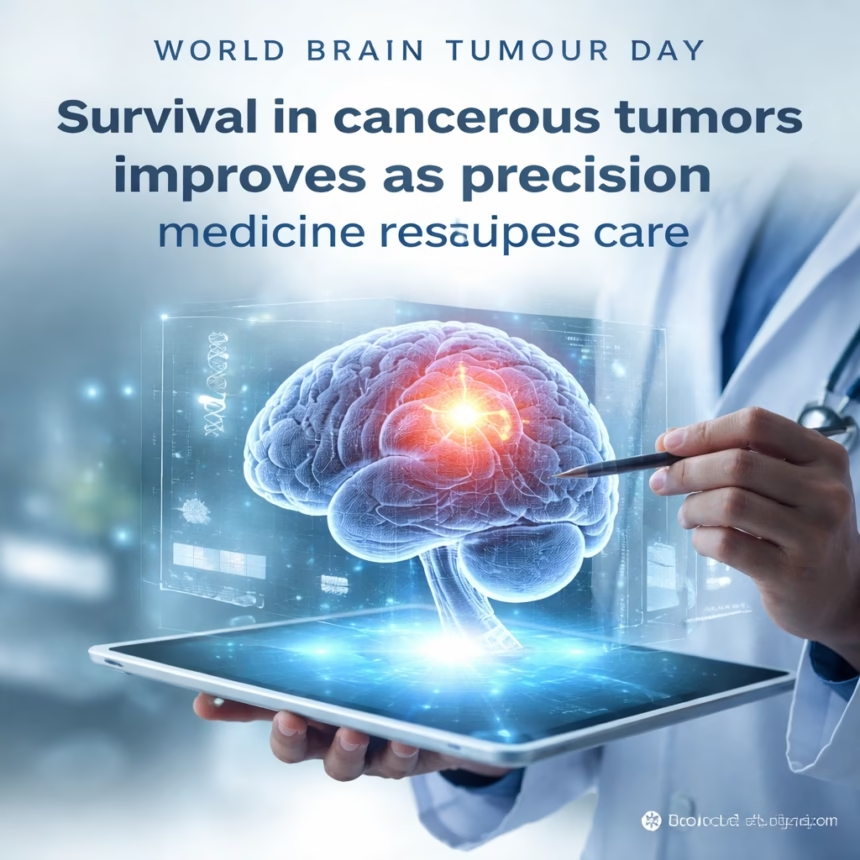
As World Brain Tumour Day is observed annually on June 8th, a significant shift in patient outcomes is becoming increasingly evident across global healthcare systems. Revolutionary advancements in precision medicine are fundamentally reshaping the landscape of brain tumour care, offering unprecedented improvements in survival rates and quality of life for thousands. This paradigm shift marks a new era in the fight against one of the most challenging cancers.
Background and Historical Context
For decades, brain tumour diagnoses often carried a grim prognosis, particularly for aggressive forms like glioblastoma multiforme. Traditional treatments, encompassing surgery, radiation therapy, and conventional chemotherapy, struggled against the disease's inherent complexities, including its diverse cellular makeup and the formidable blood-brain barrier. Survival rates remained largely stagnant, with many patients facing a median survival measured in mere months, not years.
The global community began to formally acknowledge this challenge with the establishment of World Brain Tumour Day in 2000 by the German Brain Tumour Association (Deutsche Hirntumorhilfe e.V.). This initiative aimed to raise awareness and advocate for increased research funding. Over the subsequent two decades, scientific understanding of brain tumours deepened, moving beyond their anatomical location to their intricate molecular underpinnings. This foundational shift paved the way for more targeted therapeutic strategies.
Key Developments Reshaping Care
The recent surge in improved outcomes is largely attributed to precision medicine, an approach that tailors medical treatment to the individual characteristics of each patient. This paradigm leverages advanced genomic sequencing to identify specific molecular alterations, or biomarkers, within a patient's tumour. These biomarkers then guide the selection of highly targeted therapies, moving away from a one-size-fits-all approach.

One of the most significant breakthroughs involves isocitrate dehydrogenase (IDH)-mutant gliomas. For patients with these tumours, which represent a substantial subset of lower-grade gliomas, the recent approval of drugs like vorasidenib has demonstrated remarkable efficacy. The INDIGO trial, for instance, showed vorasidenib significantly extends progression-free survival, delaying the need for more aggressive treatments like chemotherapy and radiation by several years. This marks a monumental shift for patients previously facing limited options.
Beyond IDH mutations, other molecular targets have yielded success. Tumours exhibiting neurotrophic tyrosine receptor kinase (NTRK) gene fusions, though rare, now have highly effective treatments such as larotrectinib and entrectinib. These drugs specifically inhibit the altered NTRK protein, leading to profound and durable responses, even in advanced cases. Similarly, identifying BRAF V600E mutations in certain brain tumours, including some gliomas, has opened avenues for targeted inhibitors like vemurafenib or dabrafenib in combination with trametinib, mirroring successes seen in melanoma.
The advent of liquid biopsies is further refining care. These non-invasive tests analyze tumour DNA fragments circulating in the blood or cerebrospinal fluid, offering a way to monitor disease progression, detect recurrence earlier, and identify new mutations without the need for repeat brain biopsies. Artificial intelligence (AI) is also playing an increasing role in image analysis, treatment planning, and predicting therapeutic responses, accelerating personalized care.
More Read

International collaborations, such as The Cancer Genome Atlas (TCGA) project, have been instrumental in mapping the genomic landscape of various cancers, including brain tumours. This global effort, involving institutions like the National Cancer Institute in the United States and numerous research centres across Europe and Asia, has provided the foundational data necessary for identifying these critical biomarkers and developing targeted therapies.
Impact on Patients and Healthcare
The impact of these advancements is profoundly felt by patients and their families. For specific patient cohorts, particularly those with IDH-mutant gliomas or tumours with actionable genetic fusions, the outlook has dramatically improved. Where median survival for glioblastoma historically hovered around 15-18 months, certain molecularly defined subtypes are now seeing significantly extended progression-free and overall survival.
Beyond mere survival statistics, precision medicine often translates to a better quality of life. Targeted therapies frequently come with a more favorable side-effect profile compared to conventional chemotherapy and radiation, reducing debilitating toxicities. Patients can maintain cognitive function, independence, and overall well-being for longer periods, enabling them to lead more fulfilling lives despite their diagnosis.
This shift also impacts diagnostic pathways. Increasingly, molecular profiling is becoming a standard part of initial diagnosis, guiding treatment decisions from the outset. This ensures that patients receive the most effective therapy tailored to their tumour's unique biology, rather than undergoing trial-and-error treatments that may prove ineffective and carry unnecessary risks.
While the cost of precision medicines can be substantial, the long-term benefits in terms of delayed recurrence, reduced need for intensive care, and improved productivity can offset some of these expenses. Healthcare systems globally are grappling with the economic implications, striving to balance access to innovative therapies with sustainable funding models.
What Lies Ahead: Expected Milestones
The future of brain tumour care promises even more transformative progress. Researchers are actively exploring new actionable targets beyond those currently identified, with ongoing clinical trials investigating novel inhibitors and pathways. The goal is to bring the benefits of precision medicine to an even broader spectrum of brain tumour patients.
More Read

Immunotherapy, which has revolutionized the treatment of other cancers, remains a challenging but promising frontier for brain tumours. The unique immune environment of the brain and the blood-brain barrier present significant hurdles, but innovative strategies, including oncolytic viruses and CAR T-cell therapies specifically engineered for brain tumours, are showing early promise in clinical investigations at leading institutions like the MD Anderson Cancer Center and Memorial Sloan Kettering Cancer Center.
Further advancements are anticipated in drug delivery systems designed to more effectively bypass the blood-brain barrier, ensuring therapeutic agents reach tumour cells in sufficient concentrations. Personalized vaccine approaches, using a patient's own tumour antigens, are also under investigation to stimulate a robust anti-tumour immune response. The integration of artificial intelligence and big data analytics will continue to accelerate discovery, enabling faster identification of biomarkers and more precise prediction of treatment responses.
The ultimate aspiration remains the development of effective early detection strategies that can identify brain tumours before they become symptomatic and difficult to treat. Combined with the relentless pursuit of precision therapies, this holistic approach offers a compelling vision for a future where brain tumour diagnoses no longer equate to a devastating prognosis, but rather a manageable chronic condition or even a curable disease. World Brain Tumour Day serves as a powerful reminder of both the progress made and the vital work that lies ahead in realizing this vision.