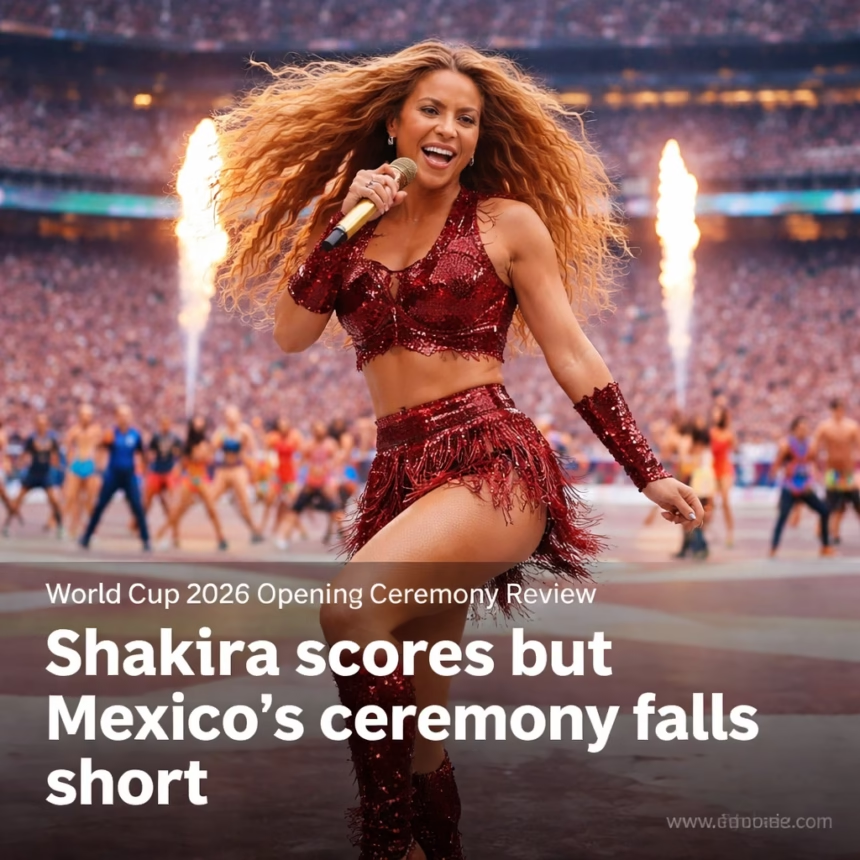
The much-anticipated FIFA World Cup 2026 kicked off on June 11, 2026, with its inaugural opening ceremony held at the iconic Estadio Azteca in Mexico City. While Colombian superstar Shakira delivered a performance widely praised for its energy and spectacle, the broader ceremonial presentation by the Mexican hosts drew significant criticism, leaving fans and pundits divided on the overall success of the event.
Background: A Historic Undertaking
The 2026 FIFA World Cup marks a monumental first, as it is co-hosted by three North American nations: Canada, Mexico, and the United States. This expanded format, featuring 48 teams and 104 matches, places immense pressure on each host city to deliver memorable experiences. Mexico holds a unique place in World Cup history, becoming the first nation to host the tournament three times, having previously done so in 1970 and 1986. The Estadio Azteca, a venue steeped in footballing legend, was chosen to host the opening match and its preceding ceremony, setting the stage for what was expected to be a grand celebration of Mexican culture and global football. Expectations were particularly high, given the historical significance and the global audience tuning in.
The tradition of elaborate opening ceremonies has grown significantly over the decades, evolving from simple parades to multi-million dollar productions. These spectacles are designed to showcase the host nation's identity, technological prowess, and hospitality, while simultaneously igniting the passion for the tournament. Previous ceremonies, such as those in South Africa (2010) and Brazil (2014), set high benchmarks for cultural immersion and artistic execution. For Mexico City, the challenge was to create a spectacle that honored its rich heritage while resonating with a diverse international audience, all under the global spotlight.
Key Developments: Pre-Ceremony Hype and On-Stage Realities
Leading up to the event, speculation mounted regarding the creative direction and featured performers for the Mexico City ceremony. FIFA and the local organizing committee had promised a vibrant celebration reflecting Mexico's artistic legacy and passion for football. The announcement of Shakira as a headline performer generated considerable excitement, given her global appeal and past association with World Cup anthems like "Waka Waka (This Time for Africa)" in 2010. Her involvement was seen as a guaranteed crowd-pleaser and a strong start to the tournament's entertainment.

However, reports from internal production sources hinted at logistical challenges and budget constraints in the months prior to the ceremony. These issues reportedly led to last-minute revisions in the program and a streamlining of certain segments. The final ceremony, broadcast globally, began with a series of choreographed performances intended to highlight various aspects of Mexican history and folklore. These included traditional dances, large-scale visual projections depicting ancient civilizations, and a procession of performers in elaborate costumes.
Shakira’s Electrifying Performance
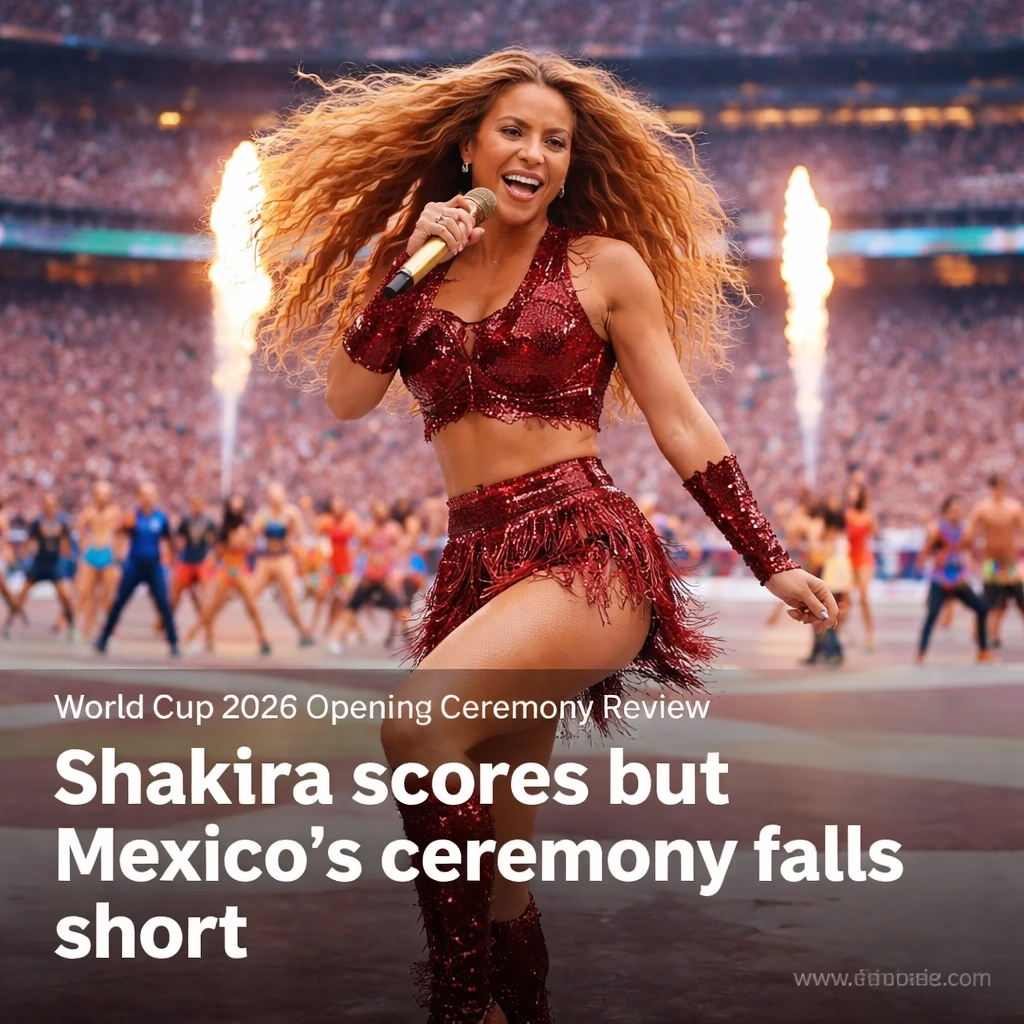
Shakira’s segment was undeniably the highlight for many viewers. Emerging onto a dazzling stage, she delivered a medley of her greatest hits, including "Hips Don't Lie," "Whenever, Wherever," and a reimagined version of "Waka Waka." Her signature energetic dance moves, powerful vocals, and undeniable stage presence captivated the audience both in the stadium and watching worldwide. Social media platforms immediately erupted with praise for her performance, with many declaring it a masterclass in live entertainment. Her ability to connect with the crowd and inject a palpable sense of excitement was universally lauded, proving a significant emotional lift for the event.
Mexico’s Ceremony Falls Short
In stark contrast to Shakira's reception, the broader Mexican ceremonial segments garnered a less enthusiastic response. Critics pointed to several areas where the production seemed to falter. The cultural vignettes, while ambitious in scope, were often perceived as disjointed and lacking a cohesive narrative. Transitions between segments were reportedly clunky, and some visual elements, particularly the large-scale projections, suffered from technical glitches and synchronization issues. Many viewers felt the pacing was uneven, with moments of grandeur quickly followed by lulls in energy.

Furthermore, some commentators suggested that the ceremony struggled to find a balance between showcasing authentic Mexican culture and appealing to a global audience. While elements were visually striking, they sometimes lacked the emotional resonance or clear storytelling that defines truly memorable opening ceremonies. The initial segments were described by some as more of a fragmented pageant than a cohesive artistic statement, failing to fully capitalize on Mexico's rich cultural tapestry.
Impact: Mixed Reactions and Lingering Questions
The mixed reception of the World Cup 2026 opening ceremony has sparked extensive debate across traditional media and social platforms. For FIFA, the event presented a dual outcome: a successful launch of the tournament from a sporting perspective, but a somewhat contentious start regarding the entertainment spectacle. The praise for Shakira undoubtedly provided a positive talking point, but the criticisms of the overall ceremony raised questions about the creative execution and logistical challenges inherent in multi-host events.
Fan morale saw a significant boost from Shakira’s performance, with many expressing excitement for the matches to come. However, the perceived shortcomings of the Mexican cultural showcase led to a degree of disappointment among those who had hoped for a more impactful and flawlessly executed introduction to the tournament. Local Mexican media, while proud of their nation's hosting duties, also echoed some of the international criticisms, acknowledging that the ceremony might not have fully captured the country's vibrant spirit. The event’s reception could influence future host nations' approaches to opening ceremonies, particularly regarding budget allocation and creative direction.
What Next: Lessons for Future Ceremonies and Tournament Focus
The immediate aftermath of the Mexico City opening ceremony will likely involve internal reviews by FIFA and the local organizing committee to assess performance and identify areas for improvement. The lessons learned from this initial event will be crucial for the subsequent opening ceremonies scheduled to take place in Canada and the United States as the tournament progresses. Both co-hosts will undoubtedly scrutinize the reception of the Mexico ceremony to fine-tune their own presentations, aiming to avoid similar pitfalls and maximize their impact.
Looking ahead, the focus will swiftly shift from the ceremony to the football itself. The World Cup 2026 promises an unprecedented scale of competition, with 48 teams vying for the coveted trophy. While the opening ceremony sets the initial tone, it is the drama, skill, and passion on the pitch that will ultimately define the tournament's legacy. However, the debate surrounding Mexico City's opening act will undoubtedly remain a talking point, serving as a reminder of the immense challenges and high expectations that accompany hosting the world's most watched sporting event.