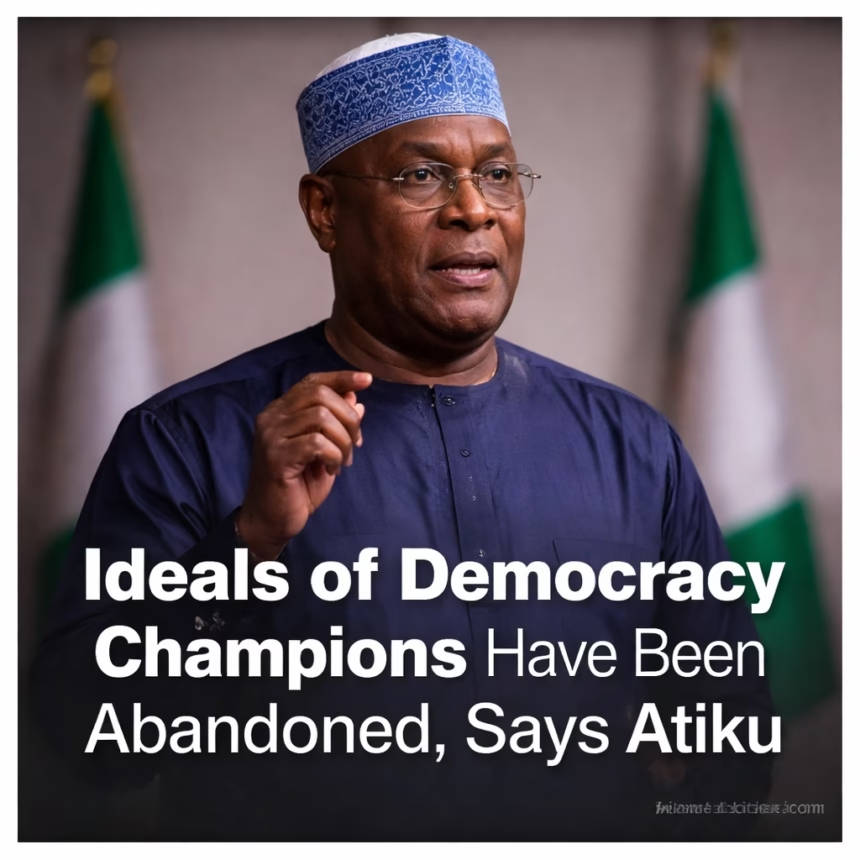
Atiku's Bombshell: 'Nigeria's Democratic Soul Abandoned'
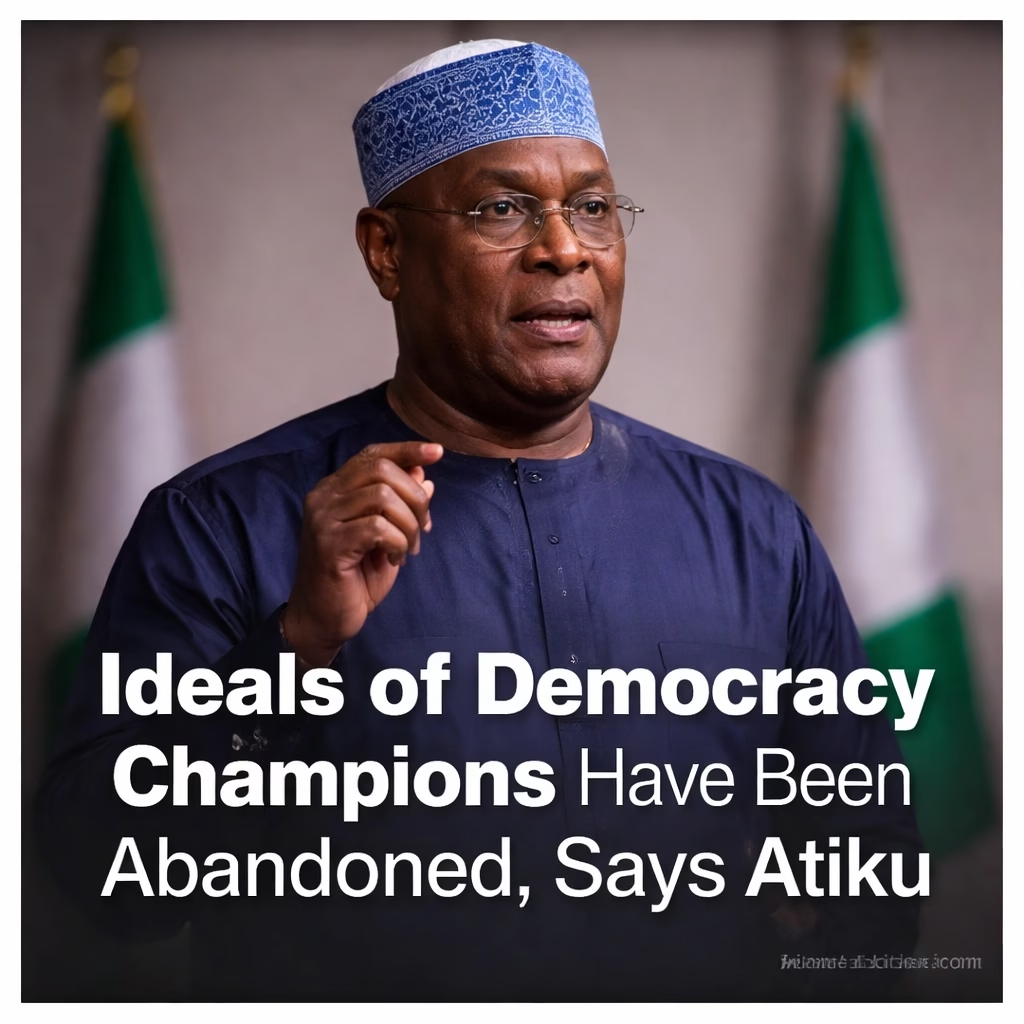
Atiku Abubakar, Nigeria's former Vice President and a prominent opposition figure, issued a stark warning on Tuesday, May 21, 2024, asserting that the core ideals upon which democratic governance is built have been "abandoned" in the nation. His statement, delivered during a public lecture on governance in Abuja, has ignited fresh debate across the political spectrum regarding the health and future trajectory of Nigeria's democracy.
The former presidential candidate's remarks underscore a growing sentiment among a segment of the populace and political class concerning the perceived erosion of foundational democratic principles in Africa's most populous nation.
Background: A Legacy of Democratic Advocacy
Atiku Abubakar has been a consistent fixture in Nigeria's political landscape for over three decades, playing a significant role in the country's return to democratic rule in 1999. A former Customs officer, he served as Vice President from 1999 to 2007 under President Olusegun Obasanjo, a period that saw the consolidation of civilian governance after years of military dictatorships.
His political career is marked by multiple attempts at the presidency, running under various party banners, including the Peoples Democratic Party (PDP), which he currently leads as a prominent figure. Throughout his public life, Atiku has often positioned himself as a champion of constitutionalism, federalism, and transparent governance, frequently critiquing what he perceives as governmental overreach or democratic backsliding.
Nigeria transitioned from military rule to democracy on May 29, 1999, a pivotal moment celebrated annually as Democracy Day. This transition brought with it immense hope for institutional strengthening, rule of law, and citizen participation. However, the journey has been fraught with challenges, including electoral controversies, governance deficits, and struggles to entrench true democratic culture across all levels of government and society.
The 2023 general elections, in which Atiku Abubakar was a leading presidential candidate for the PDP, proved to be particularly contentious. The electoral process, its outcome, and the subsequent judicial reviews drew significant national and international scrutiny, laying bare deep divisions and raising questions about institutional integrity.
Key Developments: Recent Shifts and Concerns
Atiku's recent pronouncement is not an isolated lament but rather reflects a culmination of concerns that have gained traction in recent years. Several key developments and observations likely informed his critical assessment of Nigeria's democratic health.
Electoral Integrity and Judicial Oversight
The 2023 general elections are central to the current democratic discourse. Despite assurances of technological advancements and transparency, the conduct of the presidential and gubernatorial elections faced widespread criticism from local and international observers. Issues ranged from delays in result transmission to allegations of voter suppression and manipulation.

The subsequent legal challenges to the election results, extending up to the Supreme Court, further intensified public debate. While the judiciary ultimately upheld the election outcomes, many Nigerians expressed dissatisfaction with the perceived lack of accountability and the handling of evidence presented by opposition parties. This has arguably dented public confidence in both the electoral body, the Independent National Electoral Commission (INEC), and the judicial system’s role as the ultimate arbiter of electoral disputes.
Shrinking Civic Space and Freedom of Expression
Concerns have also been raised regarding the shrinking civic space in Nigeria. Reports from human rights organizations and civil society groups indicate increasing restrictions on freedom of assembly and expression. Protests, particularly those critical of government policies, have sometimes been met with heavy-handed responses from security forces.
Journalists and media outlets have also faced pressures, including harassment and arrests, in the course of their duties. This environment, critics argue, stifles dissent and prevents the robust public discourse essential for a healthy democracy, where citizens can freely hold their leaders accountable.

Rule of Law and Governance
Another area of concern highlighted by political analysts is the perceived selective application of the rule of law. Instances where court orders are allegedly disregarded or where due process is undermined in high-profile cases have fueled public apprehension. This perception creates an environment where trust in state institutions, including law enforcement and the judiciary, can wane.
Furthermore, issues of corruption and accountability continue to plague governance at various levels. The lack of transparent processes in public procurement and resource management, coupled with perceived impunity for corrupt practices, undermines the democratic ideal of government serving the public interest.
Impact: Erosion of Trust and Future Implications
The alleged abandonment of democratic ideals, as articulated by Atiku Abubakar, carries profound implications for Nigeria's socio-political fabric and its standing on the global stage.
Citizen Disillusionment and Political Apathy
Perhaps the most significant impact is the growing disillusionment among Nigerian citizens. When the democratic process is perceived as flawed or manipulated, it erodes public trust in government and institutions. This can lead to political apathy, where citizens feel their votes do not matter, and their voices are unheard. Such apathy can undermine future electoral participation and civic engagement, weakening the very foundations of democracy.
Younger generations, in particular, who have witnessed successive cycles of electoral disputes and governance challenges, may become increasingly skeptical about the viability of democratic solutions to national problems.
Economic Instability and International Perception
A country where democratic ideals are seen to be faltering often struggles to attract significant foreign investment. Investors seek stability, predictability, and a strong rule of law. Perceptions of electoral irregularities, judicial compromise, and a shrinking civic space can deter foreign capital, exacerbating Nigeria’s existing economic challenges, including high inflation and unemployment.
More Read

Internationally, Nigeria’s reputation as a leading democratic voice in Africa could be diminished. This could affect its diplomatic influence, its role in regional bodies like ECOWAS, and its ability to advocate for democratic principles on the continent and beyond.
Weakening of Democratic Institutions
The continuous questioning of electoral outcomes and judicial independence can severely weaken democratic institutions. If these bodies are seen as partisan or compromised, their ability to perform their constitutional duties effectively is hampered. This creates a dangerous cycle where institutional weakness begets further erosion of democratic norms.
The legislature, meant to provide checks and balances on the executive, also faces scrutiny regarding its independence and effectiveness in holding government accountable.
What Next: Calls for Reform and Renewed Engagement
Atiku Abubakar's statement is likely to intensify calls for comprehensive reforms aimed at strengthening Nigeria's democratic institutions and processes. The immediate future will likely see a heightened political discourse around these issues.
Government Response and Dialogue
The current administration is expected to respond to these criticisms, potentially by reiterating its commitment to democratic principles and good governance. However, the true test will be in concrete actions that demonstrate adherence to the rule of law, respect for human rights, and a commitment to electoral integrity.
There may be calls for a national dialogue involving political parties, civil society organizations, religious leaders, and youth groups to collectively address the perceived democratic deficits and chart a path forward.
Civil Society Advocacy and Media Scrutiny
Civil society organizations are anticipated to ramp up their advocacy efforts for electoral reforms, judicial independence, and the protection of civic space. Media organizations will also play a crucial role in scrutinizing government actions, reporting on human rights issues, and fostering informed public debate.
Increased civic education and grassroots mobilization could also emerge as strategies to empower citizens to demand accountability and participate more effectively in the democratic process.
Looking Towards 2027
With the next general elections slated for 2027, the current period presents an opportunity for stakeholders to push for significant electoral reforms. These reforms could include strengthening INEC’s independence, ensuring transparent result transmission, and reforming the legal framework to address loopholes identified in past elections.
The actions taken by the government and the responses from the opposition and civil society in the coming months will be critical in determining whether Nigeria can reverse the perceived abandonment of democratic ideals and reinforce its commitment to a truly representative and accountable governance system.