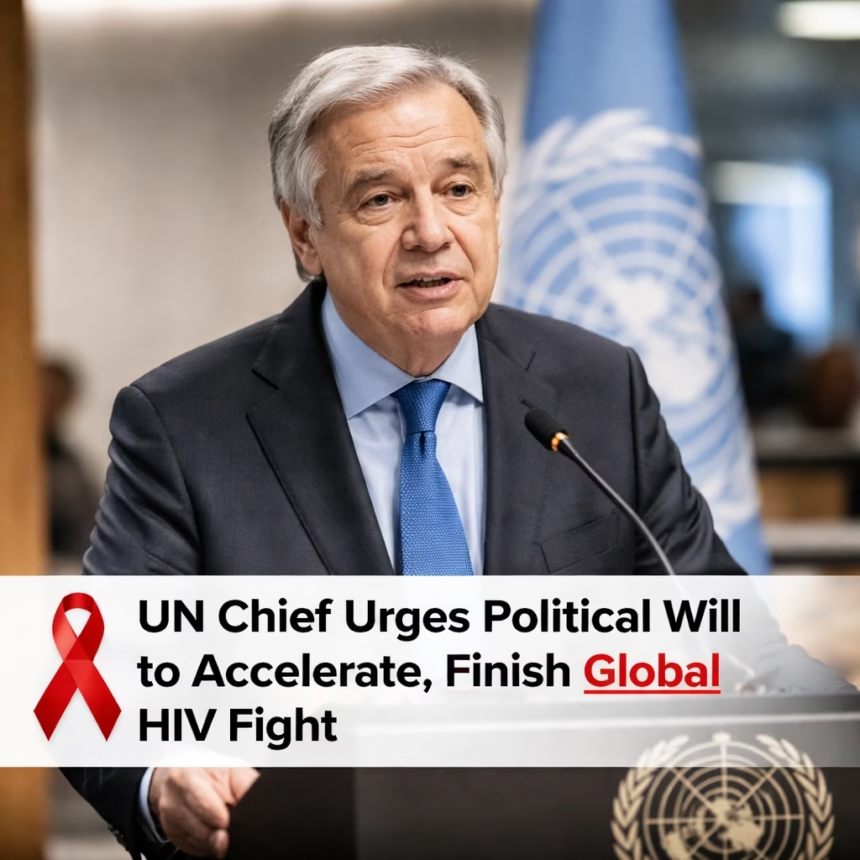
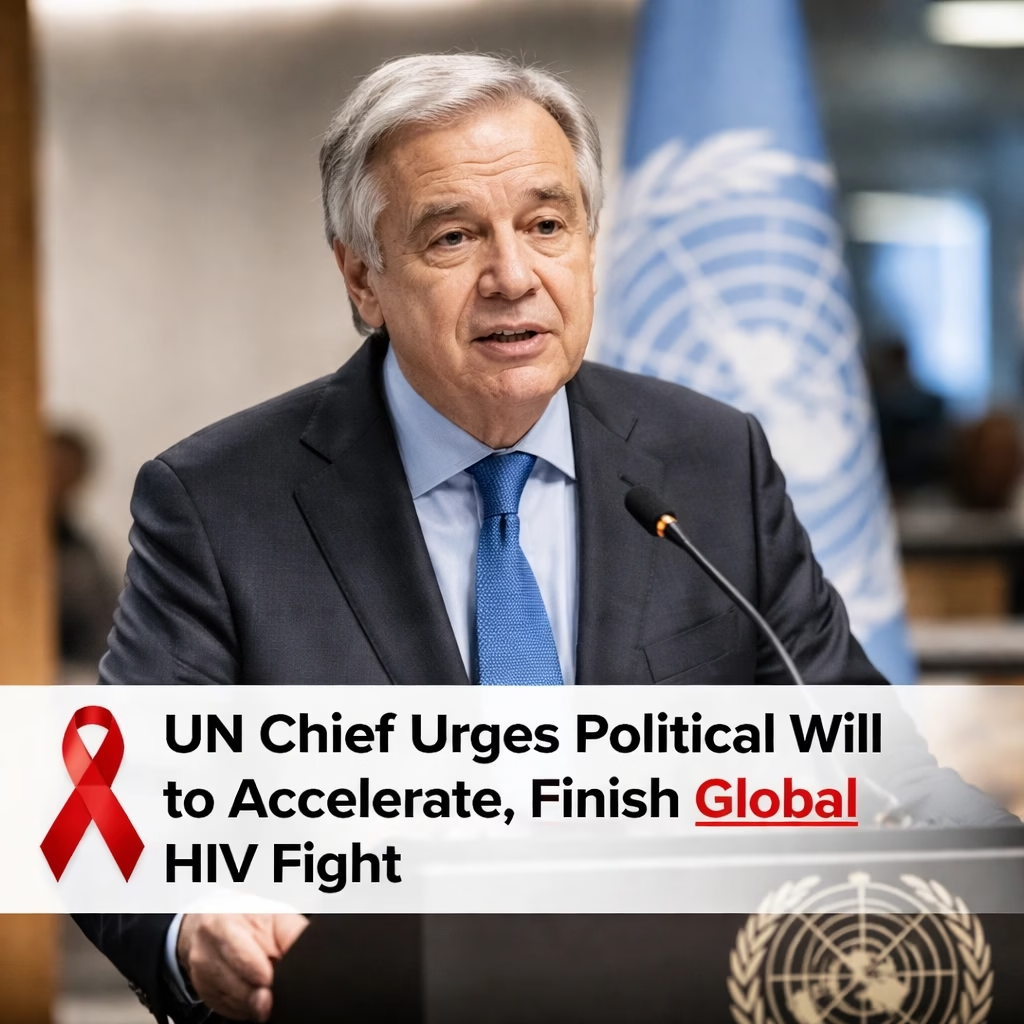
United Nations Secretary-General António Guterres recently issued a fervent plea from the UN Headquarters in New York, urging global leaders to reignite political will and accelerate efforts to finish the fight against HIV/AIDS. With the 2030 deadline for ending the epidemic looming, Guterres underscored the critical need for renewed commitment to achieve this ambitious Sustainable Development Goal.
Background: A Decades-Long Battle
The global HIV epidemic emerged in the early 1980s, rapidly becoming one of the most devastating health crises in modern history. At its peak, AIDS-related illnesses claimed millions of lives annually, particularly impacting sub-Saharan Africa. The initial response was characterized by fear and limited understanding, but soon galvanized a global movement for research, prevention, and care.
Key milestones include the establishment of the Joint United Nations Programme on HIV/AIDS (UNAIDS) in 1996, which centralized global efforts. The development of antiretroviral therapies (ARVs) in the mid-1990s revolutionized HIV management, transforming a once fatal diagnosis into a manageable chronic condition. This breakthrough led to significant reductions in AIDS-related deaths and new infections, dramatically improving the quality of life for people living with HIV.
Global initiatives like the Millennium Development Goals (MDGs) and subsequently the Sustainable Development Goals (SDGs) integrated targets for combating HIV/AIDS, aiming for its eradication by 2030. Over the past two decades, billions of dollars have been invested through international bodies such as the Global Fund to Fight AIDS, Tuberculosis and Malaria, supporting prevention, treatment, and care programs in low- and middle-income countries.
Key Developments: Progress Stalls, New Challenges Emerge
Despite monumental progress, recent data from UNAIDS indicates a concerning slowdown in the global response. The COVID-19 pandemic significantly disrupted HIV services, diverting resources and attention, exacerbating existing inequalities, and leading to a stagnation in the rate of new infections and AIDS-related deaths in many regions.
More Read

Funding Gaps and Political Inertia
A critical challenge highlighted by Secretary-General Guterres is the persistent funding gap. UNAIDS estimates that approximately $29 billion is needed annually for the global HIV response by 2025, yet only about $20.8 billion was available in 2022. This shortfall undermines prevention programs, access to treatment, and support for vulnerable communities. Political will, Guterres emphasized, is not just about funding but also about creating enabling legal and policy environments.
Regional Disparities
While some regions, particularly in Eastern and Southern Africa, have made remarkable strides – with countries like Botswana and Eswatini surpassing UNAIDS's 95-95-95 targets – others are lagging. Eastern Europe and Central Asia, along with the Middle East and North Africa, have seen alarming increases in new HIV infections. These regions often face unique challenges, including punitive laws, stigma, and limited access to harm reduction services for key populations.
More Read

The Role of Human Rights
Guterres stressed that discriminatory laws and policies continue to be significant barriers. Criminalization of same-sex relations, sex work, and drug use drives key populations underground, making it difficult to reach them with essential HIV services. He called for the repeal of such laws and the promotion of human rights as fundamental to an effective HIV response. Community-led organizations, often at the forefront of the fight, require greater support and recognition.
Impact: Millions Still Affected
The human toll of HIV remains substantial. As of 2022, an estimated 39 million people globally were living with HIV. While this number reflects increased access to life-saving ARVs, it also underscores the ongoing need for prevention and treatment.
New Infections and Deaths
In 2022 alone, 1.3 million new HIV infections occurred, and 630,000 people died from AIDS-related illnesses. These figures, though significantly lower than peak epidemic levels, indicate that the world is not on track to meet the 2030 targets. Children, in particular, face disproportionate challenges, with many still lacking access to testing and treatment.
Vulnerable Populations
The epidemic continues to disproportionately affect certain groups. Key populations—men who have sex with men, sex workers, people who inject drugs, and transgender people—account for a significant percentage of new infections globally, despite comprising a small fraction of the general population. In sub-Saharan Africa, adolescent girls and young women are acutely vulnerable, often due to gender inequality, violence, and limited access to education and health services. Stigma and discrimination remain pervasive, creating barriers to testing, treatment adherence, and overall well-being.
What Next: A Final Push Towards 2030
The Secretary-General’s call serves as a stark reminder that the fight against HIV is far from over and requires urgent, concerted action. The 2030 target remains achievable, but only with a renewed surge of political will, increased investment, and a human rights-based approach.
Achieving the 95-95-95 Targets
A primary focus for the coming years is to meet the ambitious 95-95-95 targets set by UNAIDS: 95% of people living with HIV know their status, 95% of those who know their status are on antiretroviral treatment, and 95% of those on treatment are virally suppressed. Achieving these targets would significantly reduce new infections and AIDS-related deaths, moving closer to epidemic control.
More Read

Sustainable Funding and Community Leadership
Guterres emphasized the need for sustainable funding, urging governments to increase domestic investments in HIV programs and for international donors to fully replenish funds like the Global Fund. Crucially, he advocated for empowering community-led responses, recognizing their vital role in reaching marginalized populations, delivering services, and advocating for human rights.
Policy Reform and Innovation
Accelerating the response also requires significant policy reforms, including the repeal of discriminatory laws and the implementation of policies that protect human rights and promote gender equality. Furthermore, leveraging scientific advancements, such as long-acting injectable pre-exposure prophylaxis (PrEP) and improved treatment regimens, will be essential in enhancing prevention and care strategies globally. The UN aims to galvanize a final, decisive push to ensure that the promise of ending the HIV epidemic by 2030 becomes a reality for all.