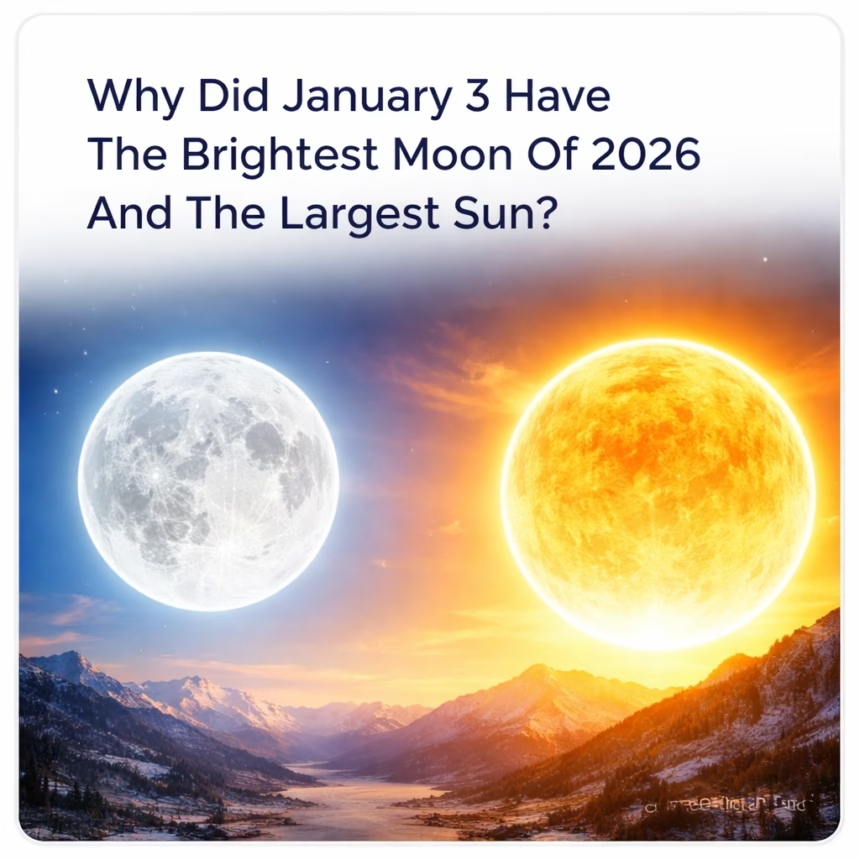
Why Did January 3 Have the Brightest Moon of 2026 and the Largest Sun?
On January 3, 2026, the world witnessed a unique celestial event: the brightest moon of the year coinciding with the largest sun. This rare phenomenon captured the attention of astronomers and stargazers alike, raising questions about its causes and significance.
Background
The brightest moon, known as the "supermoon," occurs when a full moon is at its closest point to Earth in its elliptical orbit, a point called the perigee. Conversely, the "super sun" refers to the sun appearing larger than usual due to its closest approach to Earth, known as the perigee of the sun's orbit.
Historically, these events have been documented separately, but their simultaneous occurrence in 2026 is extraordinarily rare. The last time a similar alignment happened was in 1993, and the next occurrence is not expected until 2034.
Key Developments
On January 3, 2026, the full moon reached its perigee, making it appear up to 14% larger and 30% brighter than an average full moon. Simultaneously, the sun was at its closest point to Earth, resulting in a slightly larger and brighter appearance.
More Read

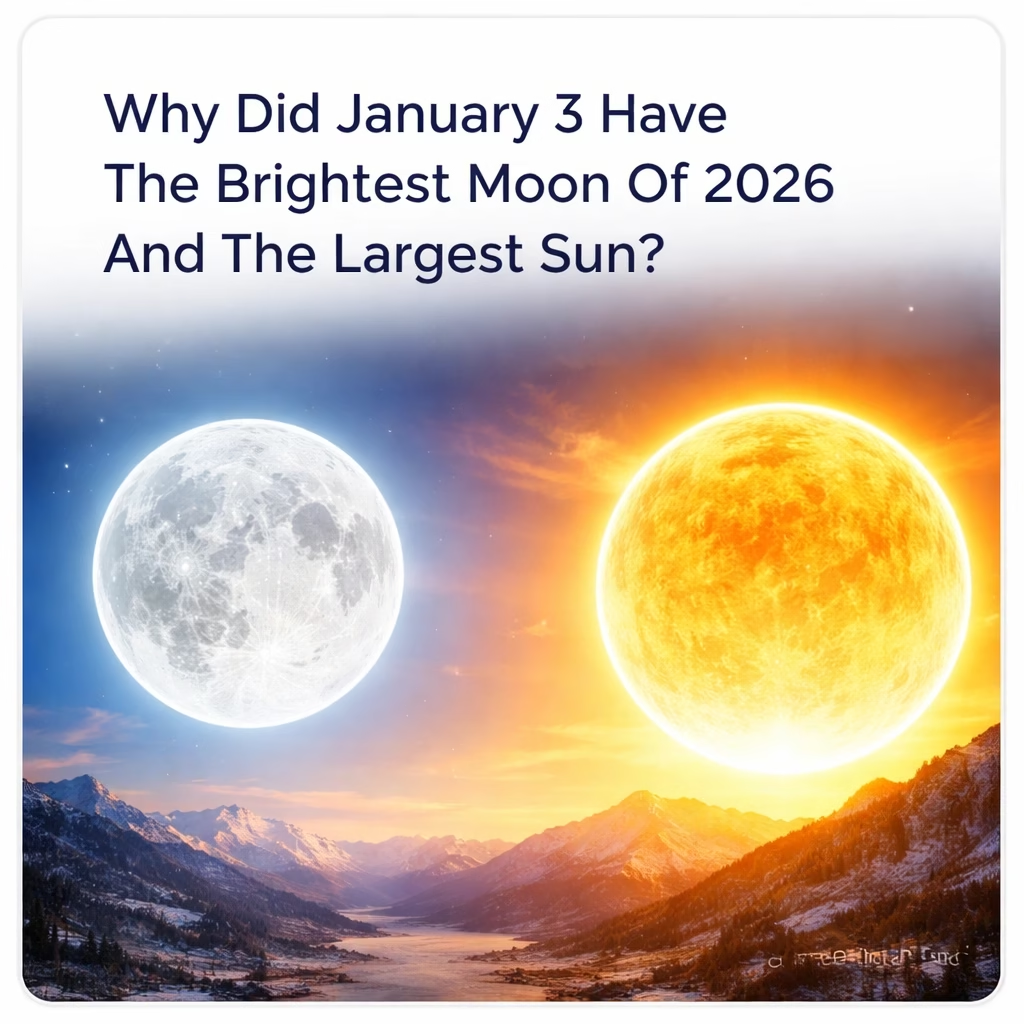
This alignment was particularly visible in the early hours of the morning, with clear skies in many parts of the world providing optimal viewing conditions. Astronomers noted that the combined effect of the supermoon and the super sun created a unique visual spectacle, with the moon's brightness contrasting sharply against the larger-than-average sunrise.
Impact
The event had a significant impact on amateur astronomers and photographers, who captured stunning images of the celestial alignment. It also sparked interest in astrological communities, with some interpreting the rare occurrence as a sign of significant changes.

Scientifically, the event provided a unique opportunity for researchers to study the effects of gravitational forces and orbital mechanics on celestial bodies. The alignment of the moon and sun at their closest points to Earth allowed for detailed observations of their interactions.
What Next
While this event is rare, astronomers predict that similar alignments will occur in the future, though not with the same precision. The next potential supermoon and super sun alignment is expected in 2034, though the exact dates and conditions will differ.
For those interested in celestial events, this occurrence serves as a reminder of the dynamic nature of the cosmos. Future advancements in astronomy may provide even more insights into these rare phenomena, offering a deeper understanding of the intricate dance of the moon and the sun.