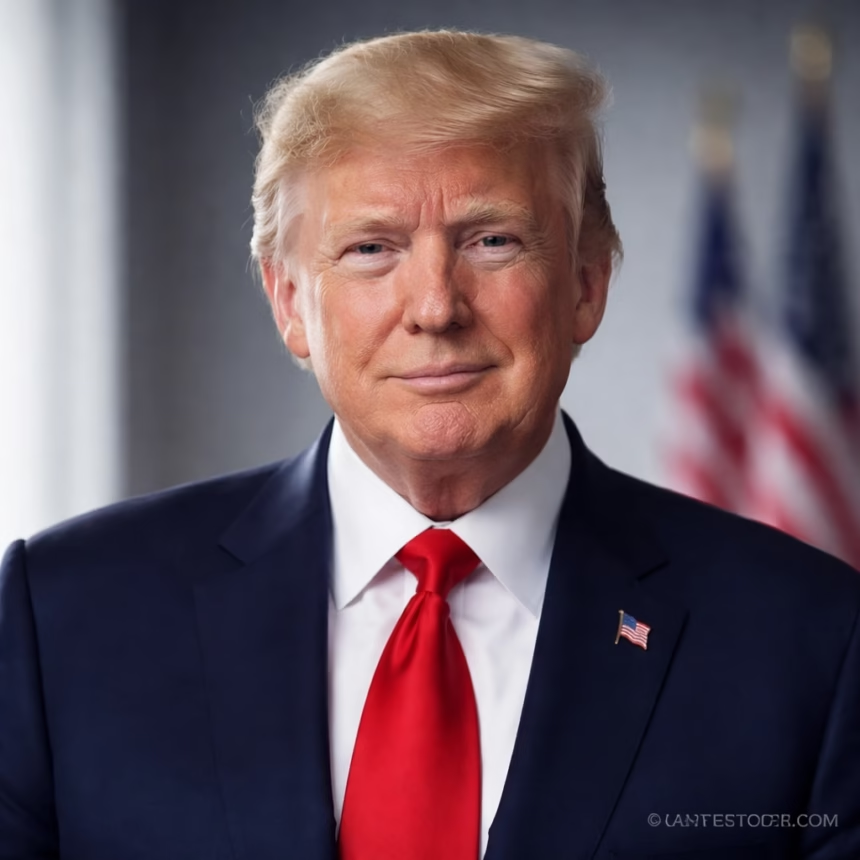
Speculation is mounting over a potential future agreement between former President Donald Trump and Chinese President Xi Jinping that could significantly revive US energy exports to China. Such a deal, if pursued following a hypothetical return of Trump to the White House, aims to reset a crucial economic relationship, potentially altering global energy trade flows and impacting geopolitical dynamics. This prospective alignment could see billions of dollars in US liquefied natural gas (LNG) and crude oil heading to the world's largest energy consumer, marking a dramatic shift from recent trade tensions.
Background: A Tumultuous Energy Relationship
The US-China energy trade has experienced considerable volatility over the past decade. Prior to 2018, China was a growing market for US crude oil and LNG, benefiting from America's shale revolution. However, this relationship soured significantly with the onset of the Trump administration's trade war. In July 2018, Beijing imposed retaliatory tariffs on US energy products, including a 25% tariff on LNG, effectively stifling what was a rapidly expanding trade route.
The Phase One Agreement and its Shortcomings
Despite the tariffs, a glimmer of hope emerged with the "Phase One" trade agreement signed in January 2020. Under this deal, China committed to purchasing an additional $52.4 billion worth of US energy products over two years, above 2017 levels. While US crude oil exports to China did see some recovery, particularly in 2020, LNG purchases lagged considerably. Geopolitical tensions, the COVID-19 pandemic, and China's strategic diversification of energy sources prevented the agreement from fully meeting its ambitious targets. China largely turned to other suppliers, including Russia, Qatar, and Australia, for its burgeoning energy needs, especially for natural gas. The underlying tariffs on US energy products also remained in place for an extended period, dampening enthusiasm for long-term contracts.
Key Developments: A Shifting Landscape
The prospect of a Trump return to the presidency has reignited discussions about a potential re-evaluation of US-China trade policy. Trump's transactional approach to foreign policy often prioritizes large bilateral deals, making energy a prime candidate for a "grand bargain." Meanwhile, global energy markets have undergone significant transformations since 2020, adding new urgency to China's energy security strategy and enhancing the US's position as a major supplier.
More Read

China’s Evolving Energy Strategy
China remains the world's largest energy importer, with a constantly growing demand for natural gas and oil to fuel its industrial base and urban centers. The geopolitical fallout from the war in Ukraine has underscored the vulnerabilities of over-reliance on single energy sources, pushing Beijing to further diversify its import portfolio. While China has deepened its energy ties with Russia, a renewed focus on US energy could provide an additional layer of security and competitive pricing. China's energy companies, such as Sinopec and CNOOC, continuously seek long-term, stable supply contracts to meet the nation's immense needs.
US Export Capacity Surges
The United States has solidified its position as a global energy powerhouse. It became the world's largest LNG exporter in 2023, with significant capacity additions from terminals like Sabine Pass, Freeport, and Corpus Christi. Further expansion projects are underway in states like Texas and Louisiana, promising even greater export capabilities in the coming years. Similarly, US crude oil production has reached record highs, making it a pivotal player in the global oil market. This increased capacity positions the US as an attractive and reliable supplier, capable of meeting large-scale demand.
Impact: Who Stands to Gain and Lose?
A potential Trump-Xi energy deal would send ripples across various sectors and geographies, creating both winners and losers in the global energy landscape.
More Read

US Energy Producers and Infrastructure
For US energy producers, particularly those in the shale gas and oil sectors in states like Texas, Pennsylvania, and Louisiana, such a deal would be a significant boon. Increased demand from China would likely lead to higher prices, stimulate further investment in exploration and production, and support thousands of jobs. It would also accelerate the development of critical infrastructure, including new LNG export terminals, pipelines, and port facilities, solidifying America's long-term role as a top energy exporter. Companies like Cheniere Energy, Sempra Infrastructure, and ExxonMobil could see substantial benefits from renewed Chinese interest.
China’s Energy Security and Economy
China would gain a more diversified and potentially more stable energy supply. Access to competitively priced US LNG and crude oil could reduce its reliance on volatile regions and single suppliers, enhancing its energy security. For Chinese industries, consistent and affordable energy imports are crucial for maintaining economic growth and competitiveness. A deal could also be framed as a step towards de-escalating broader trade tensions, offering a tangible economic benefit to both nations.
Global Energy Markets and Geopolitics
The re-entry of China as a major buyer of US energy would undoubtedly reshape global trade flows. It could shift demand away from other suppliers, potentially impacting spot and long-term contract prices for LNG in Asia (JKM benchmark) and Europe (TTF benchmark). Countries like Qatar, Australia, and even Russia, which have filled the void left by US exports, might face increased competition. Geopolitically, an energy deal could create a narrow, but significant, area of cooperation between Washington and Beijing, potentially easing some broader tensions, even amidst continued strategic competition over issues like Taiwan or the South China Sea. However, it might also be viewed with skepticism by US allies and environmental groups concerned about increased fossil fuel dependence.
What Next: The Road Ahead
The path to any potential Trump-Xi energy deal is fraught with political and economic uncertainties. Several key milestones and developments would need to unfold for such an agreement to materialize.
US Presidential Election and Policy Shifts
The most immediate determinant is the outcome of the US Presidential election in November 2024. Should Donald Trump win, his administration would likely initiate a fresh review of US-China trade policy. His past inclination for direct, high-stakes negotiations suggests that an energy deal could become an early priority in efforts to rebalance trade deficits.
High-Level Negotiations and Frameworks
Following any election, high-level delegations would need to engage in complex negotiations. These discussions would likely focus on removing existing tariffs, establishing new purchase targets, and setting the terms for long-term supply contracts. The specifics would need to address financing, shipping logistics, and potential safeguards against future trade disruptions.

Regulatory Approvals and Infrastructure Development
For US energy companies to significantly ramp up exports to China, new or expanded infrastructure would be necessary. This includes securing regulatory approvals for new LNG liquefaction terminals, expanding pipeline networks, and ensuring adequate port capacity. These projects often involve multi-year timelines and substantial capital investment, requiring long-term commitment from both sides.
Monitoring Global Energy Dynamics
The global energy landscape is constantly evolving, influenced by geopolitical events, technological advancements, and climate policies. Any future deal would need to remain adaptable to these changes, ensuring its relevance and economic viability for both the United States and China. The interplay between economic imperatives and strategic competition will continue to define this crucial bilateral relationship.