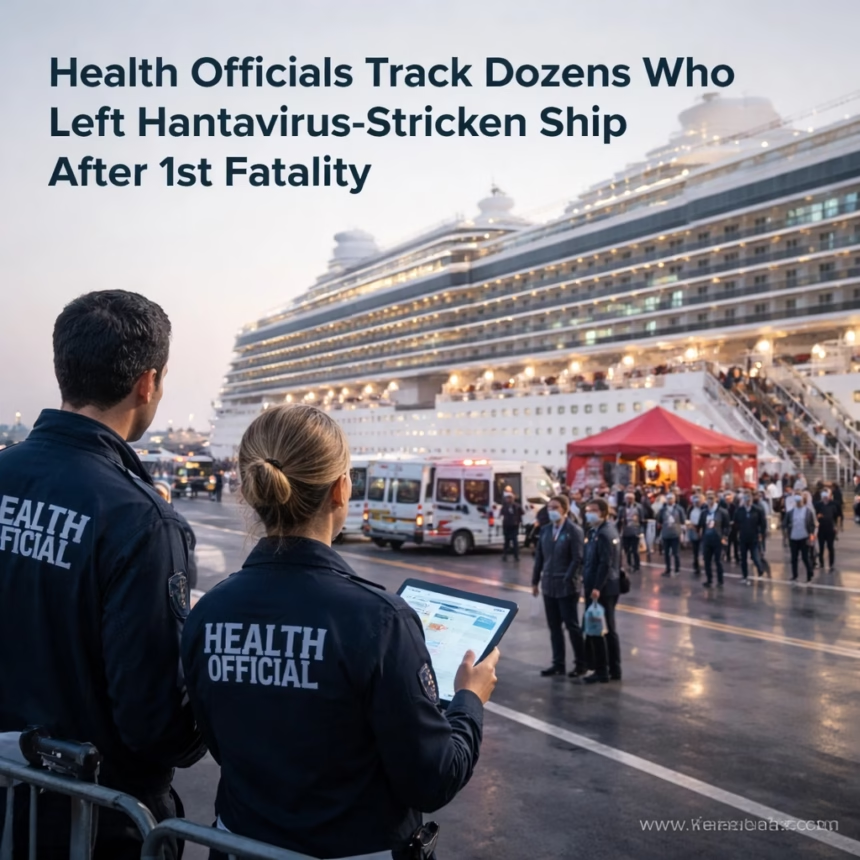
Health authorities across multiple nations have launched an urgent, coordinated effort to locate and monitor dozens of individuals who disembarked from a cargo vessel after a crew member succumbed to a confirmed hantavirus infection. The unprecedented tracking operation commenced in early November following the death of a 47-year-old seafarer aboard the *MV Triton* shortly after its arrival in the Port of Vancouver, Canada.
Background: A Silent Threat Emerges at Sea
The global health community was put on high alert following the confirmation of Hantavirus Pulmonary Syndrome (HPS) as the cause of death for Mr. Ricardo Alcantara, a Filipino national and chief engineer aboard the *MV Triton*. The vessel, which had completed a trans-Pacific journey from Busan, South Korea, via several Asian ports, docked in Vancouver on November 3rd, 2023. Mr. Alcantara had reported feeling unwell for several days prior to the ship's arrival, exhibiting symptoms including fever, muscle aches, and progressive shortness of breath, which rapidly worsened. He was medically evacuated upon docking but passed away within 24 hours at Vancouver General Hospital.
Understanding Hantavirus Pulmonary Syndrome (HPS)
Hantavirus Pulmonary Syndrome is a severe, sometimes fatal, respiratory disease in humans caused by infection with hantaviruses. The virus is primarily transmitted to humans through contact with infected rodents or their urine, droppings, or saliva. Inhalation of airborne virus particles from rodent excretions is the most common route of infection. Human-to-human transmission is extremely rare, with only a few isolated cases documented globally, typically involving specific hantavirus strains not commonly associated with HPS in the Americas. Symptoms typically appear one to eight weeks after exposure and include fever, fatigue, muscle aches, dizziness, chills, and abdominal problems, followed by respiratory distress as the lungs fill with fluid. The fatality rate for HPS can be as high as 38%.
The *MV Triton*’s Ill-Fated Voyage
The *MV Triton*, a bulk carrier, departed Busan on October 15th, 2023, carrying a crew of 22. Its itinerary included stops in Shanghai, China, and Tokyo, Japan, before its final destination in Vancouver. During its journey, the crew reported no unusual rodent activity onboard, a detail now under intense scrutiny. Public Health Agency of Canada (PHAC) officials boarded the vessel immediately after Mr. Alcantara's death to conduct an environmental assessment and interview the remaining crew. Initial investigations focused on potential exposure points within the ship, particularly in areas frequented by the deceased.
Key Developments: The Tracking Challenge
The primary concern for health officials is the potential exposure of other crew members and any shore personnel who interacted with the vessel or its crew during its recent stops. While human-to-human transmission is rare, the severity of HPS necessitates a rigorous contact tracing protocol.
More Read

Identifying Individuals at Risk
Authorities have identified approximately 60 individuals who disembarked from the *MV Triton* at various ports of call or had significant contact with the ship's crew. This includes a relief captain who left the ship in Tokyo, port agents in Shanghai and Busan, a small number of shore leave personnel who departed in Vancouver, and several technicians who serviced the vessel. The challenge is compounded by the international nature of maritime travel, requiring intricate coordination between health ministries and agencies across at least four countries.
International Collaboration and Monitoring
The Public Health Agency of Canada (PHAC) is spearheading the international contact tracing effort, working closely with the U.S. Centers for Disease Control and Prevention (CDC), the World Health Organization (WHO), and national health bodies in South Korea, China, and Japan. Each identified individual is being contacted and advised of their potential exposure. They are instructed to monitor for symptoms consistent with HPS for a period of eight weeks from their last potential exposure date. Furthermore, they are provided with specific guidance on seeking immediate medical attention should symptoms develop, ensuring healthcare providers are aware of the potential hantavirus exposure. As of November 15th, no additional cases of HPS linked to the *MV Triton* have been reported.
Vessel Sanitization and Crew Quarantined
Following the confirmed fatality, the *MV Triton* underwent extensive sanitization and rodent eradication procedures while docked in Vancouver. The remaining 21 crew members who were on board with Mr. Alcantara are currently under a voluntary quarantine period, remaining on the vessel under medical supervision. They are undergoing daily health checks and have been tested for hantavirus antibodies. Preliminary results for the majority of the crew have returned negative, though some results are still pending.
More Read

Impact: Ripple Effects of a Rare Outbreak
The incident has sent ripples through the maritime industry and public health sectors, highlighting the complexities of managing infectious disease risks in global travel.
Individuals and Families
For the dozens of individuals being tracked, the situation brings understandable anxiety. While the risk of infection is considered low, the severity of HPS means that any potential exposure cannot be taken lightly. Health officials are providing psychological support and clear communication to mitigate fear and ensure compliance with monitoring protocols. Families of the tracked individuals are also being informed and supported.
Public Health Systems
The tracking effort strains public health resources, requiring significant manpower for communication, monitoring, and coordination across international borders. It also tests the readiness of healthcare systems to respond to rare but severe infectious diseases, ensuring that medical professionals are equipped to diagnose and treat HPS should new cases emerge.
Maritime Industry and Trade
The incident has prompted discussions within the shipping industry regarding enhanced health surveillance protocols for crew members, especially those on long voyages or traversing regions with known rodent populations. While no widespread travel restrictions have been implemented, the case serves as a stark reminder of the potential for disease transmission via international transport routes and the need for robust biosecurity measures.
What Next: Vigilance and Enhanced Protocols
The coming weeks will be critical as health officials continue to monitor the identified individuals and the remaining crew of the *MV Triton*. The eight-week incubation period for hantavirus means that vigilance must be maintained through early January 2024.
More Read

Continued Surveillance and Public Awareness
PHAC and its international partners will continue their active surveillance efforts, ensuring all identified contacts are regularly checked. Public health advisories are being issued in affected regions, urging healthcare providers to remain alert for HPS symptoms in patients with relevant travel histories. Public information campaigns are also reinforcing general rodent control measures, particularly in port areas.
Review of Maritime Health Regulations
This incident is expected to prompt a review of existing international health regulations pertaining to maritime vessels. Discussions are anticipated to focus on standardized protocols for disease reporting, crew health monitoring, and environmental sanitation on ships, especially for transcontinental voyages. The International Maritime Organization (IMO) and the WHO are likely to collaborate on updated guidelines to prevent similar occurrences.
Lessons Learned for Future Preparedness
The swift, coordinated response to this rare hantavirus case on an international vessel will provide invaluable lessons for future global health crises. It underscores the importance of rapid information sharing, robust contact tracing capabilities, and strong diplomatic ties between nations to effectively manage cross-border health threats. The primary goal remains preventing any further infections and ensuring the health and safety of the global community.