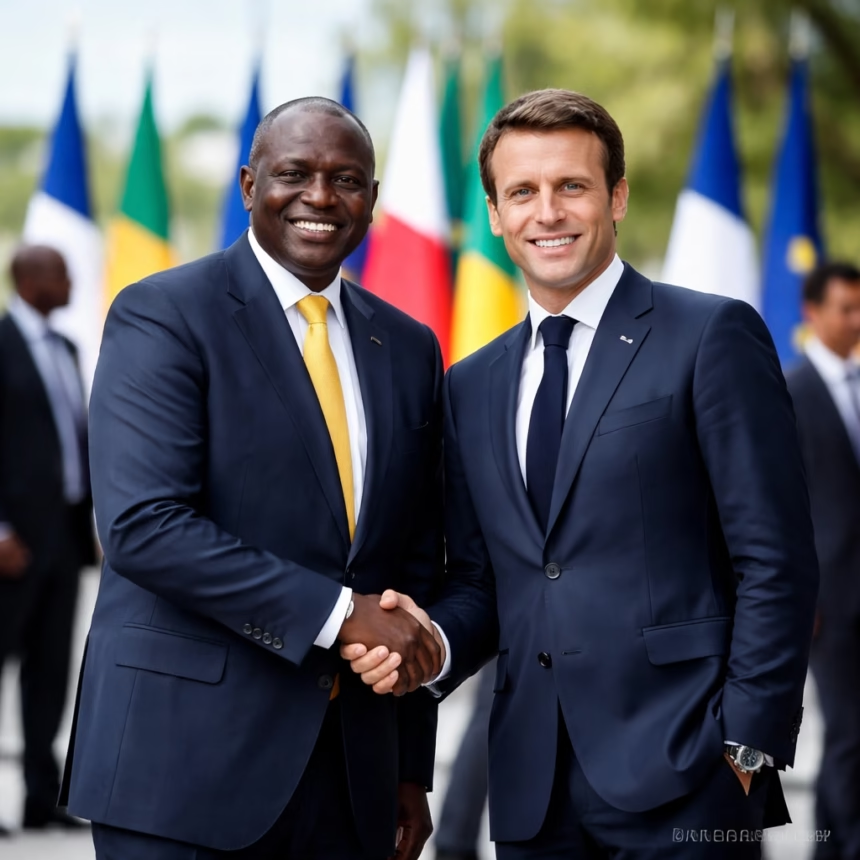
The diplomatic landscape between Africa and France is undergoing a profound transformation, with Nairobi, Kenya, emerging as a pivotal new center for engagement. President William Ruto of Kenya and President Emmanuel Macron of France are at the forefront of this redefinition, signaling a significant departure from a 53-year-old summit tradition. This strategic pivot marks the first time such a high-level dialogue, traditionally confined to France or Francophone African nations, has found a new home in Anglophone Africa, heralding a new era of partnership and mutual respect.
Background: A Legacy Under Scrutiny
For over five decades, the relationship between France and the African continent has been largely shaped by post-colonial ties, often encapsulated by the controversial term “Françafrique.” This framework saw France maintain significant political, economic, and military influence, particularly in its former colonies. The biennial Africa-France Summits, initiated in 1973, became the primary forum for these high-level engagements, almost exclusively held in France or a Francophone African capital, reinforcing a specific narrative of bilateral relations.
Critics frequently labeled this arrangement as neo-colonial, pointing to perceived economic exploitation and unequal power dynamics. As African nations matured and sought greater autonomy, calls for a more balanced partnership grew louder. President Macron, early in his presidency, acknowledged these historical complexities. In his landmark 2017 Ouagadougou speech, he called for a "new partnership" built on mutual respect and shared responsibility. This set the stage for a gradual shift in French foreign policy, further elaborated by the "New Africa-France Summit" in Montpellier in 2021, which, while in France, aimed to involve civil society and youth, signifying an earlier attempt at redefinition.
Key Developments: Nairobi’s Ascendance
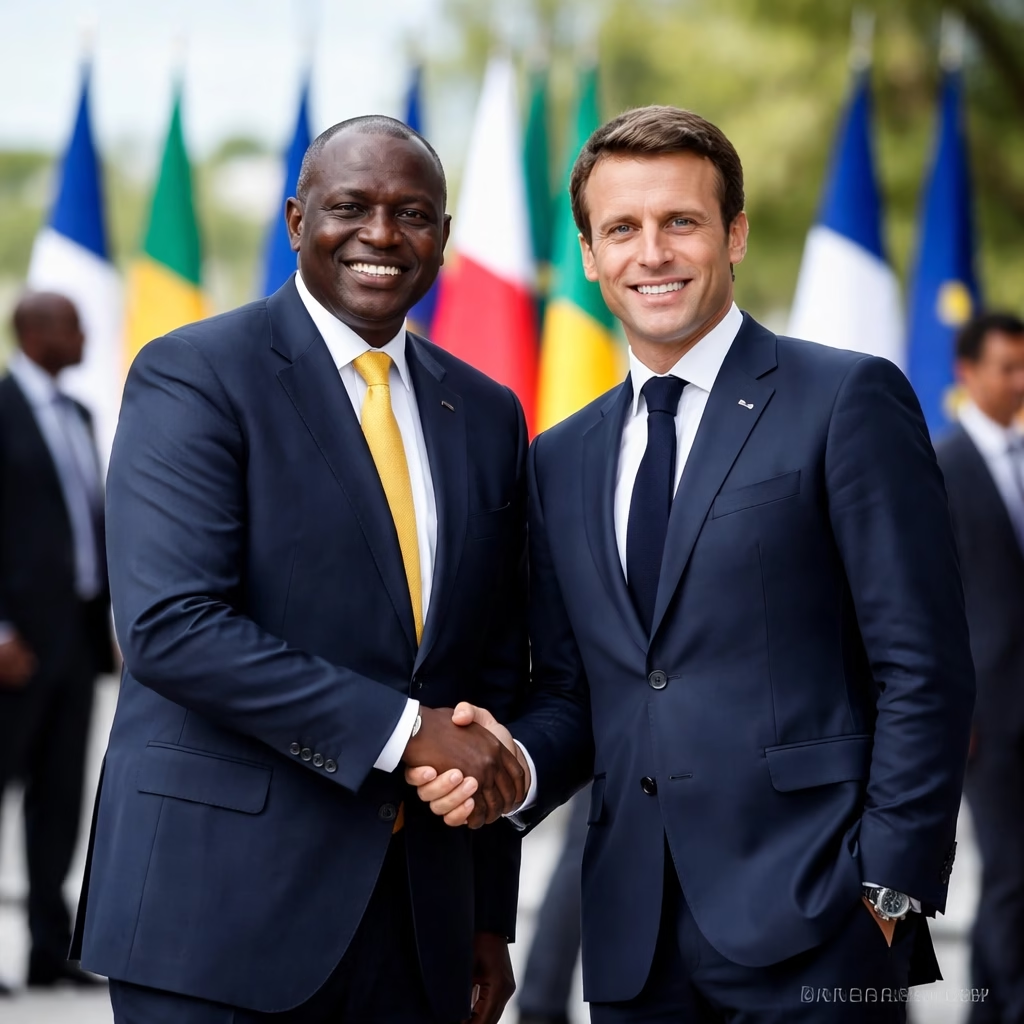
The decision to hold a significant high-level engagement between Presidents Ruto and Macron in Nairobi represents a tangible manifestation of this evolving strategy. This move directly challenges the traditional geographic and linguistic confines of previous Africa-France dialogues. Kenya, as a dynamic East African economic powerhouse and a prominent Anglophone nation, offers France a crucial gateway to diversify its African engagements beyond historical Francophone strongholds. Nairobi’s strategic location and robust economy make it an attractive partner for France seeking to expand its influence across the continent.
More Read

President Ruto's administration has actively championed a pan-Africanist vision, prioritizing trade, climate action, and technological innovation. His recent engagements with Macron have focused on concrete areas of collaboration, moving beyond traditional aid paradigms towards investment-led growth. Bilateral agreements between Kenya and France underscore this shift, encompassing substantial investments in renewable energy, sustainable infrastructure projects like the Rironi-Mau Summit highway, and digital transformation initiatives. French companies, including TotalEnergies and Vinci, have been pivotal in these ventures. This strategic reorientation aims to foster a relationship based on shared economic interests and global challenges, such as climate change and debt relief, rather than solely on historical or linguistic ties.
Impact: Reshaping Continental Dynamics
The symbolic relocation of such a high-profile engagement to Nairobi sends a powerful message across the African continent and beyond. For Francophone African nations, it may prompt reflection on their long-standing ties with France, potentially inspiring them to seek more diversified partnerships. While some might view it as a challenge to their traditional prominence, others may see an opportunity for a broader, more inclusive pan-African dialogue with France, fostering a sense of shared continental agency.
Anglophone nations, particularly those in East and Southern Africa, are likely to view Kenya's elevated role as a positive precedent. It signals France's willingness to engage with a wider array of African partners, recognizing their growing economic and geopolitical significance. For France, this diversification is crucial, allowing Paris to mitigate rising anti-French sentiment observed in parts of the Sahel region—such as Mali, Burkina Faso, and Niger—and adapt its foreign policy to a more multi-polar world. In this evolving global landscape, other powers like China, Russia, and Turkey are increasingly active. Kenya, in turn, significantly enhances its international profile, attracting further investment and solidifying its position as a regional leader and a key voice in global discussions on climate finance and sustainable development.
More Read

What Next: Charting Future Milestones
The Nairobi engagement between Presidents Ruto and Macron is not an endpoint but rather a significant milestone in an ongoing redefinition of Africa-France relations. The immediate future will likely see a deepening of economic partnerships, with a continued focus on green energy, digital economy, and climate resilience. Both nations are expected to explore new models of cooperation in areas like security and counter-terrorism, moving towards more collaborative, partner-led approaches.
A key question moving forward is whether this geographic diversification will become a permanent feature of the Africa-France Summit tradition. Will future iterations of the formal Africa-France Summit indeed be hosted in other non-Francophone countries, perhaps rotating across the continent? This would further cement France's commitment to a truly pan-African engagement strategy, moving definitively beyond its historical comfort zones. Challenges remain, including overcoming deeply entrenched historical baggage, addressing persistent economic disparities, and managing the high expectations generated by this new, more equitable approach. However, the Nairobi precedent firmly establishes that the future of Africa-France ties will be built on broader engagement, mutual respect, and a shared vision for global challenges, moving decisively beyond the confines of historical legacy.