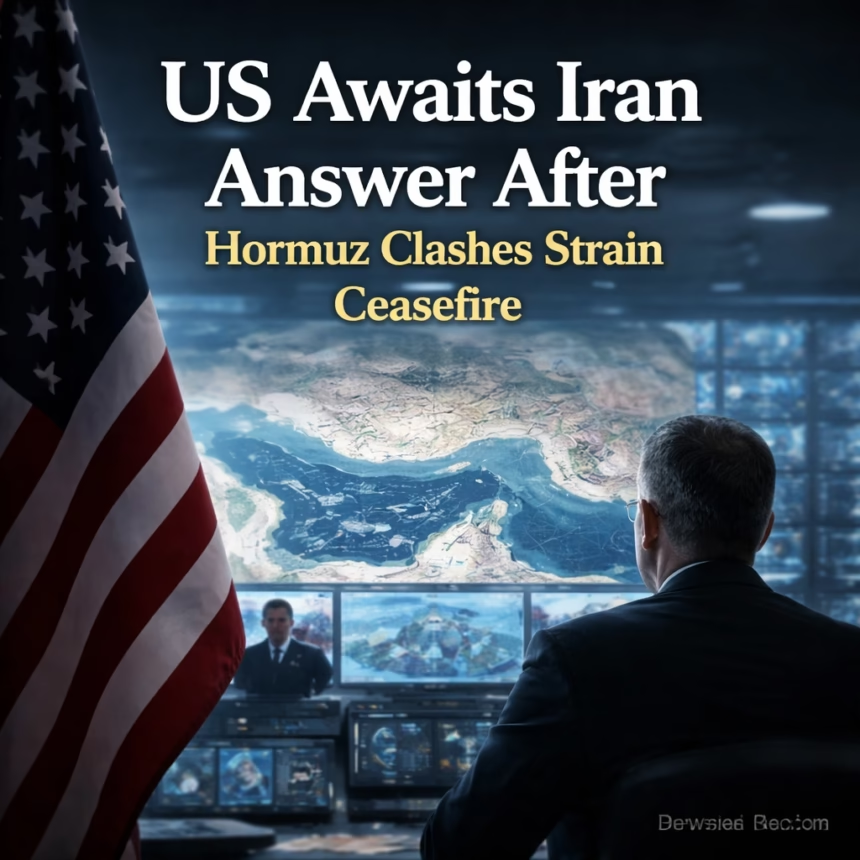
Recent naval incidents in the Strait of Hormuz, involving both United States and Iranian forces, have critically escalated tensions between Washington and Tehran. The clashes, unfolding over the past week in the vital global shipping lane, jeopardize a recently established regional ceasefire, prompting international concern over a potential return to broader conflict.
Background: A Region on the Brink
The Strait of Hormuz, a narrow maritime choke point between the Persian Gulf and the Gulf of Oman, is globally recognized as a critical artery for international trade. Approximately 20% of the world's total petroleum liquids and a quarter of its liquefied natural gas (LNG) transit through this waterway daily, making any disruption a severe threat to global energy markets and economic stability.
Historical Volatility
Relations between the United States and Iran have been fraught with antagonism since the 1979 Iranian Revolution. Decades of diplomatic breakdowns, sanctions, and proxy conflicts have often manifested in heightened military posturing in the Gulf region. Incidents in the Strait of Hormuz are not new; previous years have seen numerous confrontations, including tanker attacks, drone shoot-downs, and accusations of harassment against international shipping.
For instance, 2019 witnessed a series of attacks on oil tankers in the Gulf of Oman, which the U.S. and its allies attributed to Iran, a charge Tehran denied. The region also saw a U.S. surveillance drone shot down by Iran in June 2019, further ratcheting up tensions. These events underscored the inherent volatility of the region and the constant risk of miscalculation.
The Fragile Ceasefire
Earlier this year, a significant diplomatic breakthrough, brokered by regional powers like Oman and Qatar with tacit U.S. support, led to a fragile ceasefire between Iran and several regional adversaries. This agreement aimed to de-escalate proxy conflicts across the Middle East, including in Yemen, Syria, and Iraq, and foster a more stable environment for dialogue. The ceasefire had brought a period of relative calm, allowing for cautious optimism about future diplomatic engagement and a potential reduction in overall regional tensions. However, the recent incidents in Hormuz directly challenge the spirit and letter of this delicate truce.
More Read

Key Developments: Clashes and Accusations
The current crisis ignited with a series of close encounters between U.S. Navy vessels and Islamic Revolutionary Guard Corps Navy (IRGCN) fast-attack craft within the Strait of Hormuz. These incidents have been characterized by both sides as provocative and dangerous.
Timeline of Incidents
October 15th: The U.S. Fifth Fleet reported that three IRGCN vessels approached the USS *Bainbridge*, an Arleigh Burke-class destroyer, within 100 yards near the island of Qeshm. The U.S. Navy stated the Iranian craft performed "unsafe and unprofessional" maneuvers, including crossing the *Bainbridge*'s bow, forcing the destroyer to alter course to avoid collision. Warning shots were reportedly fired by the U.S. vessel.
* October 17th: A separate incident involved a U.S. Coast Guard cutter, the USCGC *Emlen Tunnell*, which reported being shadowed by two IRGCN Boghammar-class patrol boats for several hours. The Iranian boats allegedly came within 50 yards of the cutter, ignoring repeated radio warnings. No shots were fired, but the U.S. described the interaction as "harassing."
* October 19th: Iranian state media reported that the IRGCN had intercepted a "foreign vessel" allegedly engaged in oil smuggling near the Iranian island of Larak. While details remain scarce, some analysts suggest this operation might have been a show of force or a direct response to U.S. presence, further complicating the narrative of the previous clashes.
U.S. Response and Demands
The Pentagon has condemned Iran's actions, labeling them as "reckless and destabilizing." During a press briefing on October 20th, a U.S. Department of Defense spokesperson stated, "These provocative actions by the IRGCN directly contradict international maritime law and endanger the lives of our sailors and the safety of commercial shipping. We demand that Iran cease these unsafe maneuvers immediately and adhere to internationally recognized maritime protocols." The U.S. has reiterated its commitment to freedom of navigation in international waters and warned of potential further measures if such incidents persist. Diplomatic messages have reportedly been sent to Tehran via intermediaries, urging de-escalation.
More Read

Iran’s Stance and Counter-Accusations
Iran's Foreign Ministry and the IRGCN have vehemently denied U.S. accusations, instead blaming the U.S. for its "illegal and provocative presence" in the Persian Gulf. An IRGCN statement on October 18th asserted that "foreign forces must respect the sovereignty and territorial integrity of the Islamic Republic of Iran and adhere to international regulations when operating in regional waters." Iranian officials claim their vessels were conducting routine patrols to secure their maritime borders and counter smuggling operations, implying the U.S. vessels were operating too close to Iranian territorial waters. Tehran has yet to issue a comprehensive response to the U.S. demands regarding the alleged unsafe maneuvers, stating it is conducting its own internal investigation.
Impact: Ripple Effects Across the Globe
The renewed tensions in the Strait of Hormuz have immediate and far-reaching consequences, affecting global markets, regional stability, and the delicate balance of international diplomacy.
Global Energy Markets
The most immediate impact has been felt in global oil markets. Following reports of the clashes, crude oil prices saw an uptick of approximately 3% on October 16th, with Brent crude reaching nearly $95 per barrel. While the spike was tempered by broader market factors, analysts warn that sustained tensions or further incidents in Hormuz could lead to significant price volatility and supply chain disruptions. Shipping insurance premiums for vessels transiting the Strait have also reportedly increased, adding to operational costs for energy companies and potentially affecting consumer prices.
Regional Stability and Security
The incidents have sent jitters across the Gulf Cooperation Council (GCC) states, many of whom are heavily reliant on the Strait for their oil exports. Saudi Arabia, the UAE, and Kuwait have expressed private concerns about the potential for renewed conflict, which could destabilize their economies and security. While no official statements have been released, diplomatic channels between these nations and both the U.S. and Iran are reportedly active, urging restraint. The fragile regional ceasefire, which had brought a sense of cautious optimism, now appears significantly strained, risking a return to proxy skirmishes and a broader arms race.
International Shipping and Trade
Beyond oil tankers, the Strait of Hormuz is a crucial route for container ships and other commercial vessels. Increased military presence and the risk of confrontation raise security concerns for all maritime traffic. Shipping companies may consider rerouting, though viable alternatives are limited and often involve significant delays and higher costs. This could impact global supply chains, leading to delays in goods delivery and increased shipping expenses, ultimately affecting consumers worldwide.

U.S.-Iran Relations and Diplomacy
The clashes represent a significant setback for any nascent diplomatic efforts between Washington and Tehran. The incidents further erode trust and make future dialogue, particularly concerning Iran's nuclear program or regional conduct, considerably more challenging. Both sides face domestic pressure to appear strong, which can complicate de-escalation efforts. The risk of miscalculation, where a minor incident escalates rapidly into a larger confrontation, remains high, especially without clear and consistent communication channels.
What Next: Awaiting Iran’s Answer
The international community now keenly awaits Iran's official response to the U.S. demands and the broader implications for the ceasefire. The coming days are critical in determining whether the recent clashes are isolated incidents or a precursor to a more sustained period of tension.
Diplomatic Pathways and Challenges
Iran's Official Stance: Tehran's formal response is expected to shape the immediate trajectory of the crisis. Will it be conciliatory, defiant, or a mix of both? A defiant stance could prolong the standoff, while a more diplomatic tone might open avenues for de-escalation.
* Role of Mediators: International bodies like the United Nations and the European Union, along with regional mediators such as Oman and Qatar, are likely to intensify their efforts to facilitate communication and de-escalate the situation. Their ability to bridge the communication gap between Washington and Tehran will be crucial.
* Direct Talks: While unlikely in the immediate aftermath of the clashes, calls for direct talks between the U.S. and Iran may grow, particularly if tensions persist. However, both sides have historically been reluctant to engage without significant preconditions.
Potential for Escalation
Without effective de-escalation, the potential for further military posturing and even direct confrontation remains. The U.S. has maintained a robust military presence in the region, and Iran has consistently asserted its right to patrol its perceived territorial waters. Any additional "unsafe" encounters could quickly spiral, especially if either side misinterprets the other's intentions or actions. The integrity of the broader regional ceasefire also hangs in the balance; its collapse could reignite dormant conflicts across the Middle East.
Economic Repercussions
Should the crisis deepen, global energy markets will likely react with greater volatility. Long-term disruptions in oil supply or significant increases in shipping costs could have a tangible impact on global economic recovery and stability. Businesses and investors will closely monitor developments, with potential implications for investment decisions in the region and beyond.
The Strait of Hormuz remains a critical barometer of U.S.-Iran relations. As the world watches, the choice between de-escalation and renewed confrontation rests heavily on the diplomatic and strategic decisions made in the coming days.