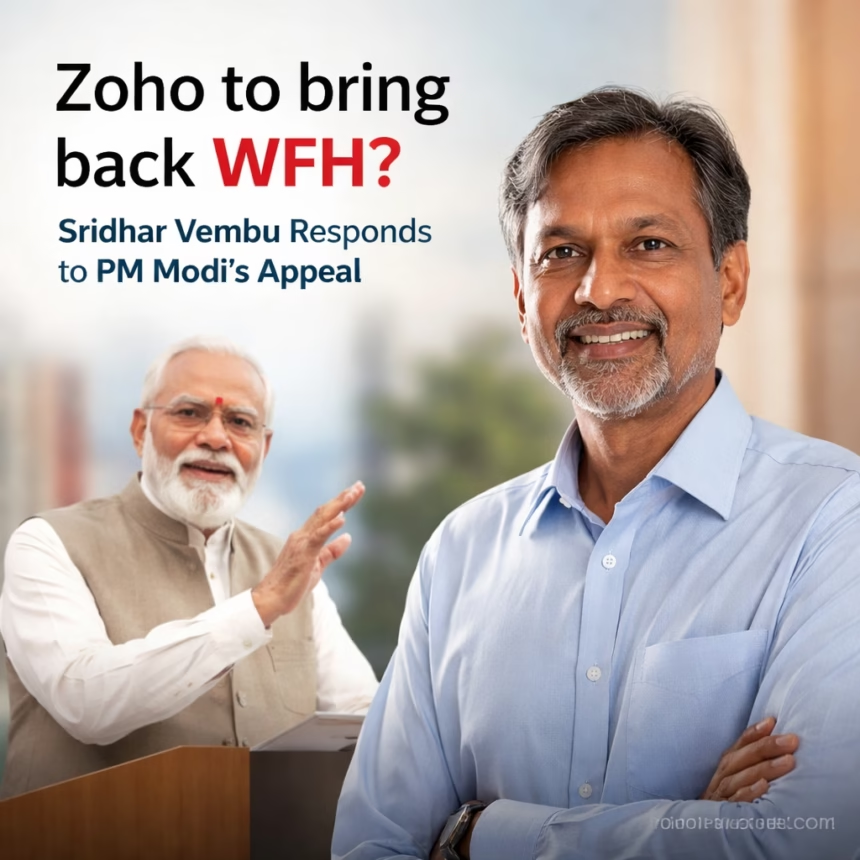
Chennai, India – The debate over the future of work in India has taken a new turn as Zoho Corporation CEO Sridhar Vembu publicly aligned with Prime Minister Narendra Modi's recent advocacy for "Work From Home" (WFH) and "Work From Anywhere" (WFA) models. Vembu's response, shared on social media, signals a potential reinforcement of flexible work policies within the tech giant, sparking discussions across the Indian corporate landscape.
Background: The Evolving Landscape of Work in India
Before the global pandemic, the concept of remote work, particularly on a large scale, was largely nascent in India's technology sector. While some companies offered limited flexibility, the predominant culture favored traditional office environments, especially in major IT hubs like Bengaluru, Hyderabad, and Chennai.
Zoho’s Pre-Pandemic Vision and the Pandemic Pivot
Zoho Corporation, however, stood out with its early experimentation with decentralized work models. Even prior to 2020, Sridhar Vembu had championed the idea of establishing smaller "rural offices" to tap into talent pools outside urban centers and mitigate the challenges of urban migration. This forward-thinking approach laid a unique foundation for the company.
When the COVID-19 pandemic struck in early 2020, forcing an immediate shift to remote operations, Zoho was arguably better prepared than many of its peers. The company rapidly transitioned its entire workforce to WFH, ensuring business continuity while prioritizing employee safety. This period saw a significant portion of its over 12,000 employees successfully working from their hometowns and various remote locations across India.
More Read

The Post-Pandemic Return-to-Office Trend
As pandemic restrictions eased in late 2022 and throughout 2023, a significant trend emerged across the Indian IT sector: a gradual, and in many cases, mandatory, return to office (RTO). Major tech companies, both domestic and multinational, began recalling employees, citing reasons such as collaboration benefits, company culture, and perceived productivity gains in a physical office setting. This industry-wide push created a tension between employee preferences for flexibility and corporate directives for in-person attendance. Many employees who had grown accustomed to the benefits of WFH, including reduced commute times and improved work-life balance, expressed reluctance to fully return to the office.
PM Modi’s Appeal for WFH/WFA
Against this backdrop, Prime Prime Minister Narendra Modi, during an interview with News18 in early May 2024, made a notable appeal. He highlighted WFH and WFA as powerful concepts that could benefit the nation by reducing urban congestion, improving quality of life, and fostering economic growth in smaller towns and rural areas. The Prime Minister emphasized the potential for technology to enable this shift, suggesting that a distributed workforce could unlock new opportunities for India's diverse population. His comments injected a fresh perspective into the ongoing debate, signaling potential government endorsement for flexible work arrangements.
Key Developments: Vembu’s Affirmation and Zoho’s Strategy
The Prime Minister's remarks quickly resonated across the industry, but it was Sridhar Vembu's swift and enthusiastic response that captured significant attention.
More Read

Sridhar Vembu’s Response
Taking to X (formerly Twitter) shortly after PM Modi's interview, Sridhar Vembu affirmed Zoho's deep alignment with the Prime Minister's vision. He stated, "We are deeply aligned with PM Modi’s vision of Work From Home/Anywhere. We are already ahead of the curve." Vembu elaborated on Zoho's existing strategy, explaining how the company has been actively establishing "spoke offices" in rural areas and smaller towns across India. He highlighted that a significant portion of Zoho's workforce already operates from these distributed locations or directly from their homes, effectively embodying the WFH/WFA philosophy.
Vembu's post underscored Zoho's commitment to creating high-quality job opportunities outside metropolitan areas, thereby fostering local economies and preventing brain drain from rural communities. He reiterated that this decentralized model allows talent to thrive without the necessity of migrating to expensive, congested cities, a core tenet of Zoho's long-term strategy.
Zoho’s Hub-and-Spoke Model
Zoho's strategy involves a "hub-and-spoke" model, where a central office (the hub) in a major city supports numerous smaller offices (the spokes) located in tier-2 and tier-3 cities and even villages. Examples include offices in Tenkasi (Tamil Nadu), Renigunta (Andhra Pradesh), and Kollam (Kerala), among others. These smaller offices are fully equipped with modern infrastructure, enabling employees to work collaboratively and productively closer to their homes.
This model is not merely a pandemic-era adaptation but a deliberate strategic choice by Zoho to diversify its talent base, reduce operational costs associated with large urban campuses, and contribute to regional development. Vembu has often spoken about the social and economic benefits of this approach, emphasizing its role in building sustainable communities.
Impact: Who is Affected and How?
Sridhar Vembu's endorsement of PM Modi's appeal, backed by Zoho's established practices, carries significant implications across various stakeholders.
Zoho Employees
For Zoho's workforce, Vembu's statement reinforces the company's commitment to flexibility. Employees currently working remotely or from rural offices can expect continued support for these arrangements. For those who might have anticipated a full RTO mandate, this offers reassurance of sustained work-life balance and reduced commuting burdens. It solidifies Zoho's reputation as an employer that values employee autonomy and geographic flexibility.

The Indian Tech Industry
Zoho's stance could serve as a powerful case study for the broader Indian tech industry. While many companies are still grappling with RTO challenges, Zoho's successful implementation of a large-scale distributed model provides a tangible example of how WFH/WFA can be viable and even beneficial. This might prompt other tech firms to re-evaluate their own RTO policies, especially if government support for flexible work models gains momentum. It could reignite discussions about hybrid models that offer more balance between in-office collaboration and remote flexibility.
Rural Economies and Talent Dispersal
The most significant long-term impact aligns with PM Modi's vision: the empowerment of rural economies. By creating high-quality tech jobs outside major metros, Zoho directly contributes to local economic development, increases disposable income in smaller towns, and stimulates ancillary businesses. This "talent dispersal" also helps retain skilled professionals in their hometowns, preventing the concentration of talent and resources solely in urban centers. It can lead to a more equitable distribution of economic opportunities across the country.
Urban Centers and Infrastructure
A broader adoption of WFH/WFA, even partially, could alleviate pressure on urban infrastructure, including transportation networks, housing, and public services. Reduced daily commutes could lead to less traffic congestion, lower pollution levels, and a better quality of life in major cities. This aligns with government efforts to manage rapid urbanization and its associated challenges.
What Next: Expected Milestones and Future Trajectories
The convergence of PM Modi's appeal and Zoho's existing strategy sets the stage for several potential developments in the coming months and years.
Zoho’s Continued Expansion of Distributed Work
Expect Zoho to further expand its network of rural and satellite offices. The company has a stated goal of continuing to hire and grow its operations in these non-urban locations. This will likely involve investing in more infrastructure, technology, and training programs to support these distributed teams, solidifying its position as a pioneer in the WFA model. Zoho may also share insights and best practices from its experience, further influencing the industry.
Potential Government Policy Support
PM Modi's public endorsement could lead to more concrete policy measures from the government. This might include incentives for companies that adopt WFH/WFA models, such as tax breaks for establishing rural offices, improved digital infrastructure in remote areas, or simplified regulatory frameworks for remote employment. Such policies would further encourage companies to consider flexible work arrangements as a strategic imperative rather than just a temporary solution.
Industry-Wide Reassessment of Work Models
The renewed emphasis on WFH/WFA, particularly with government backing, could prompt a significant reassessment among other Indian tech companies. While a complete reversal of RTO mandates might be unlikely for many, there could be a push towards more structured hybrid models, greater flexibility in remote work policies, or even pilot programs for distributed teams. Companies might start exploring smaller, regional offices as an alternative to consolidating all operations in large urban campuses.
The Evolution of Work Culture and Talent Acquisition
The debate will continue to shape work culture. Companies that offer greater flexibility might gain an edge in talent acquisition, particularly among younger professionals who prioritize work-life balance and autonomy. This could lead to a competitive environment where flexible work becomes a key differentiator for employers. The long-term impact on collaboration tools, cybersecurity for remote setups, and employee engagement strategies will also be closely watched.
Sridhar Vembu's response to PM Modi's appeal is more than just an endorsement; it is a testament to Zoho's pioneering spirit and a significant moment in the ongoing evolution of work in India. As the country looks to leverage its demographic dividend and technological prowess, the WFH/WFA model, championed by both a leading business figure and the nation's top leader, could define the next chapter of India's economic growth and social development.