From Gambhir to Smith: The Changing Guard in Indian Cricket
From Gambhir to Smith: The Changing Guard in Indian Cricket
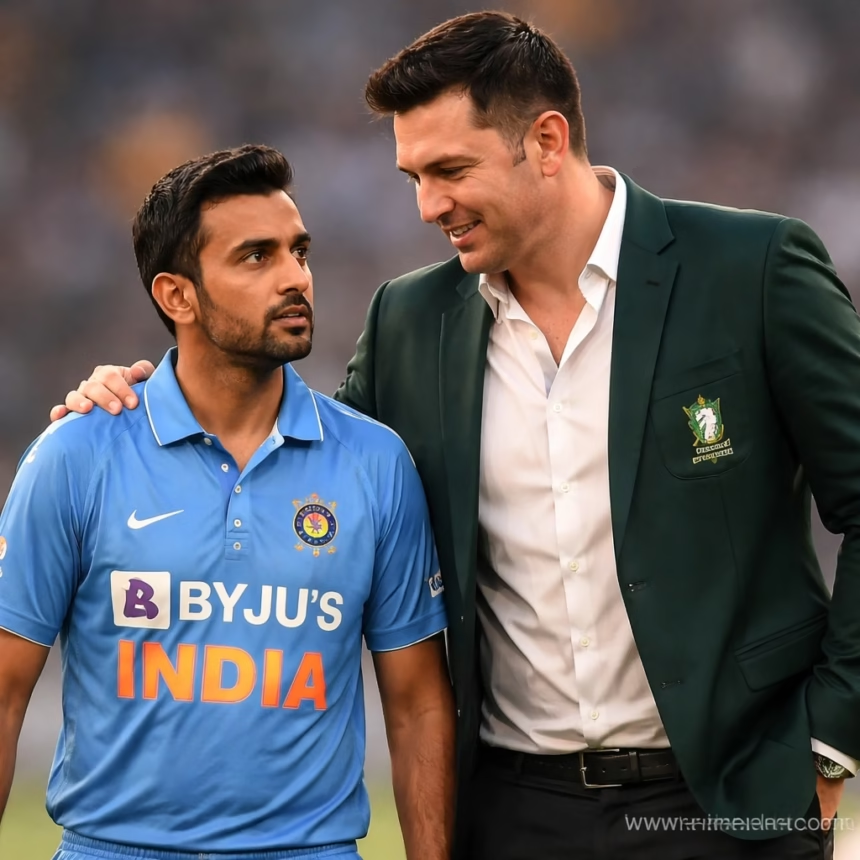
Indian cricket is witnessing an intriguing transition phase as senior players like Gautam Gambhir make way for a new generation. Former South African captain Graeme Smith recently highlighted the evolving dynamics within the team, hinting at a shift in leadership and strategy.
This transition is not just about individual players but reflects a broader change in the approach of the Indian cricket team, which has dominated world cricket in recent years.
Background: The Rise and Fall of the Senior Players
The Indian cricket team has long been known for its strong senior leadership, with players like MS Dhoni, Virat Kohli, and Ravindra Jadeja leading the charge. However, with the retirement of key players and the emergence of new talent, the team is undergoing a significant transformation.
Gautam Gambhir, a stalwart of Indian cricket, has been a key figure in the team’s success, particularly in the 2007 T20 World Cup and the 2011 ODI World Cup. His departure marks the end of an era and the beginning of a new chapter for Indian cricket.
Key Developments: The Emergence of New Leaders
As senior players step back, younger players like Rohit Sharma, KL Rahul, and Shreyas Iyer are stepping up to take on leadership roles. Graeme Smith, who has been closely associated with Indian cricket as a mentor, has noted the importance of this transition in shaping the team’s future.
More Read

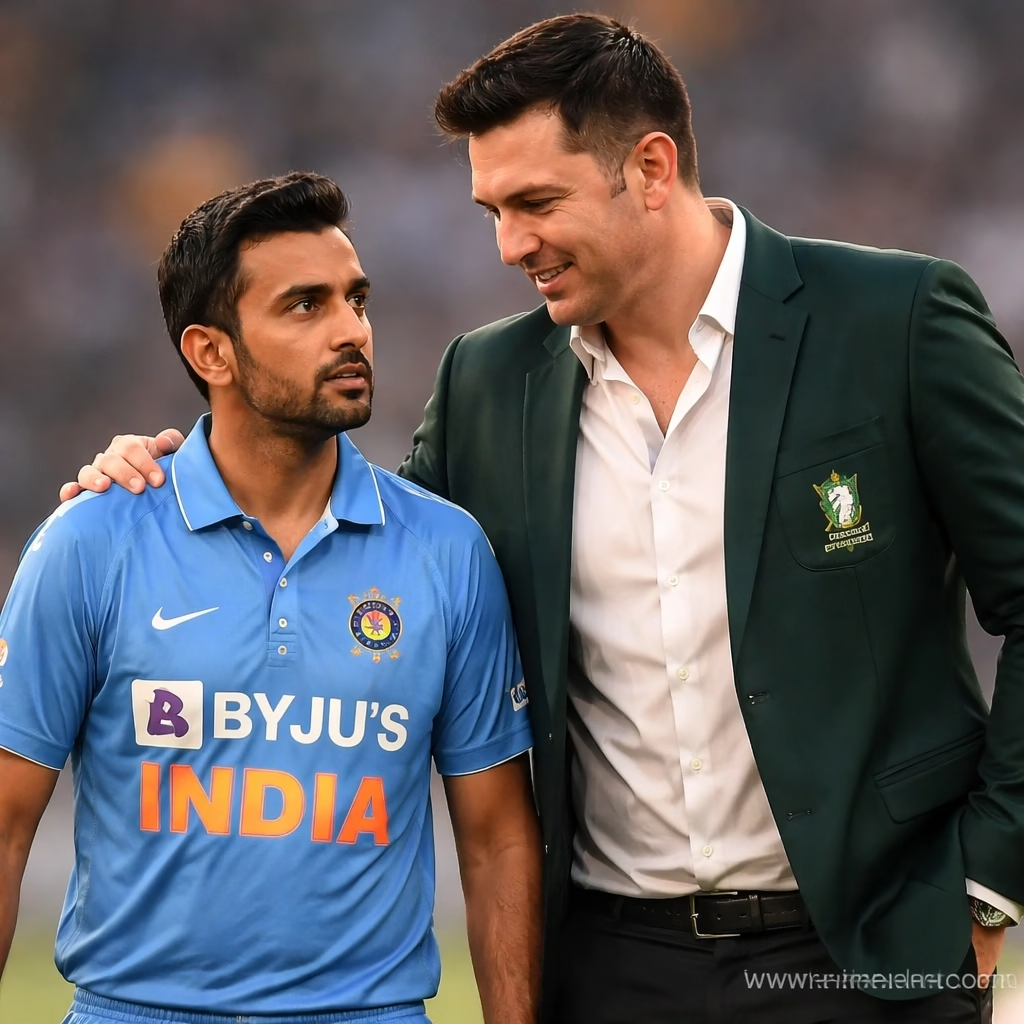
Smith emphasized that the team’s performance in the upcoming ICC events will be crucial in determining how well the new leaders adapt to their roles. The Indian team’s success in the 2023 ODI World Cup and the 2024 T20 World Cup will be key indicators of this transition’s success.
Impact: How the Transition Affects the Team
The Leadership Vacuum
The departure of experienced players like Gambhir has left a leadership vacuum that needs to be filled by the younger generation. The team’s ability to adapt to this change will be critical in maintaining its dominance in world cricket.
More Read

Virat Kohli, who has been a consistent performer, will play a pivotal role in guiding the new leaders and ensuring a smooth transition. His experience and leadership will be invaluable in this phase.
The Role of Mentors Like Graeme Smith
Graeme Smith’s insights into the transition phase underscore the importance of mentorship in modern cricket. His experience as a former captain and his understanding of team dynamics will be crucial in helping the Indian team navigate this change.
Smith’s involvement with the Indian team, particularly in his role as a mentor, highlights the growing trend of international players contributing to the development of cricket in other countries.
What Next: The Road Ahead for Indian Cricket
The Indian team’s performance in the next few years will be closely watched as the new leaders take charge. The 2023 ODI World Cup, scheduled to be held in India, will be a major test for the team’s new-look squad.
Additionally, the 2024 T20 World Cup will provide another opportunity for the younger players to prove themselves on the international stage. The team’s success in these events will be a testament to the effectiveness of the transition phase.
The Indian cricket board and the coaching staff will play a crucial role in supporting the new leaders and ensuring that the team continues to thrive in the coming years.